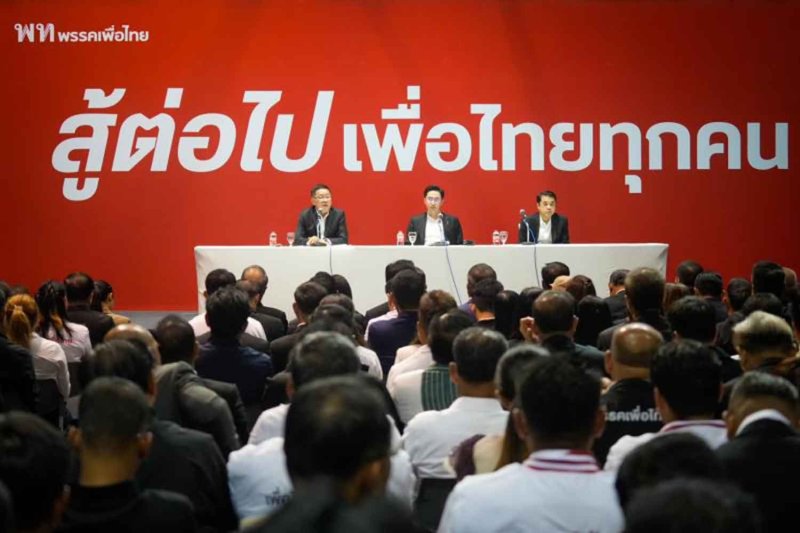
The distribution of ministerial positions in the Thai government has sparked significant tensions within the Pheu Thai Party, raising concerns about the party's ability to recover electorally. This situation arises amidst the formation of a coalition led by the Bhumjaithai Party, where a limited number of positions have been allocated, leading to the marginalization of certain factions and individuals within the party.
The distribution of ministerial roles, which included five ministers and three deputy ministers, has exacerbated feelings of discontent and anxiety among party members, as some seek to negotiate quietly regarding their shares. Suthin Klangsaeng, a prominent figure in the party, has attempted to calm fears, indicating that parties go through phases of ups and downs, and that the party still holds 74 seats, enabling it to serve the community.
Details of the Event
The limited distribution of ministerial positions has caused dissatisfaction among party members, with some feeling marginalized. According to Suthin, the reduction in the number of seats is due to miscalculations rather than structural weaknesses, emphasizing that the party still possesses the resources and personnel necessary to compete in the political arena.
Despite Suthin's attempts to ease tensions, the disputes over positions reflect deeper organizational pressures. Suthin acknowledged that some complaints have merit, but he asserted that the situation is not as dire as portrayed.
Background & Context
The Pheu Thai Party, regarded as one of the major parties in Thailand, has faced significant challenges in the recent elections. Although the party managed to secure a substantial number of seats, the results were below expectations, raising questions about its future strategy. The formation of a coalition with the Bhumjaithai Party, which dominates the public agenda, may limit Pheu Thai's ability to formulate effective policies.
Historically, political parties in Thailand have experienced considerable fluctuations, influenced by alliances and political changes. This historical context adds a layer of complexity to the current situation, as the Pheu Thai Party strives to maintain its strength amid unstable political conditions.
Impact & Consequences
The greatest challenge facing the Pheu Thai Party is its ability to deliver effective policies. The ministries assigned to the party, such as Education and Social Development, may struggle to achieve quick and tangible results, heightening concerns about the party's capacity to maintain public trust. Suthin acknowledged that implementing key policies will be difficult if they do not align with the ministries overseen by the party.
If complaints remain unresolved, new tensions may arise in the future, especially if exacerbated by poor government performance or perceptions of unequal treatment within the party. This could negatively impact the party's ability to regain its standing in the upcoming elections.
Regional Significance
The political events in Thailand intersect with global conditions, including economic crises affecting Arab countries. Rising fuel prices and inflation due to global crises may impact economic stability in the region, making it essential to monitor how political parties address these challenges.
In a related context, the political tensions in Thailand may reflect similar challenges in other Arab countries, where political parties strive to maintain their balance amid internal and external pressures. The Pheu Thai Party's ability to navigate these challenges could provide valuable lessons for Arab parties in crisis management.