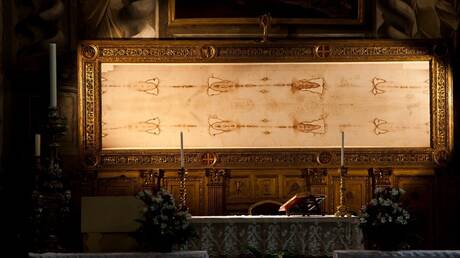
Recent DNA analysis has revealed diverse traces of animals, plants, and humans on the Shroud of Turin, reigniting discussions about its origin and history. These findings could significantly influence our understanding of various historical and religious aspects related to this shroud.
The Shroud of Turin, believed to have covered the body of Christ after his crucifixion, is one of the most controversial artifacts in history. Numerous studies have been conducted on it, but this new analysis adds another dimension to the ongoing debates regarding its origin.
Details of the Analysis
The study was conducted on a sample of the shroud using advanced DNA analysis techniques, revealing traces from several types of living organisms. The results showed evidence of animals such as sheep and goats, along with some plants, suggesting that the shroud may have been subjected to multiple environmental influences over the centuries.
This analysis comes at a time when interest in the Shroud of Turin is growing, as scientists and researchers seek to understand more about its history and origin. The new findings have raised questions about how these organisms came to be on the shroud and whether they reflect a specific period in history or particular conditions.
Background & Context
The Shroud of Turin is a piece of medieval cloth believed to bear the image of Christ. It was discovered in Italy in the 14th century and has since become the subject of numerous studies and research. In recent years, modern techniques have been employed to analyze the shroud, including radiocarbon dating, which indicated that the shroud dates back to a period between 1260 and 1390 AD.
However, there remains controversy surrounding its origin, with some believing it may be a forgery, while others argue it could be genuine. The new DNA analysis adds another layer to this debate, revealing new details that may affect our understanding of the history associated with this shroud.
Impact & Consequences
The results of this analysis are of significant importance, as they may influence various fields, including religious and historical studies. If the findings are confirmed, it could lead to a reevaluation of much of the information related to the Shroud of Turin, opening the door for further research and studies.
Additionally, these results may impact the religious beliefs of some individuals, as the Shroud of Turin is an important symbol in Christianity. Therefore, any changes in the understanding of its origin could lead to shifts in how this shroud is perceived by believers.
Regional Significance
Although the Shroud of Turin is primarily associated with European history, its impact extends to the Arab region, where many believers consider this shroud a part of their religious heritage. The new findings may prompt a reevaluation of how different cultures interact with religious symbols.
Moreover, discussions surrounding the Shroud of Turin could pave the way for more dialogue between cultures and religions, fostering mutual understanding and promoting tolerance. In a world characterized by religious and cultural diversity, these discussions are essential for building bridges of communication between peoples.
In conclusion, the new DNA analysis of the Shroud of Turin raises many questions about its origin and history. As discussions continue, this shroud remains a topic of interest for researchers and believers alike.