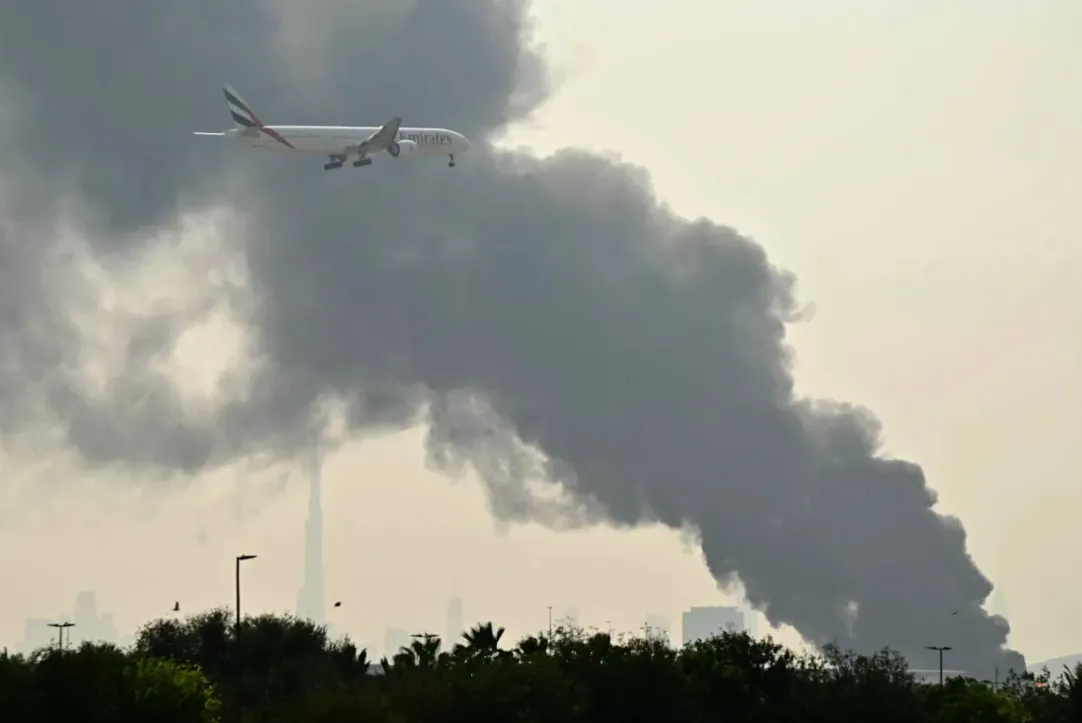
In a notable security development, three Gulf countries announced on Sunday that they were addressing multiple threats from drones targeting Kuwait, Qatar, and the UAE, with no human casualties reported.
The Kuwaiti Ministry of Defense confirmed in an official statement that the army dealt with several hostile drones that entered Kuwaiti airspace. The ministry explained that air defense units detected the targets as soon as they entered the airspace, and necessary measures were taken according to established protocols to ensure the protection of the country's sovereignty and security.
Details of the Incident
Colonel Saud Abdulaziz Al-Otaibi, the official spokesperson for the Kuwaiti Ministry of Defense, affirmed the full readiness of the armed forces to maintain the security of the homeland and the safety of citizens and residents. In the UAE, the Ministry of Defense announced that air defenses successfully dealt with two drones launched from Iran, intercepting them on May 10, 2026. The ministry confirmed the armed forces' readiness to respond to any threats targeting the country's security.
Since the onset of Iranian aggressions, UAE air defenses have managed to intercept 551 ballistic missiles, 29 cruise missiles, and 2265 drones. The ministry also confirmed that there were no reported casualties or injuries in recent hours, noting that the total number of martyrs since the beginning of the attacks has reached two, in addition to a Moroccan civilian contracted with the armed forces.
In a related context, the Qatari Ministry of Defense announced that a commercial cargo ship was targeted by a drone while sailing in Qatari territorial waters northeast of the port of "Messaid." The ministry clarified that the targeting caused a limited fire on board the ship, but no injuries were reported among the crew, as the relevant authorities quickly managed to control the fire.
Background & Context
These attacks come at a time when tensions in the region are escalating, with increased Iranian aggressions against Gulf states. Qatar strongly condemned the targeting of the ship, considering this aggression a blatant violation of the principle of freedom of navigation and international law, threatening the security and safety of commercial maritime routes.
The Qatari Ministry of Foreign Affairs also emphasized that targeting commercial vessels represents a serious breach of international law and poses a direct threat to regional and international security and stability. It noted that Qatar is closely monitoring the developments of the incident in coordination with relevant authorities and regional and international partners.
Impact & Consequences
The recent attacks reflect the rising tensions in the Gulf region, where Iran seeks to destabilize neighboring countries. The Gulf Cooperation Council condemned the Iranian attacks, affirming the full support of its member states for the UAE and Kuwait in all measures they take to maintain their security and stability.
Jassem Al-Budaiwi, the Secretary-General of the Gulf Cooperation Council, pointed out that the Iranian approach systematically seeks to undermine regional security, in blatant violation of international law principles. This escalation could lead to negative repercussions on security and stability in the region, increasing anxiety among Gulf states.
Regional Significance
These events indicate a rise in security threats in the Gulf region, necessitating enhanced cooperation among Arab countries to confront these challenges. The continuation of these aggressions could impact maritime navigation and trade in the region, adversely affecting the Arab economy.
In conclusion, the current situation requires a united Arab effort to confront common threats and ensure the security and stability of the region. There must be an effective response from the concerned countries to protect their interests and national capabilities.