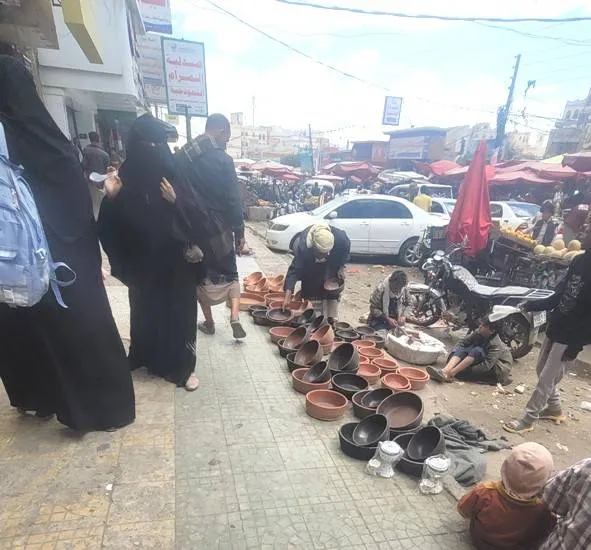
This year's Eid al-Adha in Yemeni villages controlled by the Houthis comes amidst escalating economic crises, where residents are suffering from rising prices and declining purchasing power. These difficult conditions have led to the absence of many traditional celebrations that Yemenis are accustomed to, replaced instead by concerns over securing food and meeting basic needs.
In the governorate of Ibb, located 193 kilometers south of Sana'a, residents are welcoming the holiday with feelings of anxiety and anticipation. Thousands of families have lost their sources of income due to halted salaries and the deterioration of agricultural and commercial activities, making the ability to purchase new clothes and sacrificial animals nearly impossible.
Details of the Situation
Residents in the villages of Ibb confirm that traditional Eid celebrations have noticeably declined, with social visits and festive tables disappearing. Instead, families are living in a state of worry due to the challenging economic circumstances. Additionally, the oppressive conditions imposed by the Houthi group, including child recruitment, have forced some families to limit their children's movements or send them to safer areas.
This year, many families were unable to buy new clothes for their children, settling instead for basic necessities like flour, sugar, and oil. Sweets and toys have become out of reach for most poor families, reflecting the extent of suffering experienced by the population.
Background & Context
Yemeni villages have witnessed a decline in essential services, with residents facing recurring crises in water, electricity, and healthcare. The difficulty of accessing markets and rising transportation costs further exacerbate the suffering of families. In the isolated area of Bani Had, part of the Al-Adain district, one resident notes that many families no longer own livestock as they did in the past, with some having to sell them to secure food or pay off debts.
Holidays, which used to represent an opportunity for family gatherings and visits, now reflect a painful reality of poverty and deprivation. Sacrificial animals and lavish feasts were integral parts of Eid celebrations, but these aspects have significantly diminished, with some villages now devoid of the sounds of livestock that once filled the streets.
Impact & Consequences
These conditions illustrate that the humanitarian situation in rural Yemen has become increasingly fragile, with the concerns of rural and urban areas mirroring each other under the pressures of war and the ongoing economic crisis. As Eid approaches, hope remains suspended for a resolution that could restore the holiday's meaning and joy.
Despite the harsh conditions, villagers are attempting to maintain some simple aspects of the holiday by engaging in limited visits and preparing traditional dishes. These efforts reflect the persistence of social solidarity within Yemeni society, despite all challenges.
Regional Significance
The situation in Yemeni villages under Houthi control serves as a testament to the escalating humanitarian crisis in the country. With the continuation of war and economic decline, Eid has become an occasion that reveals the extent of daily suffering experienced by millions of Yemenis. The absence of joyful celebrations during holidays highlights the challenges faced by Arab communities in conflict zones.
In conclusion, there remains hope for an improvement in Yemen's economic and social conditions, allowing Eid to return as a symbol of joy and solidarity among people. Restoring peace and stability is the only way to bring smiles back to the faces of children and families in this war-torn country.