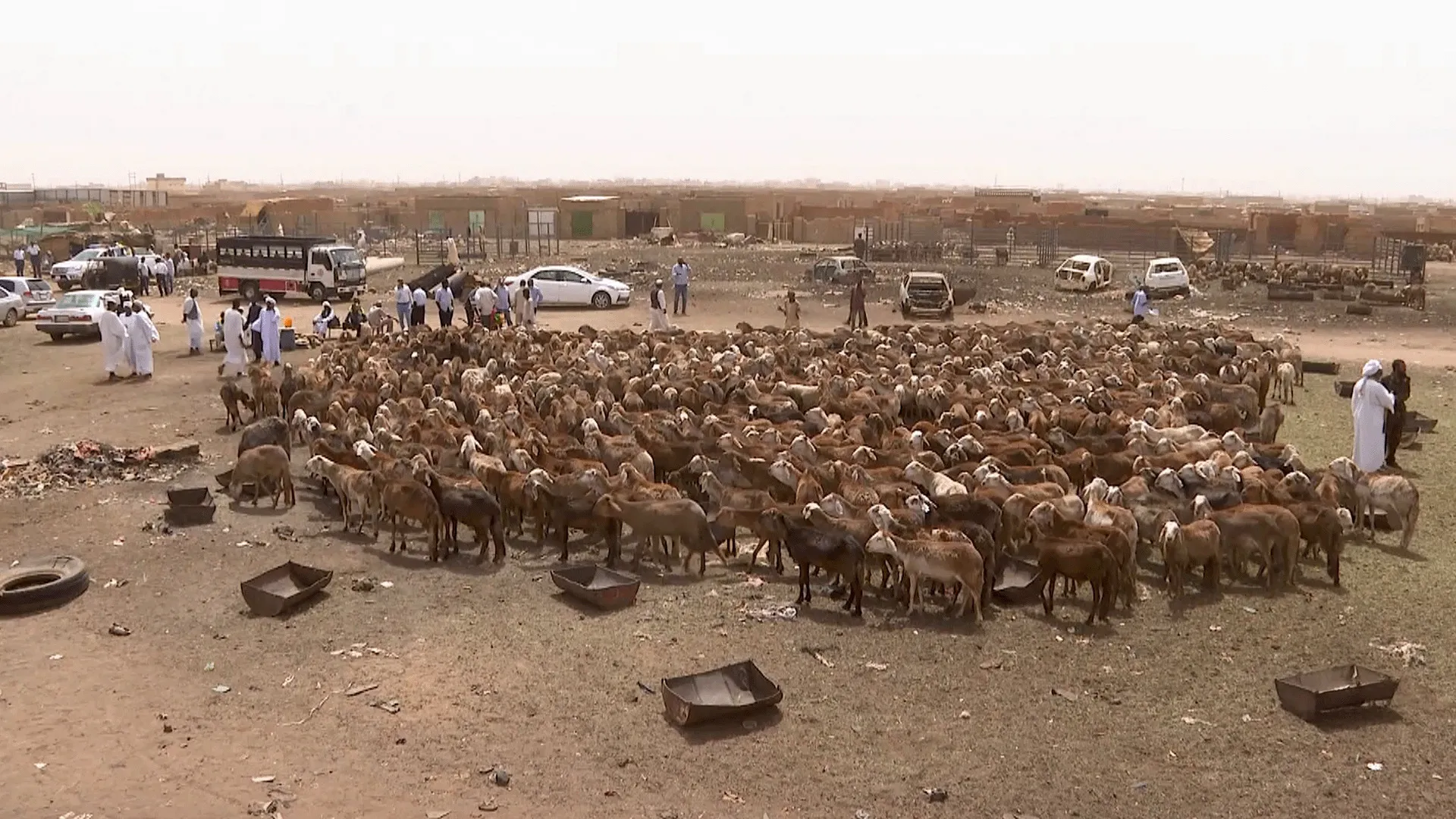
This year's Eid al-Adha in Sudan arrives amidst challenging economic conditions, as citizens grapple with unprecedented increases in livestock prices. This situation has made purchasing sacrificial animals a heavy burden for many families. The deteriorating economic conditions reflect the impacts of the ongoing war in the country, which has disrupted supply chains and made it difficult to transport livestock between states.
The sharp rise in inflation rates and the cost of living have diminished purchasing power, leaving many families unable to afford the costs associated with the sacrifice. Under these circumstances, market activity has significantly declined, negatively impacting the joy typically associated with the holiday.
Details of the Event
Livestock markets in Sudan are experiencing a noticeable stagnation, with the number of sacrificial animals available for sale dropping sharply. According to local sources, prices have surged by as much as 50% compared to last year, prompting many families to abandon the idea of purchasing a sacrifice this year.
Simultaneously, charitable and humanitarian initiatives have begun to emerge, aiming to support needy and impoverished families by providing sacrificial animals and distributing their meat. These initiatives seek to alleviate the humanitarian crisis and bring joy to the hearts of those most affected by the conflict.
Background & Context
These conditions coincide with the ongoing armed conflict in Sudan, which has exacerbated economic and social crises. Since the outbreak of the conflict, the country has witnessed a deterioration in infrastructure, impacting citizens' ability to access basic necessities.
Historically, Eid al-Adha has represented an opportunity for social connection and strengthening family ties; however, current circumstances have altered this image, transforming the holiday into a symbol of suffering rather than joy.
Impact & Consequences
The current economic situation affects all aspects of life in Sudan, including education and healthcare. With rising poverty rates, children and youth face significant challenges in obtaining quality education, threatening their future.
Moreover, these conditions may lead to increased feelings of frustration and despair among citizens, heightening social tensions. It is expected that these crises will continue to impact social and political stability in the country.
Regional Significance
The situation in Sudan reflects the challenges faced by many other Arab countries, where numerous nations are grappling with economic crises and internal conflicts. Arab solidarity during such times is crucial, as humanitarian initiatives can help alleviate suffering and improve living conditions.
In conclusion, hope remains pinned on humanitarian efforts and charitable initiatives aimed at bringing joy to the hearts of affected families, despite the difficult circumstances facing Sudan.