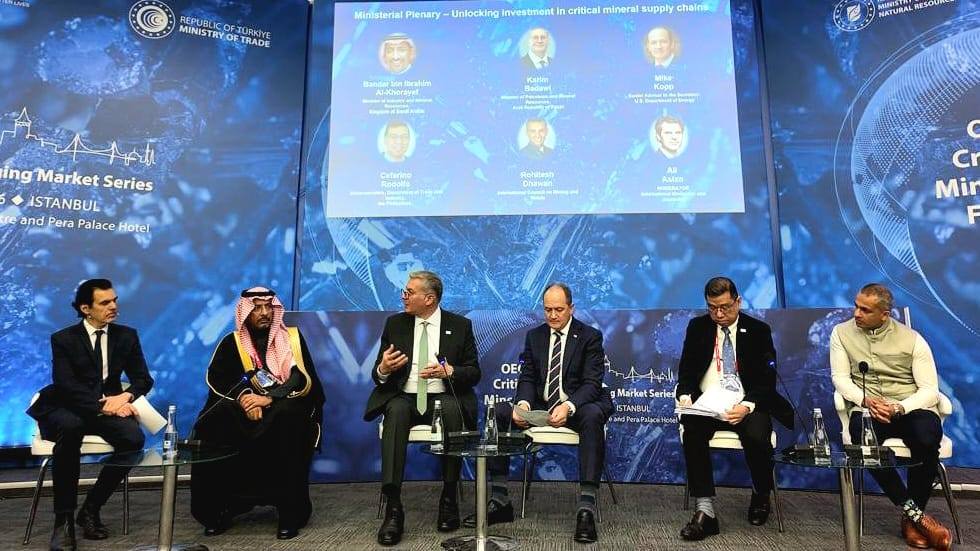
Egypt's Minister of Petroleum and Mineral Resources, Karim Badawy, announced the commencement of a comprehensive airborne geophysical survey for minerals in June 2024, marking the first initiative of its kind since 1984. This project aims to enhance the mining sector's contribution to the economy.
During the opening of the Critical Minerals Forum organized by the OECD in Istanbul, Badawy presented Egypt's ambitious vision to maximize the benefits from the mining sector's potential. He emphasized that the government prioritizes this sector, recognizing its significant opportunities and economic value.
Details of the Initiative
The minister clarified that Egypt aims to increase the mining sector's contribution to the GDP from less than 1% currently to approximately 6% by fully unlocking the sector's potential, developing operational mechanisms, and improving the investment climate. He noted that providing accurate geological data is a fundamental pillar for assessing mineral resources and presenting more attractive investment opportunities.
Badawy also confirmed that Egypt possesses strong attributes for developing its mining sector, including a geological nature rich in minerals, promising extensions of mineral formations with neighboring countries, and a unique infrastructure capable of transforming mining potential into real economic value.
Background & Context
The mining sector is considered one of the vital sectors that Egypt seeks to enhance amid global economic challenges. In recent years, the Egyptian government has shown increasing interest in developing this sector, implementing new strategies to attract investments and improve the working environment.
These strategies include updating legislative and contractual frameworks and transitioning to models compliant with global best practices. The government also aims to provide suitable incentives for investors, whether from large or medium-sized companies.
Impact & Consequences
The airborne geophysical survey project is expected to attract more foreign and local investments into the mining sector, thereby enhancing Egypt's ability to achieve its economic goals. It will also expedite investor decisions and boost job opportunities in this sector.
Moreover, the availability of various energy sources and the expansion of renewable energy are crucial factors supporting mining and industrial development, reflecting the government's overall direction towards enhancing environmental sustainability.
Regional Significance
The development of the mining sector in Egypt serves as a model for other Arab countries seeking to strengthen their economies through the exploitation of natural resources. These efforts could enhance regional cooperation in the mining field and facilitate the exchange of expertise.
In conclusion, the airborne geophysical survey project for minerals represents a strategic step towards achieving sustainable development in Egypt and reflects the government's commitment to enhancing the mining sector as a key driver of economic growth.