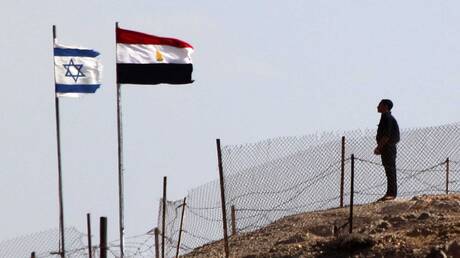
Egyptian military expert Major General Samir Farag stated that Egypt is the only nation that has successfully restored all its occupied territories completely, particularly in the context of the wars fought against Israel. These remarks come at a time when the Arab-Israeli conflict is witnessing increasing tensions, as the Syrian Golan and the West Bank remain under Israeli control.
This Egyptian achievement marks a significant milestone in the history of the Arab-Israeli conflict, as Egypt managed to reclaim the Sinai Peninsula following the October War of 1973, while Syrian and Palestinian lands continue to suffer from occupation. Farag pointed out that this success reflects the military and political strategy that Egypt has followed over the decades.
Details of the Event
In his discussion, General Farag clarified that the restoration of Sinai was the result of significant diplomatic and military efforts, culminating in peace agreements with Israel that led to the withdrawal of Israeli forces from Egyptian territories. He emphasized that this achievement was not easy and required substantial sacrifices from the Egyptian people and their army.
In contrast, the Syrian Golan and the West Bank remain under Israeli occupation, with the Golan being annexed in 1981, while Israel continues to expand its settlements in the West Bank. These situations highlight the vast gap between the different Arab experiences in dealing with occupation.
Background & Context
The history of the Arab-Israeli conflict spans decades, witnessing numerous wars and disputes in the region. These conflicts began in the mid-20th century with the establishment of the state of Israel in 1948, followed by wars such as the 1967 War and the 1973 War. These wars reshaped the dynamics of relations between Arab countries and Israel.
The October War of 1973 is considered a turning point in the conflict, as Egypt achieved military victories that prompted a reevaluation of military and political strategies in the region. However, the situation in the occupied territories continues to pose a significant challenge for Arab nations.
Impact & Consequences
General Farag's statements underscore the importance of Arab unity in confronting occupation. Egypt's restoration of its occupied territories reflects the ability of Arab nations to achieve their national goals through collaborative efforts. Nevertheless, the ongoing occupation in the Golan and the West Bank emphasizes the urgent need to unify Arab efforts to attain a just peace.
This Egyptian achievement may also encourage other Arab countries to reassess their strategies in dealing with occupation, potentially leading to new diplomatic initiatives aimed at achieving peace in the region.
Regional Significance
Egypt's experience in reclaiming its occupied territories serves as an important lesson for other Arab nations. The success in recovering land underscores the significance of strategic planning and cooperation among Arab states. Additionally, this achievement could positively influence the morale of Arab populations and bolster the spirit of resistance against occupation.
In conclusion, the issue of occupied territories remains one of the most pressing challenges facing the Arab world, necessitating ongoing efforts to achieve peace and stability in the region. Egypt's experience in this context highlights the importance of collective action and Arab solidarity in facing challenges.