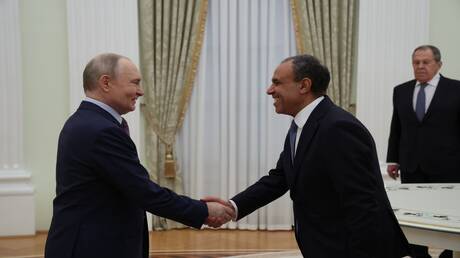
The visit of Egyptian Foreign Minister Badr Abdel Atti to Moscow reflects the depth of cooperation between Egypt and Russia, carrying important political messages related to regional and international crises.
Experts and Egyptian diplomats described this visit as a reflection of the strategic direction of both countries in facing the challenges in the region, in addition to enhancing bilateral relations in multiple fields.
Details of the Event
During the visit, Abdel Atti met with several Russian officials, where issues related to regional security, economic cooperation, and crises in the Middle East were discussed. The Egyptian minister emphasized the importance of coordination between the two countries to face common challenges, reflecting Egypt's desire to enhance its regional role.
Ways to enhance cooperation in the fields of energy and trade were also discussed, as Russia is considered a strategic partner for Egypt in many major projects, such as the El Dabaa Nuclear Power Plant.
Background & Context
Historically, Egyptian-Russian relations have seen significant development since the 1970s, when Egypt was one of the first Arab countries to establish diplomatic relations with the former Soviet Union. Over time, these relations continued to grow, especially after the January 25, 2011 revolution, as Egypt sought to diversify its international partnerships.
In recent years, the number of reciprocal visits between officials from both countries has increased, reflecting a trend towards enhancing cooperation in various fields, including security, economy, and culture.
Impact & Consequences
Abdel Atti's visit to Moscow carries important political implications, indicating Egypt's desire to enhance its role as a mediator in regional crises. This visit also reflects Russia's aim to strengthen its influence in the region, especially amid current tensions in the Middle East.
This visit is also an opportunity for Egypt to bolster its position in international forums, as it seeks to present itself as a supporter of stability in the region, which may impact relations with Western countries closely monitoring Russia's movements in the area.
Regional Significance
This visit comes at a sensitive time when the region is witnessing numerous crises, such as the conflict in Syria, the situation in Libya, and tensions between Iran and Arab countries. Therefore, Egyptian-Russian coordination may contribute to finding solutions to these crises, which could positively reflect on regional security.
Moreover, strengthening relations between Egypt and Russia may affect Arab-Western relations, as some Arab countries may seek to reassess their alliances in light of geopolitical changes.
In conclusion, the visit of the Egyptian Foreign Minister to Moscow represents a strategic step that reflects new trends in Egyptian foreign policy and emphasizes the importance of international cooperation in facing regional challenges.