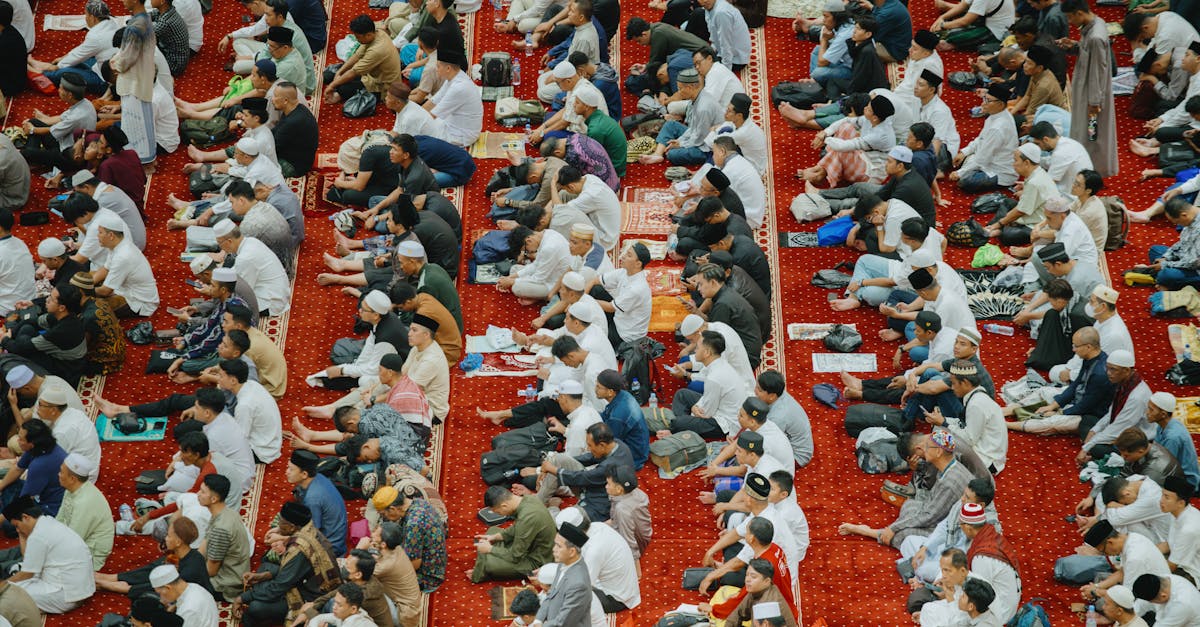
Muslims in the UAE celebrate Eid al-Adha, which is considered one of the most important religious occasions in the Islamic world. This festival takes place on the 10th day of Dhu al-Hijjah and lasts for four days, expressing sacrifice and altruism through special rituals that include animal sacrifice and charity.
The act of sacrifice is one of the most prominent rituals of Eid al-Adha, where capable Muslims are required to slaughter animals such as sheep or cows as a means of drawing closer to God. It is emphasized that the chosen animal must be healthy and free of defects. After the slaughter, the meat is distributed among family and the poor, reflecting the spirit of cooperation and sharing within the community.
Event Details
Eid al-Adha ceremonies take place throughout the UAE, where people gather to perform the Eid prayer in mosques and public squares. This prayer is held early in the morning, allowing Muslims to express their gratitude to God for His blessings. After the prayer, people exchange greetings and congratulations, which strengthens social bonds among individuals.
Zakat, or almsgiving, is also an integral part of Eid al-Adha, as Muslims are encouraged to give their zakat before performing the Eid prayer. This money is used to assist the poor and needy, enhancing the values of giving and sharing within the community. This act is considered a righteous deed that brings the servant closer to God.
Background & Context
Eid al-Adha is celebrated across the Islamic world and commemorates the story of the Prophet Ibrahim (Abraham), who was commanded to sacrifice his son Ismail (Ishmael). This story illustrates the values of obedience and faith and symbolizes sacrifice for the sake of God. In the UAE, these values are reinforced through local traditions that highlight the importance of family and community.
Historically, the act of sacrifice has been seen as a means to strengthen social ties among individuals, as everyone participates in these rituals. Over time, traditions have evolved to include cultural and social activities that enhance the festive spirit.
Impact & Consequences
The acts of sacrifice and zakat are factors that enhance social cohesion in the UAE. By distributing meat to the poor and needy, the community can promote values of cooperation and sharing. These rituals also contribute to strengthening family ties, as individuals come together to celebrate the holiday.
Furthermore, these traditions serve as an opportunity to reinforce cultural and religious identity in the UAE, as people demonstrate their commitment to their values and principles. This contributes to enhancing social and economic stability in the country.
Regional Significance
Eid al-Adha is an important occasion in all Arab countries, where these rituals strengthen the bonds between communities. Celebrations in the UAE illustrate how traditions can enhance social cohesion, serving as a model for other nations.
This occasion is an opportunity to promote cooperation among Arab countries, allowing for the exchange of traditions and cultural experiences. Eid al-Adha demonstrates how religious values can strengthen human connections between peoples.