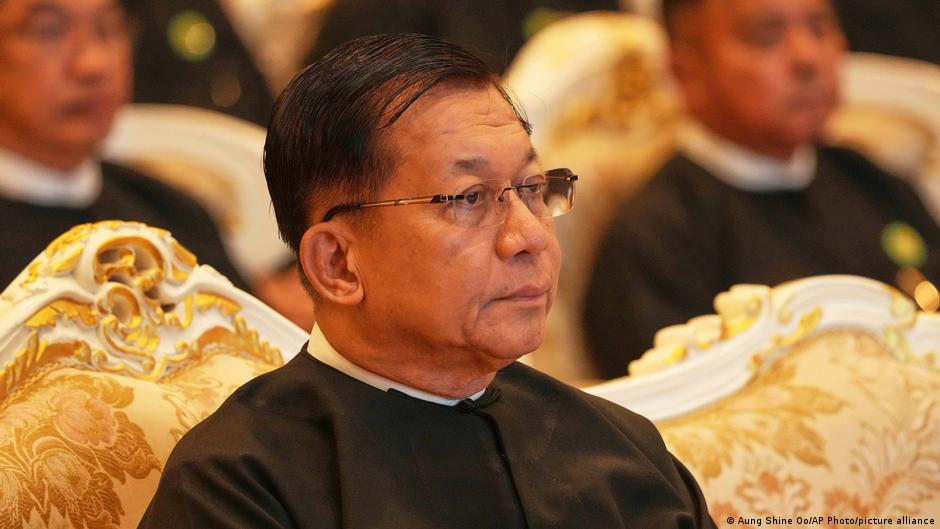
Myanmar's parliament elected General Min Aung Hlaing, the leader of the military coup, as the country's president on Friday after a parliamentary vote. This move follows elections held in December and January, which faced widespread criticism from the United Nations and Western governments, as these elections were deemed a mere charade aimed at legitimizing the continuation of military rule.
General Hlaing, who resigned from his position as army chief days before the vote, secured the required majority in parliament. His party, the Union Solidarity and Development Party, backed by the military, won over 80% of the seats in parliament.
Event Details
Min Aung Hlaing, aged 69, has been the de facto leader of Myanmar since the military coup in 2021, which overthrew the elected government led by Aung San Suu Kyi, who was later sentenced to 27 years in prison in trials heavily criticized by human rights organizations. Hlaing handed over the command of the armed forces to Yee Win Oo, a close ally, reflecting the continued military control over the country.
Since the coup, Myanmar has experienced ongoing internal conflict, with nearly 93,000 people killed and over 3.6 million displaced. Analysts have noted that this transition represents a technical shift from military rule to formal presidential governance, rather than a genuine change in power.
Context and Background
Historically, Myanmar has endured long periods of military rule, witnessing several coups since its independence from British colonial rule in 1948. In 2015, democratic elections were held, resulting in a victory for the National League for Democracy led by Aung San Suu Kyi, but this success was short-lived following the military coup in 2021.
General Min Aung Hlaing, belonging to the Dawei ethnic group, is part of the broader Burmese majority but holds a distinct cultural identity. He began his military career after studying law, rising through the military ranks during operations against ethnic insurgents, which helped bolster his political power.
Implications and Effects
This move poses a challenge to the international community, as many countries and human rights organizations have condemned the actions of the military government, especially following the military campaign against the Rohingya minority in 2017, which led to the displacement of around 750,000 people to Bangladesh. The continuation of military rule in Myanmar raises concerns about worsening humanitarian and human rights conditions in the country.
Tensions in Myanmar are escalating, threatening the stability of the entire region. Observers have warned that the ongoing conflict could lead to an outbreak of violence and an increase in displaced populations, potentially impacting neighboring countries.
Impact on the Arab Region
Despite Myanmar's geographical distance from the Arab region, events there remind us of the importance of democracy and human rights, issues that concern many Arab nations. The persistence of conflicts in distant areas could affect regional security, as humanitarian crises may contribute to increased refugee flows into neighboring countries.
In conclusion, the situation in Myanmar remains under international scrutiny, as the world watches how events unfold under General Min Aung Hlaing's rule and whether there are prospects for peace and stability in the near future.