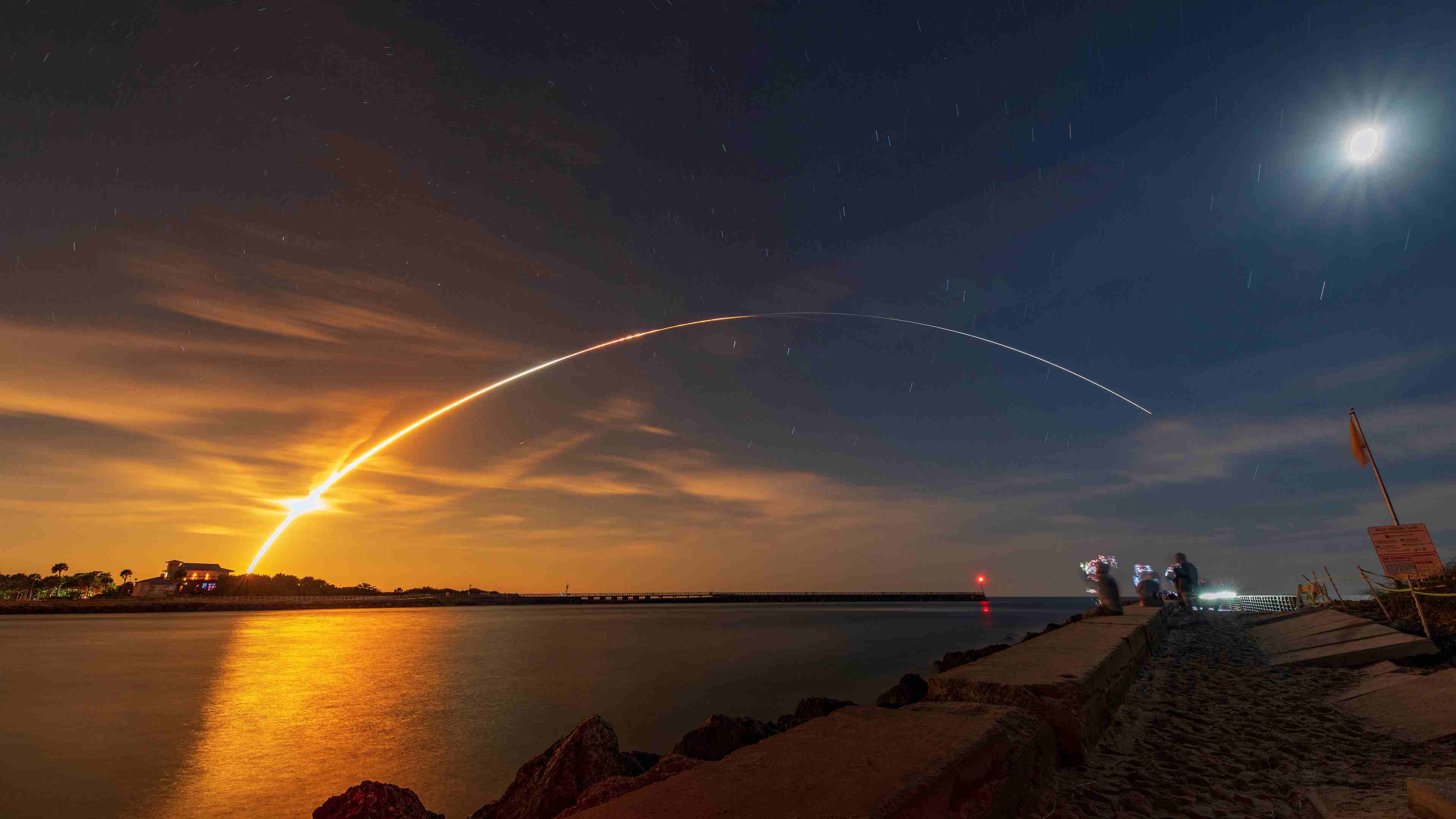
The Artemis 2 mission is preparing for a historic flyby around the Moon, where four astronauts will become the first humans to travel over 406,000 kilometers from Earth. This journey is part of the Artemis program, which aims to return humans to the Moon and explore outer space more profoundly.
The four astronauts, representing a diverse range of backgrounds, will conduct their flyby in an advanced spacecraft, surpassing the record set by the Apollo 13 mission. This mission is not merely a step towards the Moon; it also represents a significant achievement in the field of space exploration.
Event Details
The mission will commence late Monday evening, with the spacecraft launching from Kennedy Space Center in Florida. During this journey, the astronauts will conduct a series of scientific experiments aimed at gaining a better understanding of the lunar environment and its effects on humans.
The mission also includes testing new technologies that will be utilized in future trips to the Moon and Mars. These experiments will aid in developing new strategies to ensure the safety of astronauts during long-duration missions.
Background & Context
The history of space exploration is filled with challenges and achievements. The Apollo 13 mission, which took place in 1970, is one of the most famous missions, where the astronauts faced difficult conditions after an oxygen tank exploded. However, they managed to return safely to Earth, making them a symbol of human will.
The Artemis program, launched by NASA, aims to return humans to the Moon by 2024, focusing on exploring the Moon's polar regions, where it is believed that there are water resources that could be utilized in the future.
Impact & Consequences
The Artemis 2 mission is a crucial step towards achieving larger goals in space exploration. Success in this mission could open doors for future missions to Mars, enhancing humanity's ability to explore other planets.
This mission also reflects international cooperation in the field of space, as multiple countries are involved in developing the necessary technologies to support these journeys. This collaboration could lead to improved relations between nations and foster innovation in various fields.
Regional Significance
The Artemis 2 mission presents an opportunity for Arab countries to enhance their participation in the field of space. Many Arab nations have begun developing their own space programs, such as the United Arab Emirates, which launched the Hope Probe to Mars.
This mission could inspire new generations in the Arab world to engage in science and technology fields, contributing to skill development and fostering innovation in the region.
In conclusion, the Artemis 2 mission is not just a journey to the Moon; it marks the beginning of a new chapter in the history of space exploration, as humanity seeks to push beyond its limits and explore the unknown.