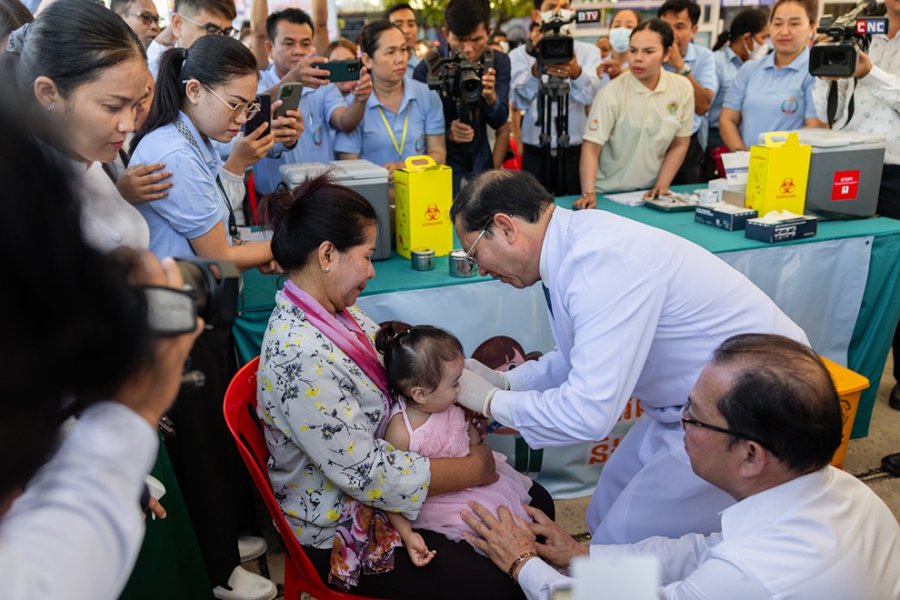
Bangladesh has announced the launch of an emergency vaccination campaign to combat the measles outbreak, which is suspected to have caused the deaths of over 100 individuals, most of whom are children, since mid-March. The campaign began on Sunday and comes at a time when more than 7,500 suspected cases have been recorded, according to data from the Ministry of Health.
More than 900 cases of measles have been confirmed, showing a sharp increase compared to the year 2025, when only 125 cases were reported throughout the year. Although Bangladesh had started vaccinating children against this highly contagious disease, the recent outbreak has revealed gaps in the vaccination program, raising concerns among officials.
Details of the Outbreak
Rana Flowers, UNICEF representative in Bangladesh, stated that "vaccines are the foundation for children's survival," noting that the current measles outbreak poses a severe risk to thousands of children, especially the most vulnerable. In Bangladesh, which has a population of approximately 170 million, children are vaccinated against measles starting at nine months of age.
However, Shahriar Sajjad, Deputy Director of the Ministry of Health, reported that about one-third of those affected in the recent outbreak were under nine months old, which is concerning. Children who have not yet been vaccinated are the most susceptible to serious complications.
Background & Context
Bangladesh conducts special vaccination campaigns against measles every four years, but these campaigns have not proceeded as planned. No special vaccination campaigns have been held since 2020, due to the COVID-19 pandemic and then due to the "political situation" in the country. Bangladesh experienced political turmoil in 2024, when massive protests against the government led to the ousting of leader Sheikh Hasina.
A caretaker government took power after Hasina's ousting, and elections were not held until February of this year. A measles vaccination campaign was scheduled for April, but it did not take place, exacerbating the outbreak.
Impact & Consequences
Reports indicate that issues in vaccine procurement have led to a shortage of vaccines, including the measles vaccine. Many in Bangladesh have blamed the previous caretaker government, which oversaw a new vaccine procurement system. However, UNICEF confirmed that the resurgence of measles is often the result of accumulated gaps in vaccination programs rather than a single factor.
Historically, Bangladesh has enjoyed a high vaccination coverage rate, but even small interruptions can lead to the accumulation of immunity gaps over time. In collaboration with international partners such as UNICEF and the World Health Organization, Bangladesh has launched an emergency vaccination campaign against measles and rubella, which share similar symptoms.
Regional Significance
The events in Bangladesh serve as a reminder of the importance of vaccination programs worldwide, including in Arab countries. With rising measles cases in some nations, Arab governments must strengthen vaccination programs and ensure there are no immunity gaps among children.
In conclusion, the measles outbreak in Bangladesh highlights the urgent need to enhance vaccination programs and ensure a continuous supply of vaccines to safeguard children and protect them from infectious diseases.