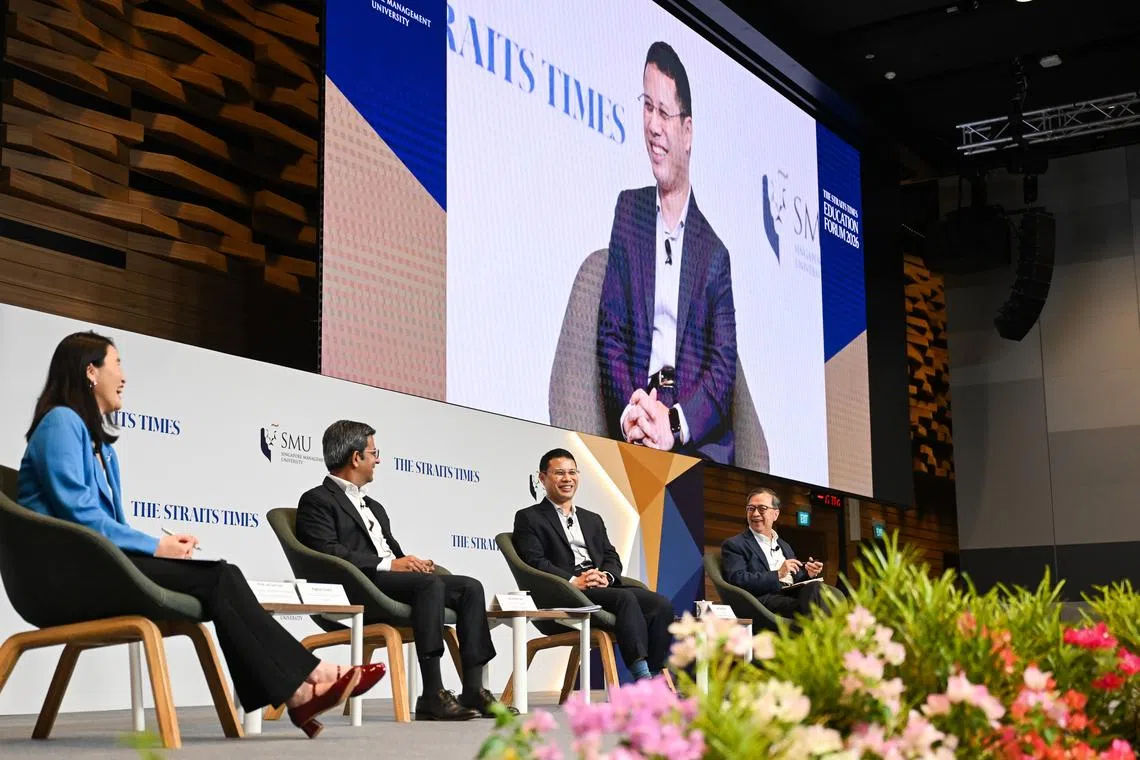
Participants at the education forum in Singapore emphasized that education must go beyond mere knowledge transfer, especially with the growing influence of artificial intelligence in daily life. They highlighted the importance of enhancing students' critical thinking skills, enabling them to better understand problems and find effective solutions.
During the forum, it was stressed that artificial intelligence has become an integral part of our daily lives, necessitating a rethinking of how education is delivered. Experts pointed out that traditional education, which focuses on memorization and rote learning, is no longer sufficient in the age of advanced technology.
Event Details
The education forum in Singapore featured a number of academics and experts in the field of education, addressing various issues related to the impact of technology on education. Discussions revolved around how to adapt curricula to meet students' needs in the age of artificial intelligence.
Moreover, the importance of developing critical thinking and problem-solving skills was highlighted, as these are essential for tackling the complex challenges posed by artificial intelligence. Participants noted that education should focus on nurturing these skills rather than merely transferring information.
Background & Context
In recent years, the world has witnessed significant advancements in artificial intelligence, impacting various sectors, including education. Studies have shown that students with critical thinking skills are better equipped to adapt to rapid changes in the job market.
Historically, education has relied heavily on the transfer of information from teacher to student, but with the emergence of technology, it has become essential to reconsider this model. Research has indicated that students need a learning environment that encourages exploration and critical thinking.
Impact & Consequences
Enhancing critical thinking and problem-solving skills in education can lead to improved student outcomes and increased adaptability to rapid changes in the job market. This will also help prepare a new generation of leaders and innovators capable of facing future challenges.
Additionally, education that focuses on critical thinking can contribute to enhancing students' social and political awareness, making them more informed citizens capable of engaging in their communities.
Regional Significance
In the Arab region, education faces significant challenges related to quality and relevance to labor market needs. Enhancing critical thinking and problem-solving skills can contribute to improving the quality of education in Arab countries, helping to prepare a generation capable of addressing economic and social challenges.
Furthermore, applying these principles in education can foster innovation and sustainable development in the region, assisting Arab countries in achieving their developmental goals.