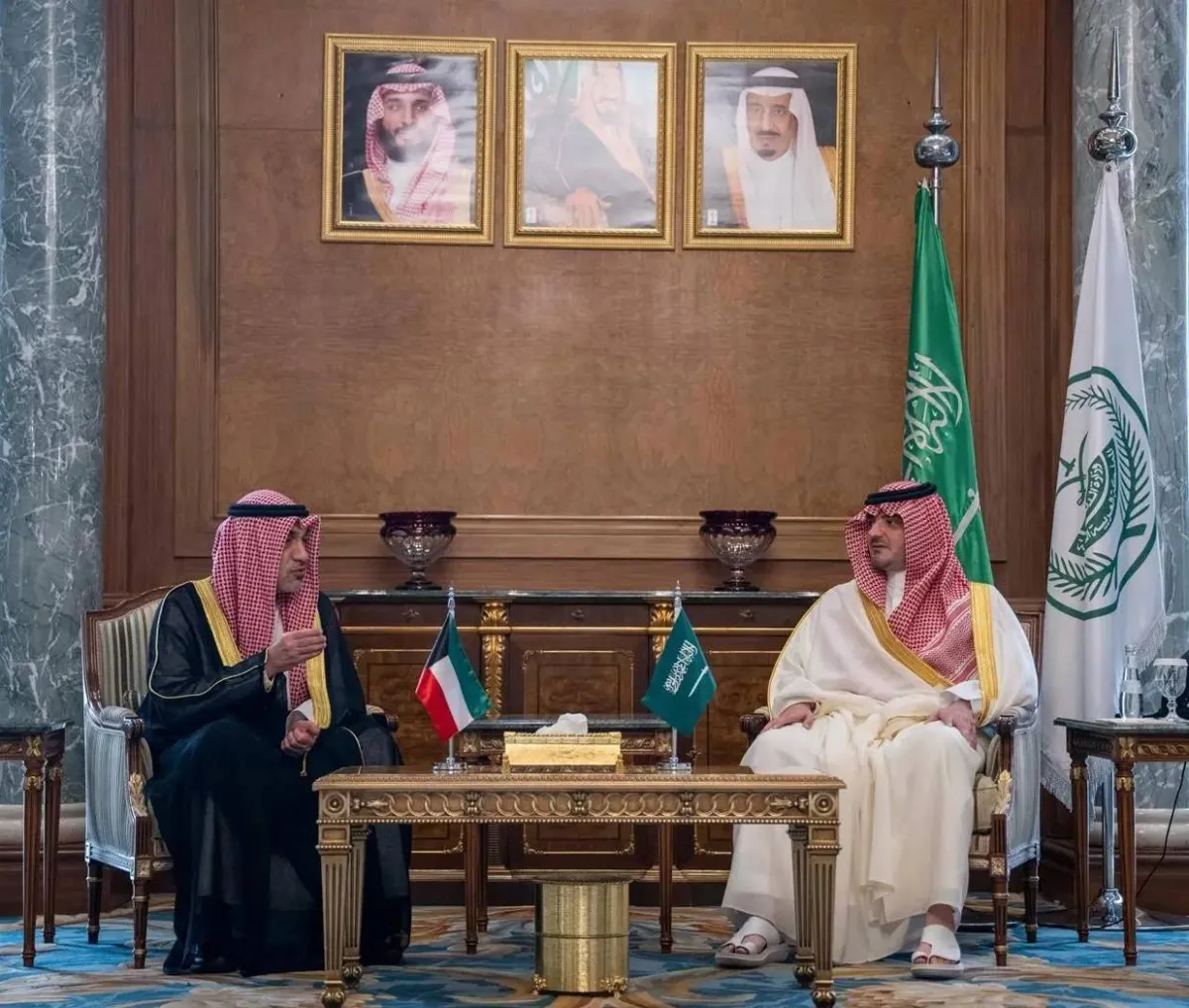
Saudi Interior Minister Prince Abdulaziz bin Saud discussed the existing security coordination between Saudi Arabia and Kuwait with Sheikh Fahad Al-Yusuf, the First Deputy Prime Minister and Minister of Interior of Kuwait. This meeting took place at the Saudi Ministry of Interior in Mecca, where various issues of mutual interest were addressed.
Sheikh Fahad Al-Yusuf praised the continuous efforts made by Saudi Arabia in organizing the Hajj season, highlighting the integrated services and modern facilities provided to the guests of Allah, which contribute to enabling them to perform their rituals with ease and tranquility.
Details of the Meeting
The meeting was attended by several prominent officials from the Saudi side, including Prince Dr. Abdulaziz bin Mohammed bin Ayaf, the Acting Deputy Minister of Interior, Dr. Hisham Al-Falih, Assistant Minister, and Major General Khalid Al-Arawan, Director General of the Minister's Office for Studies and Research. Several security issues of concern to both countries were also discussed, reflecting the depth of bilateral relations.
In a related context, Prince Faisal bin Farhan, the Saudi Foreign Minister, arrived in the Cypriot city of Limassol to participate in the informal meeting of the European Foreign Affairs Council, where he will hold bilateral meetings to enhance bilateral relations and exchange views on regional and international challenges.
Context and Background
These meetings come at a time when the region is facing multiple security challenges, necessitating enhanced cooperation among Arab countries. The relations between Saudi Arabia and Kuwait are historic, with both sides always striving to enhance security and stability in the region.
The Hajj season also represents an opportunity to strengthen security coordination, as millions of pilgrims from around the world converge, requiring intensified efforts to ensure their safety and security.
Implications and Effects
These meetings reflect the leadership's commitment to enhancing security cooperation, contributing to achieving stability in the region. The security coordination between the two countries may also help address common challenges such as terrorism and organized crime.
These steps serve as a strong message about the importance of Arab cooperation in confronting security challenges, enhancing the ability of countries to effectively deal with crises.
Impact on the Arab Region
These meetings highlight the significance of security coordination among Arab countries in the current circumstances. The cooperation between Saudi Arabia and Kuwait can serve as a model for other Arab nations, contributing to enhancing security and stability in the region.
In conclusion, Saudi-Kuwaiti relations remain a model for Arab cooperation, as both countries continually strive to enhance security and stability in the region, benefiting their peoples.