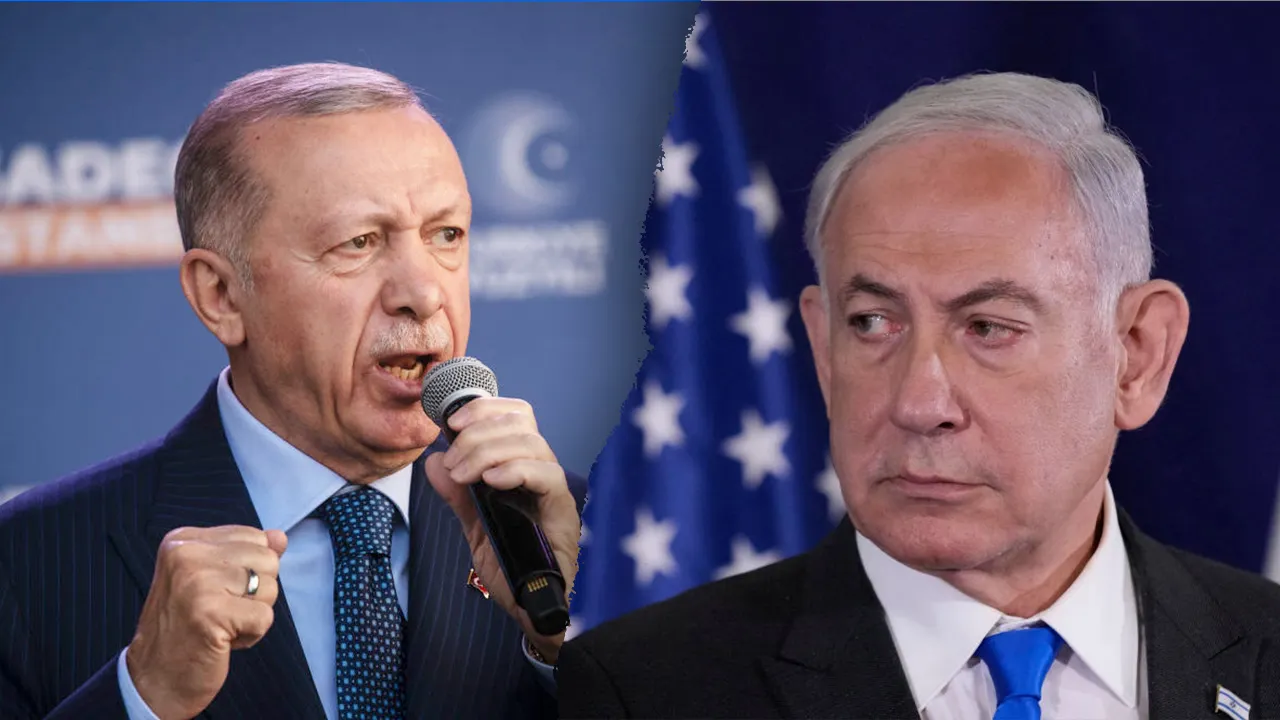
Turkish President Recep Tayyip Erdogan asserted that the continuation of the war with Iran contributes to strengthening Israeli Prime Minister Benjamin Netanyahu's hold on power. This statement was made during a press conference held by Erdogan, where he explained that regional conflicts play a pivotal role in shaping the domestic policies of nations.
Erdogan noted that the ongoing war in the region allows Netanyahu to divert attention away from internal issues, thus aiding him in maintaining his political authority. He considered this dynamic as a reflection of how regional conflicts can influence local politics.
Details of the Event
Erdogan's remarks come at a time when the Middle East is witnessing escalating tensions, particularly between Iran and Israel. Military clashes and political tensions are on the rise, creating a complex environment for leaders in the region. Erdogan seems to be aiming to highlight the impact of regional conflicts on political stability in Israel through these statements.
He also pointed out that these circumstances could lead to changes in political alliances in the region, as leaders seek to exploit crises to bolster their positions. Thus, the war with Iran is not merely a military conflict but also a battleground for determining the fates of political leaders.
Background & Context
Historically, the relationship between Iran and Israel has been marked by increasing tensions, with Iran considering Israel a primary adversary in the region. These tensions have led to recurring military conflicts, affecting regional stability. In recent years, these tensions have intensified with the rise of Iranian military activities in the area, prompting Israel to take preemptive military actions.
The political situation in Israel is also complex, as Netanyahu faces significant internal challenges, including corruption issues and public protests. Consequently, the ongoing war with Iran may provide him with an opportunity to unite internal factions around a national cause, thereby strengthening his political position.
Impact & Consequences
Erdogan's statements carry profound implications regarding how regional conflicts influence local politics. The continuation of the war with Iran could enhance Netanyahu's position, but at the same time, it may escalate tensions in the region, creating an unstable environment.
These dynamics could also affect relationships between regional countries, as some nations may seek to exploit the situation to their advantage. Thus, regional conflicts are not just military issues; they are also complex political matters that require precise strategies from leaders.
Regional Significance
Erdogan's remarks are significant for the Arab region, as they reflect how regional conflicts can impact political stability in neighboring countries. The ongoing war with Iran could lead to heightened tensions in the area, affecting the national security of Arab nations.
Moreover, these circumstances may prompt changes in political alliances in the region, as Arab countries may seek to reevaluate their strategies based on developments in Iranian-Israeli relations. Therefore, the situation in the Middle East requires careful monitoring and in-depth analysis to understand its ramifications.
In conclusion, Erdogan's statements shed light on the political dimensions of regional conflicts, emphasizing the importance of understanding how these dynamics affect political stability in the region.