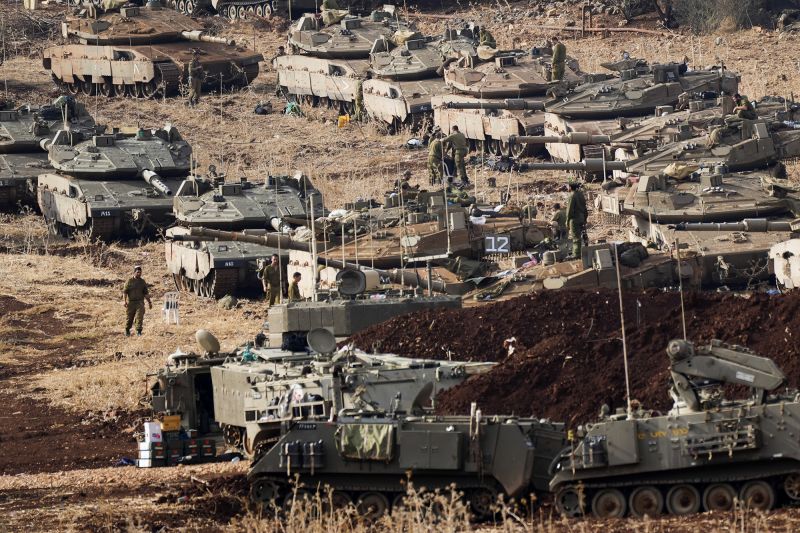
An article in +972 Magazine reveals the erosion of Israel's permanent security doctrine, highlighting that ongoing wars, particularly with Iran and Lebanon, may lead to a legitimacy and moral crisis within Israeli society.
Authors Amir Fakhouri and Miron Rabaport examine how Israel's pursuit of "total victory" has plunged the country into a cycle of open wars, reflecting a shift in Israeli combat doctrine. The article notes that recent military operations bear names that reflect a more direct approach to total destruction, such as the recent operation in Lebanon named "Eternal Darkness."
Details of the Current Situation
The authors assert that the permanent security doctrine is no longer limited to eliminating current threats but aims to prevent future threats through widespread destruction of civilian life and displacement of populations. This has manifested in military operations that have resulted in hundreds of deaths and thousands of injuries in Lebanon, where the objective has shifted from merely military to approaching genocide.
Despite the current ceasefire, Israel continues to destroy villages and infrastructure in southern Lebanon with the aim of establishing a permanent buffer zone. Israeli Defense Minister Israel Katz has stated that hundreds of thousands of Lebanese will not be allowed to return to their homes, reflecting Israel's adoption of the permanent security doctrine.
Background & Context
The roots of the permanent security doctrine trace back decades of Israeli-Palestinian conflict, where Israel previously adopted a policy of "conflict management" based on blockades and periodic bombings. Following the escalation of events after October 7, 2023, this policy has shifted towards widespread destruction of cities and infrastructure.
In this context, the authors discuss the slogan "total victory" adopted by Prime Minister Benjamin Netanyahu, which has transformed into a policy based on excessive military force. This shift has led to the collapse of the concept of "conflict management," leaving Israel in a state of strategic void.
Impact & Consequences
The results of the recent war show that Israel has not achieved a "permanent security system" as was intended; instead, it has revealed a fundamental contradiction, where every threat addressed generates a new threat. This makes security itself an unattainable state.
Moreover, public support for Israel in the United States has declined, especially within the Democratic Party, reflecting a political shift that may limit Israel's ability to continue this military approach without increasing political costs.
Regional Significance
These developments serve as a warning to Arab states, highlighting the need for new strategies to address security challenges. The increase in violence and displacement may further complicate humanitarian conditions in the region.
In conclusion, this situation may open the door to a new approach based on settlement and recognition of borders, but this requires international pressure and a change in Israeli political consciousness.