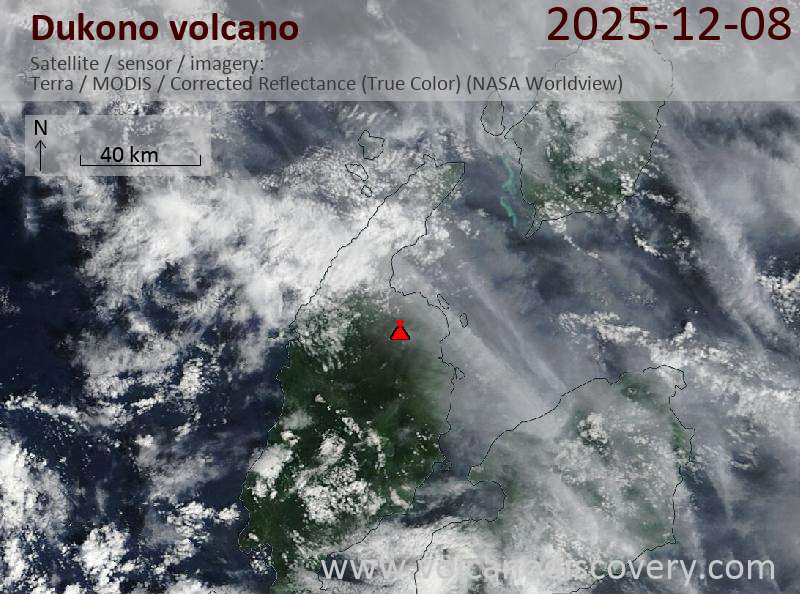
Mount Dukono on Indonesia's Halmahera Island experienced a new eruption on Thursday morning, releasing volcanic ash that reached a height of 1100 meters above the volcano's summit. The regional volcano monitoring center reported that the eruption occurred at 08:05 local time, with thick gray ash columns observed drifting towards the east.
According to reports, this eruption was recorded on a seismograph, with vibration amplitudes reaching 34 mm and lasting for 35.82 seconds. Although volcanic activity has begun to decline, the number of explosions remains high, with 61 explosions recorded the day prior.
Details of the Eruption
Mount Dukono, which stands at 1087 meters above sea level, remains on a level two alert, indicating that volcanic activity is ongoing but under control. Local authorities have urged residents and visitors to avoid the area of Kawah Malupang Warirang within a 4-kilometer radius of the volcano due to the possibility of further eruptions.
It has also been emphasized that local residents should wear masks to avoid health risks associated with inhaling volcanic ash, which can negatively impact respiratory health.
Background & Context
Mount Dukono is considered one of the most active volcanoes in Indonesia, having experienced numerous eruptions over the years. Historically, this volcano has played a significant role in shaping the surrounding environment and is part of the Pacific Ring of Fire, an area known for its seismic and volcanic activity.
The last eruptions of the volcano date back to earlier periods, with the area having witnessed several instances of volcanic activity, making it a site of particular interest for geologists and researchers. Monitoring volcanic activity at Dukono is a priority for Indonesian authorities to ensure the safety of local residents.
Impact & Consequences
Volcanic eruptions raise significant concerns not only locally but also internationally, as they can affect air travel and tourism in the region. Volcanic ash can lead to airport closures and disrupt flights, resulting in substantial economic losses.
Moreover, the climatic and environmental changes resulting from volcanic activity may impact agriculture and water resources in surrounding areas, necessitating a swift response from local authorities to mitigate potential damages.
Regional Significance
Although Indonesia is far from the Arab world, natural events such as volcanic eruptions can influence global markets, including prices of essential commodities like food and energy. Environmental impacts may also increase awareness of the importance of preparedness for natural disasters worldwide.
In conclusion, the eruption of Mount Dukono serves as a reminder of the importance of continuous monitoring of volcanic activity and the need for necessary precautions to protect local populations. International cooperation in geological research and studies can contribute to improving responses to natural disasters.