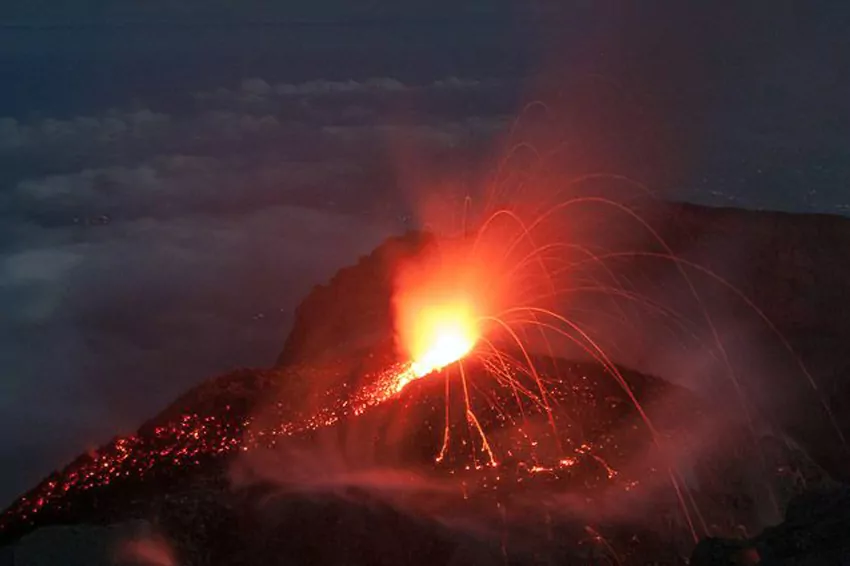
Mount Semeru in the Lumajang region of Indonesia has erupted again, releasing an ash column that reached a height of approximately 2000 meters, raising concerns among local residents. This latest eruption is part of a series of volcanic activities that have occurred in the region in recent years, keeping the population in a constant state of alert.
The eruption caused plumes of gas and volcanic ash to be emitted, with the clouds extending up to 4.5 kilometers, leading to the closure of some roads and warnings issued to nearby residents. Local authorities have evacuated some families from the most at-risk areas, and emergency plans have been put in place to address any developments that may occur.
Details of the Eruption
Reports indicate that the eruption began in the early morning hours, with local authorities having detected increased volcanic activity prior to the eruption. Images and videos circulated on social media captured stunning scenes of volcanic ash rising into the sky, attracting the attention of global media.
Mount Semeru is considered one of the most active volcanoes in Indonesia, having experienced several eruptions in recent years. Indonesian authorities are closely monitoring the situation, with rescue and rapid response teams being reinforced to handle any emergencies that may arise due to the eruption.
Background & Context
Indonesia is located on what is known as the "Ring of Fire," an area characterized by high seismic and volcanic activity. Historically, the country has faced numerous natural disasters due to volcanic activity, resulting in loss of life and property damage. Mount Semeru, which is the highest peak on the island of Java, has seen previous eruptions, including one in 2021 that resulted in multiple fatalities.
These volcanic eruptions are part of a natural cycle but require constant preparedness from both authorities and residents. In recent years, early warning systems have been improved, helping to mitigate the damage caused by such disasters.
Impact & Consequences
The impact of the volcanic eruption extends beyond the local area, as ash clouds can affect air travel and cause disruptions in services. There are also concerns about health effects on the population due to inhalation of harmful gases.
While authorities are working to manage the situation, concerns remain about how these events will affect the local economy, especially given that many communities rely on agriculture and tourism. Any disruption in these activities could have severe consequences for livelihoods.
Regional Significance
While volcanic events in Indonesia may seem distant from the Arab region, their effects can reach across the globe. Climate changes and volcanic activity can influence weather patterns, potentially leading to indirect effects on agriculture and food security in Arab countries.
Moreover, the response to natural disasters and international cooperation in crisis management can positively impact relations between Arab countries and others like Indonesia, enhancing collaboration in scientific research and technology.