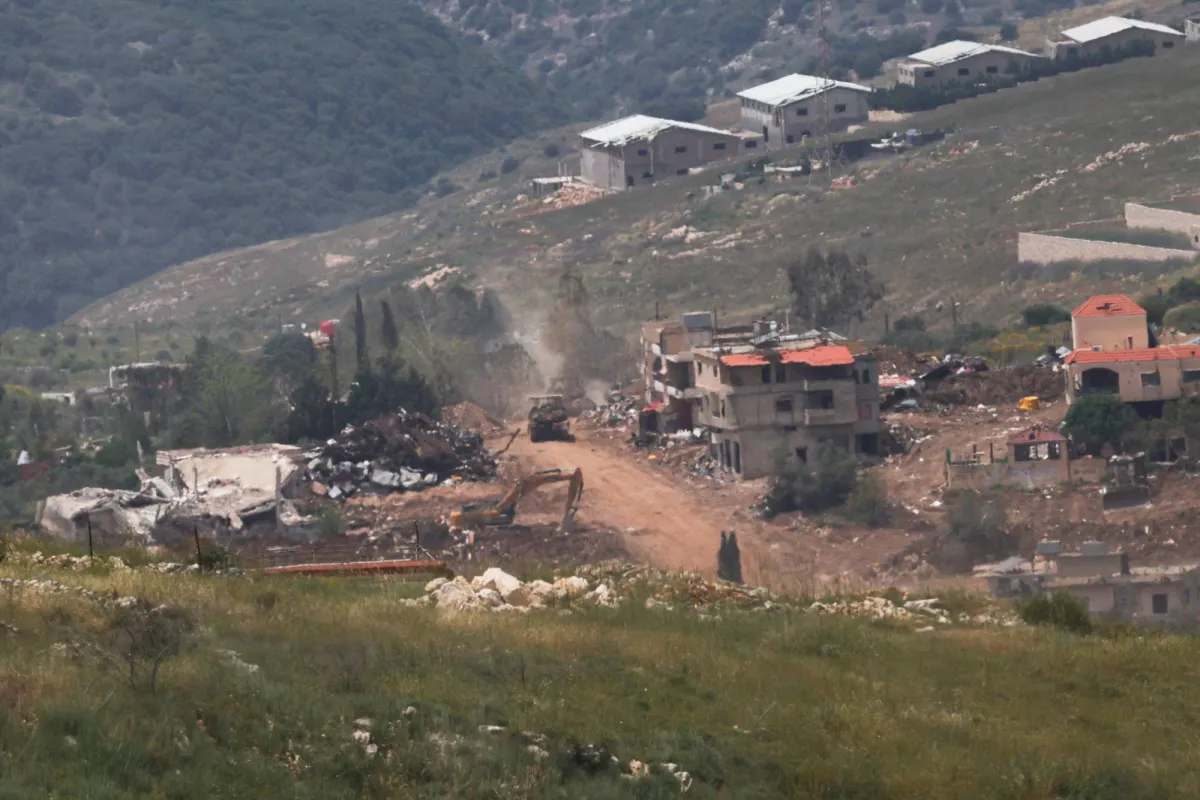
Clashes between Israel and Hezbollah have accelerated, with Israeli airstrikes moving from southern border villages to deep within the Bekaa Valley. This escalation occurs at a sensitive time, coinciding with the upcoming first session of direct negotiations between Lebanese and Israeli representatives in Washington, D.C.
The Israeli army issued evacuation warnings covering eight villages and towns in the south and Bekaa Valley, some of which are located about 40 kilometers from the border. These warnings included towns such as Labaya, Sahmar, Yahmor, and Ain al-Tineh, leading to significant displacement of residents, particularly from the districts of Nabatieh, Sidon, Bekaa Valley, and Zahrani.
Details of the Incident
In the latest warning, the Israeli army stated that Hezbollah had violated the ceasefire agreement, necessitating military action against it. The army urged civilians to evacuate their homes and stay away from areas near Hezbollah elements, indicating that anyone found near these elements would be putting their lives at risk.
Scenes of warnings reminiscent of the early weeks of the war have reoccurred, as the scope of Israeli targets has expanded to include areas far from the border strip. According to statistics from the National Council for Scientific Research in Lebanon, approximately 8,200 Israeli violations were recorded between March 2 and April 16, with 3,318 violations since the ceasefire began on April 17.
Background & Context
The roots of the conflict between Israel and Hezbollah go back decades of political and military tensions in the region. Since 2006, the Lebanese-Israeli border has witnessed repeated tensions, with Hezbollah being one of the most prominent armed factions in Lebanon, known for its resistance to Israeli occupation.
The current ceasefire, announced in April, aimed to reduce escalation, but recent events indicate that the situation has shifted to an