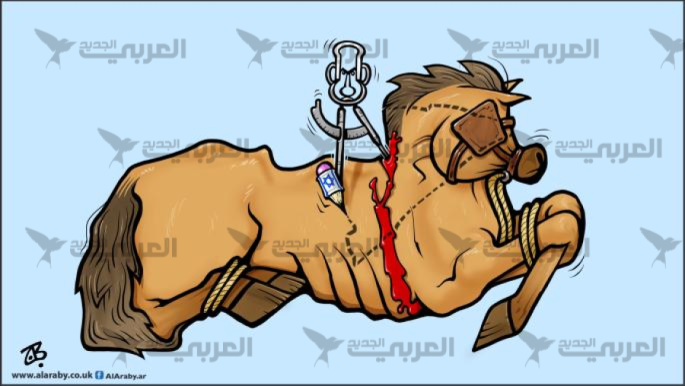
The ongoing Israeli escalation in the Arab region draws attention, raising questions about Israel's true intentions as it surpasses established borders. Since October 7, 2023, Israel has initiated extensive military operations, exacerbating the situation in the area.
These military operations go beyond merely responding to threats; they indicate an expansionist strategy aimed at reinforcing Israeli control over Palestinian and Arab territories. This escalation occurs at a sensitive time, as international calls for de-escalation and a return to the negotiation table are increasing.
Details of the Event
Since the beginning of October, the Palestinian territories have witnessed an unprecedented military escalation, with Israeli forces conducting airstrikes in various areas, resulting in numerous casualties. These operations are not limited to the West Bank and Gaza Strip but have extended to other border areas, reflecting Israel's intention to broaden the scope of its operations.
Reports indicate that Israel has reinforced its forces along the borders, in addition to utilizing advanced weaponry in its operations. This escalation coincides with rising tensions in the region, heightening fears of a larger conflict.
Background & Context
Historically, Israel has always faced security challenges, prompting it to take preemptive military actions. However, the current escalation occurs in a changing context, with increasing international pressure on Israel to comply with treaties and international resolutions calling for an end to the occupation.
Many analysts believe that these military operations may be part of a broader strategy aimed at altering the geopolitical equations in the region, especially amid escalating tensions between regional powers.
Impact & Consequences
The Israeli escalation has serious implications for regional security, as it could provoke reactions from neighboring Arab countries. Furthermore, the continuation of these operations may contribute to heightened tensions between Israel and Palestinian factions, potentially leading to new confrontations.
On the international front, Israel may face increasing pressure from the global community, particularly from countries advocating for a peaceful resolution to the conflict. This pressure could influence Israel's position in future negotiations.
Regional Significance
The impact of the Israeli escalation extends to neighboring Arab countries, where many nations are concerned about the repercussions of these operations on regional stability. Additionally, the ongoing tensions could affect relations between Arab states and Israel, especially in light of the normalization attempts witnessed in recent years.
In conclusion, the question remains whether Israel is seeking to achieve expansionist goals or is dealing with a complex geopolitical equation. What is certain is that the current escalation carries significant risks for both regional and international security.