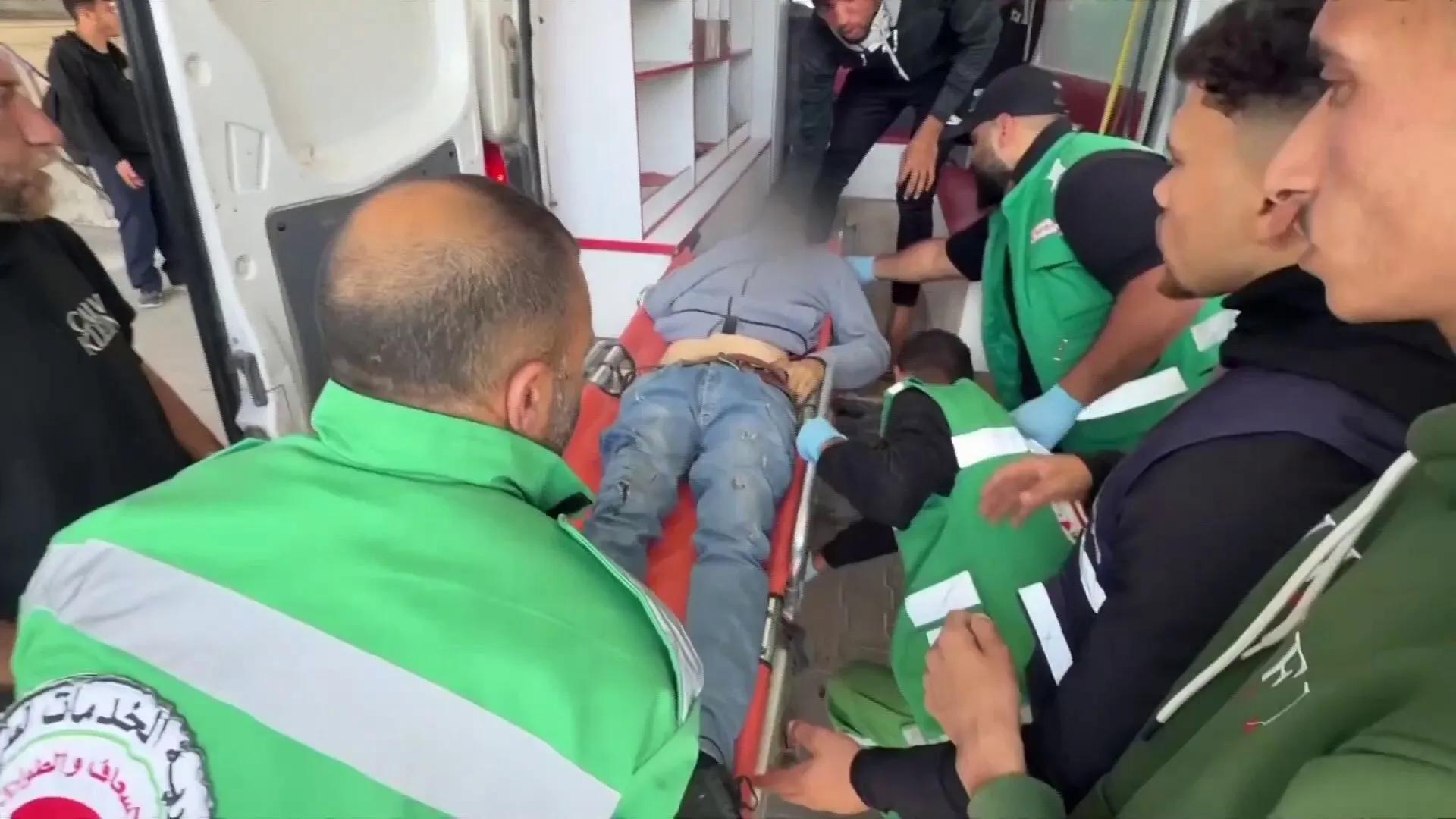
Israeli escalations in the Gaza Strip persist, with military operations concentrating on targeting police elements and security interests. These actions are part of a systematic policy aimed at breaking the will of the Palestinian street, according to expert analyses.
Analysts suggest that Israel seeks to spread chaos in the sector through these operations, preventing any attempts to restore civil stability. This situation threatens to turn Gaza into an unlivable environment, potentially pushing residents towards forced displacement options.
Details of the Event
In an episode of the program "Beyond the News" aired on April 25, 2026, the Israeli military escalation was discussed in depth. Speakers indicated that targeting the police system reflects an Israeli strategy aimed at weakening any potential resistance from the Palestinians.
The local elections in Deir al-Balah and the West Bank were also addressed, as these elections were seen as an attempt to unify the Palestinian voice against division policies. These elections could be a step towards enhancing national unity, despite the significant challenges faced.
Background & Context
Historically, the Gaza Strip has witnessed repeated escalations by Israeli forces, especially in the absence of any effective international pressure to end the conflict. These escalations are part of an Israeli policy aimed at strengthening control over Palestinian territories, complicating the humanitarian situation in the region.
The Israeli occupation has long used military force as a means of pressure on the Palestinians, exacerbating humanitarian conditions. The current situation in Gaza reflects the continuation of this approach, with military operations intensifying amid rising political pressures.
Impact & Consequences
The ongoing escalation in Gaza could lead to serious repercussions at the regional level. As military actions increase, the likelihood of larger confrontations that could affect neighboring countries also rises, especially given the tense conditions in the region.
Furthermore, the continuation of these operations may worsen humanitarian crises in Gaza, where residents suffer from severe shortages of basic resources. This situation could contribute to heightened tensions between Palestinians and Israelis, making peaceful solutions more difficult.
Regional Significance
Events in Gaza do not only affect Palestinians; they have wide-ranging implications for the entire Arab region. The rise in violence could reignite old conflicts and impact relations between Arab countries and Israel.
Additionally, the situation in Gaza may enhance feelings of frustration among Arab populations towards their governments, potentially leading to increased protests and demands for change. This complex context requires Arab countries to take clear positions regarding what is happening in Gaza.
In conclusion, the scene in Gaza remains open to further escalation, in the absence of any genuine efforts to end the conflict. Netanyahu's government bets on the factor of time and a strategy of attrition, placing significant challenges before the Palestinians in the future.