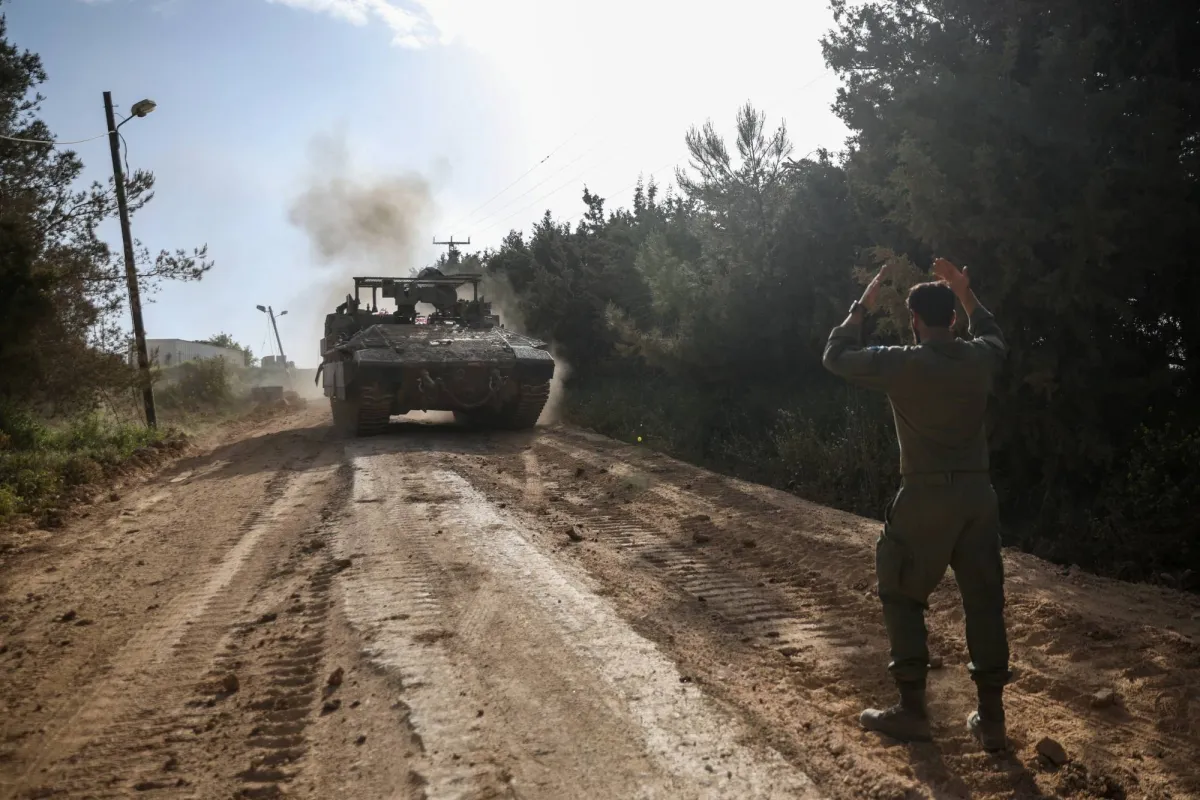
The ceasefire agreement between Lebanon and Israel is currently under severe tension due to a significant military escalation that has resulted in numerous Israeli airstrikes and shelling from Hezbollah targeting Israeli forces. This escalation follows the extension of the agreement by U.S. President Donald Trump for an additional three weeks, complicating the situation in the region.
For the first time since the agreement came into effect ten days ago, the Israeli army issued evacuation warnings for seven towns in the Nabatiyeh district: Mifdoun, Shoukin, Hamar, Arnoun, Zoutar al-Sharqiya, Zoutar al-Gharbiya, and Kfar Tebnit. These towns are located on the northern bank of the Litani River and have been included by the Israeli army in the previously issued map of the yellow line.
Details of the Incident
The evacuation warning led to renewed displacement of residents, causing severe traffic congestion on southern roads heading towards Beirut. Israeli airstrikes have resulted in the deaths of at least five individuals, while the Lebanese Ministry of Health documented eight additional fatalities from shelling on Sunday. The Israeli strikes targeted at least 18 towns deep in southern Lebanon, reflecting an unprecedented military escalation.
Security sources reported that the evacuation warnings indicate an attempt by Tel Aviv to expand the buffer zone deeper into northern Litani. For the first time, the warning included villages such as Kfar Tebnit, Shoukin, and Mifdoun, indicating a new development in the conflict.
Background & Context
Attempts by both parties to establish unannounced security arrangements have failed, as the current escalation surpasses the situation that existed prior to the extensive war in September 2024. The bombing map in the districts of Nabatiyeh, Marjeyoun, Bint Jbeil, and Tyre indicates that Israel is seeking to expand the security belt and enforce it by force, beyond the yellow line.
Most of the targeted towns serve as contact lines between Israeli forces and areas supplying fighters, further complicating the security situation in the region. In response, Hezbollah announced the execution of three military operations within the occupied Lebanese territories, reflecting a reaction to the Israeli escalation.
Impact & Consequences
Concerns are growing over a larger escalation in the conflict, as the Lebanese death toll has risen to 2,509 since March, with 7,755 injured. Diplomatic communications have intensified to contain the escalation, with Israeli Prime Minister Benjamin Netanyahu accusing Hezbollah of undermining the truce, while the party vowed to respond to any violations.
The United Nations Special Coordinator for Lebanon, Janine Hennis-Plasschaert, has begun an official visit to Tel Aviv to discuss ways to stabilize the ceasefire, but no new initiatives are on the horizon. The agreement, which came into effect on April 17, was initially set to last for ten days but has been extended for an additional three weeks.
Regional Significance
The region is significantly affected by the rising tensions between Lebanon and Israel, as both sides exchange accusations of violating the truce. This escalation raises concerns in neighboring countries and increases the likelihood of a broader conflict in the region. Additionally, the ongoing Israeli assaults on Lebanese territory threaten Lebanon's stability and exacerbate civilian suffering.
In conclusion, the situation between Lebanon and Israel remains precarious, balancing between hope for peace and anxiety over a new escalation. Intensive diplomatic efforts are required to avoid further escalation and ensure regional stability.