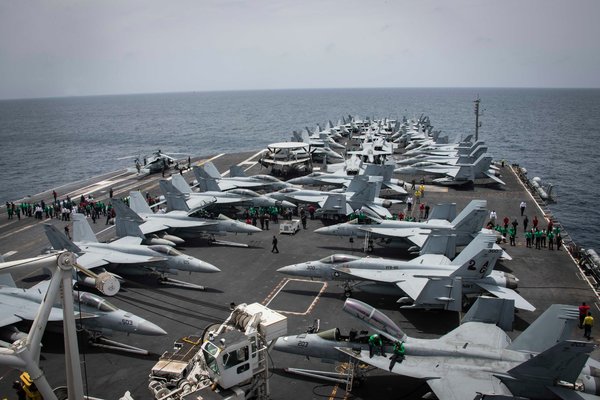
Tensions in Iran continue to escalate, with the sighting of the U.S. 'Doomsday Plane' over Nebraska, raising questions about the military and political implications of this situation. These developments occur at a sensitive time, as Iran experiences growing internal and external tensions, heightening fears of a potential military escalation.
In recent days, Iran has witnessed widespread protests against the government, with citizens taking to the streets to express their dissatisfaction with the economic and political situation. These protests emerge as the Iranian people face significant economic pressures due to international sanctions and deteriorating living conditions.
Details of the Incident
The flight of the 'Doomsday Plane', a special aircraft used for national emergency situations, was observed in the skies over Nebraska, raising concerns among observers. This aircraft is designed to transport U.S. officials in the event of nuclear threats or natural disasters. The flight at this time indicates potential military preparations by the United States in response to the escalating tensions with Iran.
U.S. military movements come amid increasing statements from Iranian officials regarding the development of their nuclear programs, further intensifying tensions between the two sides. Iran has repeatedly asserted that it will not back down from its nuclear programs, placing it in direct confrontation with Western powers.
Background & Context
Historically, relations between Iran and the United States have been fraught with ongoing tensions since the Islamic Revolution of 1979. Economic sanctions imposed on Iran have led to a significant deterioration of the Iranian economy, contributing to the outbreak of popular protests. In recent years, tensions have escalated sharply due to Iran's nuclear program, which the United States and its allies consider a threat to regional and international security.
Iran seeks to enhance its military capabilities, raising concerns in the region. U.S. military movements, including the flight of the 'Doomsday Plane', reflect Washington's anxiety over developments in Iran.
Impact & Consequences
The current escalation in Iran could have serious repercussions for regional security. If tensions continue to rise, we may witness military interventions by the United States or its allies, potentially leading to armed conflict. Such a scenario could have negative effects on stability in the Middle East, which is already grappling with multiple conflicts.
Any military escalation could also impact oil prices and global financial markets, as Iran is one of the largest oil producers in the world. Disruptions in Iranian production could lead to rising oil prices, affecting the global economy.
Regional Significance
The repercussions of the escalation in Iran may extend to neighboring Arab countries, particularly affecting Gulf states. Fears of escalating conflict could increase tensions between Gulf countries and Iran, negatively impacting security and stability in the region.
In light of these circumstances, Arab countries must take proactive steps to enhance their security and stability, especially amid rising tensions in the region. Regional cooperation may be essential to address the increasing security challenges.
In conclusion, the current escalation in Iran and U.S. military movements indicate a new phase of tensions in the region. It is crucial to closely monitor these developments, as they may have far-reaching implications for security and stability in the Middle East.