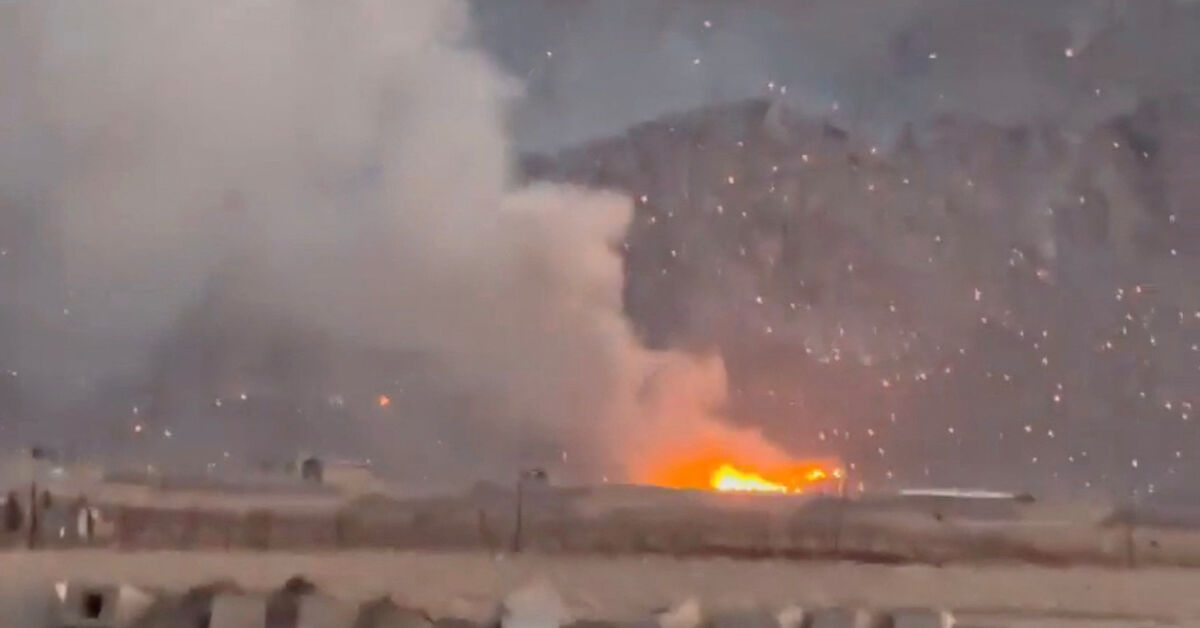
US President Donald Trump confirmed that the United States has not yet begun to destroy the remaining Iranian infrastructure, indicating that Washington will intensify its attacks on Iran. These statements come at a time when many countries are striving to reopen the Strait of Hormuz, a vital artery for global energy shipments.
Trump's remarks followed nearly five weeks since the start of the war in Iran, which began with a joint airstrike by the United States and Israel. This conflict has led to chaos in the region, negatively impacting financial markets and increasing pressure on Trump to seek a swift resolution to the conflict.
Details of the Event
In his escalation against Iran, Trump emphasized that the United States will continue to target Iranian infrastructure, which could exacerbate conditions in the region. This escalation comes at a sensitive time, as many countries are looking to reopen the Strait of Hormuz, a crucial point for the flow of oil and natural gas.
Concerns are rising that this escalation could lead to further tensions in the region, as many countries rely on energy shipments that pass through this strait. Some nations have expressed their willingness to mediate to reopen the strait, amid growing worries about the conflict's impact on the global economy.
Background & Context
Historically, the Strait of Hormuz has been the scene of numerous political and military conflicts, through which approximately 20% of the world's oil passes. In recent years, the region has witnessed a notable escalation in tensions between the United States and Iran, especially after Washington withdrew from the Iranian nuclear agreement in 2018.
Fears are mounting that US military operations could provoke Iranian reactions that might lead to a larger escalation of the conflict. Iran has warned that it will take countermeasures if military and economic pressures continue.
Impact & Consequences
The US escalation against Iran could have far-reaching implications for regional security and the global economy. The continuation of the conflict is likely to lead to rising oil prices, affecting the global economy and increasing energy costs for consuming countries.
Moreover, the rising tensions could deepen divisions among countries in the region, as some nations may take opposing stances based on their economic and political interests. This situation could complicate international mediation efforts and make it more difficult to reach a peaceful resolution to the conflict.
Regional Significance
Arab countries are directly affected by the US escalation against Iran, as many of these nations rely on regional stability to ensure energy flow. Any escalation in the conflict could impact oil prices, negatively reflecting on the economies of oil-producing Arab nations.
Additionally, the conflict may lead to increased sectarian tensions in the region, as Iran plays a significant role in supporting certain groups within Arab countries. This could further complicate security situations in countries like Iraq, Syria, and Lebanon.
In conclusion, the situation in the region remains complex, with political and economic interests overlapping. It is crucial for the concerned nations to work towards diplomatic solutions to avoid exacerbating conditions.