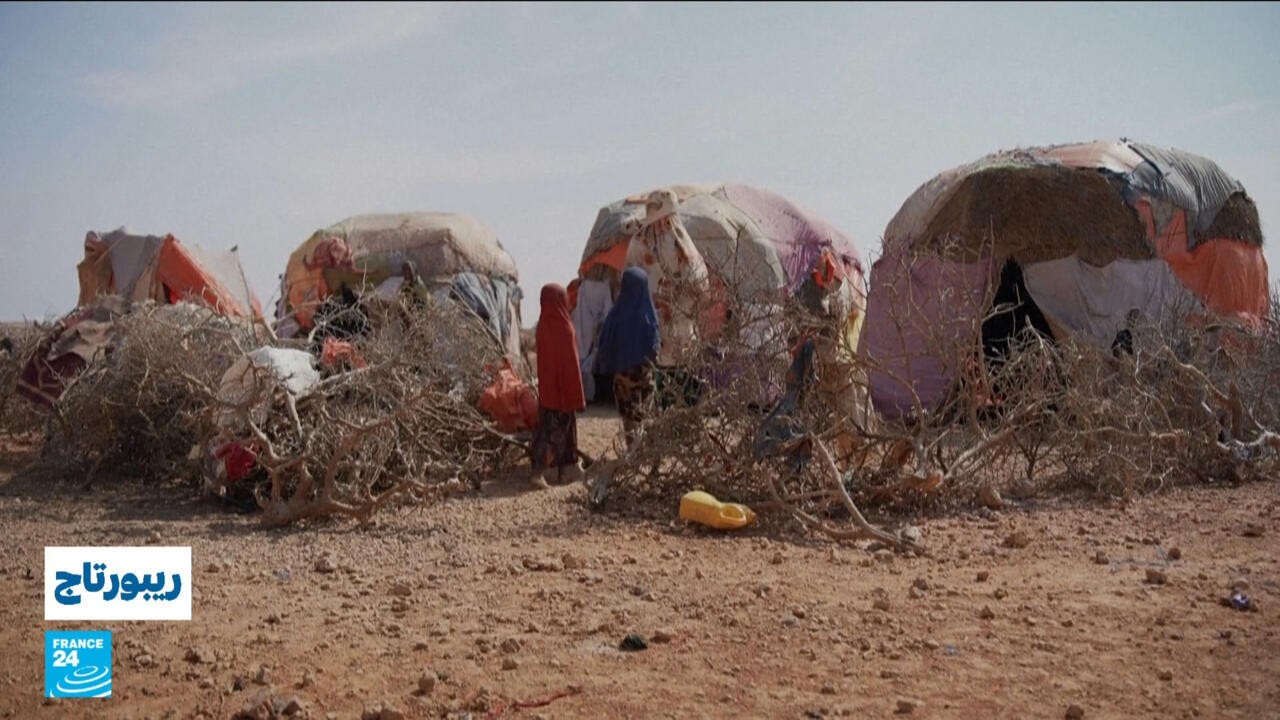
Thousands of families in Southern Somalia are suffering due to recurring droughts, forcing them to flee in search of water and food. This situation is worsening as humanitarian aid has significantly declined, intensifying the humanitarian crisis in the region.
Reports indicate that the drought affecting Southern Somalia for several months has led to crop failures and the deterioration of livestock, severely impacting livelihoods. Residents are facing a critical shortage of drinking water, compelling them to walk long distances in search of water sources amid deteriorating living conditions.
Details of the Crisis
Statistics show that over 2.5 million people in Southern Somalia are in urgent need of humanitarian assistance, with local communities severely affected by the ongoing drought. Relief organizations have confirmed that the situation requires an immediate response, as international aid has notably decreased in recent months.
Displacement cases among families are rising, with many forced to leave their villages in search of safer areas that provide basic living necessities. Displaced individuals are enduring harsh conditions, lacking shelter, food, and healthcare.
Background & Context
Historically, Somalia has faced recurring humanitarian crises due to drought and ongoing conflicts. These crises have led to widespread poverty and unemployment, complicating the humanitarian situation. The current drought is part of a changing climatic pattern affecting the region, with drought occurrences increasing in recent years.
The Somali government, in collaboration with international organizations, is striving to address these crises; however, logistical and political challenges hinder relief efforts. Additionally, the security situation in some areas makes it difficult to reach those in need.
Impact & Consequences
The drought crisis in Southern Somalia is affecting food security in the region, increasing the likelihood of disease outbreaks and malnutrition among children and women. The rising number of displaced individuals may further exacerbate conditions in neighboring areas, creating additional pressure on limited resources.
This crisis requires a coordinated response from the international community, as the decline in humanitarian aid could worsen the situation. It is crucial that efforts are combined to provide the necessary support to those affected, especially given the harsh conditions they face.
Regional Significance
The drought crisis in Southern Somalia exemplifies the humanitarian challenges faced by many countries in the region. Humanitarian crises can lead to irregular migration flows, affecting the stability of neighboring countries. Furthermore, the situation in Somalia may raise concerns among Arab nations regarding food security and regional stability.
In conclusion, the situation in Southern Somalia requires urgent attention from the international community. An effective response is essential to assist affected families and alleviate their suffering, as hope for improved conditions relies on international solidarity and joint efforts.