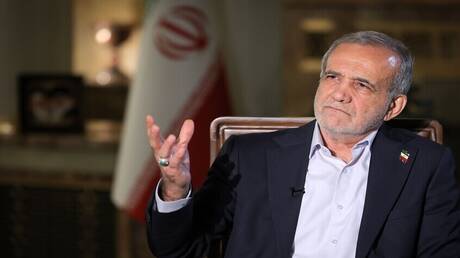
Iranian President Masoud Bezhakian continues to strengthen his position as the official manager of the war file with the formation of the National Security Council. Despite this, actual influence remains in the hands of the Supreme Leader and the Revolutionary Guard.
These developments come at a sensitive time for Iran, where regional and international tensions are escalating. The establishment of the National Security Council reflects the Iranian regime's desire to organize its response to the multiple crises it faces, including military and economic threats.
Details of the Event
The Iranian National Security Council was established as a primary body to coordinate security and military policies. Bezhakian was appointed to this position as part of the government's efforts to enhance coordination among various security institutions. However, the Supreme Leader Ali Khamenei remains the final authority on strategic issues, ensuring continued control over critical decisions.
The council's tasks include coordination between the Ministry of Defense and the Revolutionary Guard, reflecting the significant role these institutions play in directing Iranian military policy. The council also seeks to develop new strategies to confront the security challenges facing the country, including threats from neighboring countries.
Background & Context
Historically, Iran has played a prominent role in regional conflicts, often at the center of tensions between major powers. Since the Islamic Revolution in 1979, Iran has pursued a foreign policy based on supporting armed groups in the region, complicating its relations with Western and Arab countries.
In recent years, tensions between Iran and the United States have intensified, especially following Washington's withdrawal from the nuclear agreement. These circumstances have prompted Iran to bolster its military capabilities and develop new strategies to counter external pressures.
Impact & Consequences
These developments are expected to significantly impact Iranian policy. Strengthening Bezhakian's role may lead to changes in how crises are managed, potentially affecting Iran's response to regional and international events. This trend may also raise concerns among neighboring countries, which closely monitor Iran's military and political movements.
Furthermore, enhancing the role of the National Security Council could increase coordination among Iranian armed forces, potentially altering the dynamics of conflict in the region. These changes may affect ongoing conflicts, such as those in Syria and Iraq, where Iran plays a pivotal role.
Regional Significance
Developments in Iran are particularly significant for Arab countries, as any change in Iranian policy may impact regional stability. Gulf states, in particular, are concerned about Iran's increasing influence in Iraq, Syria, and Lebanon.
Additionally, the enhancement of Iranian military capabilities may escalate tensions in the Gulf, potentially leading to an intensification of existing conflicts. Therefore, closely monitoring these developments is essential to understand their potential impact on regional security.
In conclusion, the question remains as to how these changes will affect Iranian relations with Arab countries and the international community, as the challenges Iran faces may lead to shifts in its political and military strategies.