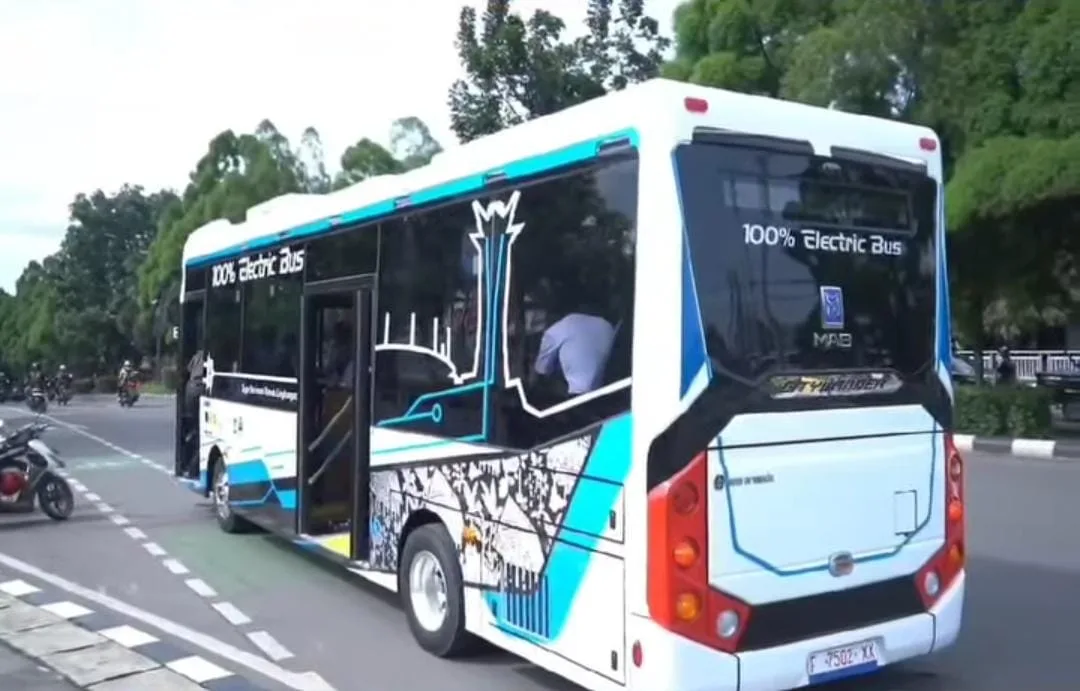
The government of Bogor in West Java has reported that it requires an estimated budget of around 12 billion rupees annually to implement the Bus Transport Service (BTS) system for operating electric buses on the Bogonggidi-Centol route. This statement was made by Bayu Ramwanto, the head of the transportation department in the region, during a press conference in Sepinong.
Ramwanto explained that these estimates were calculated based on the distance traveled by the buses, the number of daily trips, and the operating costs per kilometer. He noted that the cost of operating electric buses ranges from 10,000 to 12,000 rupees per kilometer, indicating that each bus could cover approximately 300 kilometers daily.
Details of the Initiative
The Bogonggidi-Centol route extends over a distance of nearly 50 kilometers, with each bus expected to make six trips daily, raising the total distance covered to about 300 kilometers each day. Based on these calculations, the monthly operating cost will depend on the price per kilometer multiplied by the total daily distance and the number of operational days in the month.
Ramwanto also mentioned that the Bogor government plans to provide nine units of buses to serve this route, meaning the required annual budget will reach around 12 billion rupees.
Background & Context
The Bogor government is seeking to develop a public transportation system by introducing electric buses, a project that aligns with the global trend towards sustainable transportation. Previous trials have been conducted on the Bogonggidi-Centol route as a preliminary step to assess the feasibility of implementing the BTS system in public transport.
This initiative is part of the government's efforts to alleviate traffic congestion and promote the use of public transportation, contributing to improved air quality and reduced harmful emissions.
Impact & Consequences
The implementation of the BTS system could lead to significant improvements in public transport efficiency, allowing the government to operate buses without incurring costs for purchasing the buses or paying driver salaries. This means that the government will only pay for the services provided.
If passenger fees are implemented in the future, the resulting revenues could help reduce the financial burden on the government, as each bus could generate revenues of up to 100 million rupees monthly, implying that nine buses could yield revenues of up to 9 billion rupees annually.
Regional Significance
The Bogor experience in utilizing electric buses serves as a model that Arab countries could benefit from, facing similar challenges in public transport. Such initiatives could enhance environmental sustainability and alleviate congestion in major cities.
In light of the global shift towards clean energy, there may be opportunities for collaboration between Arab nations and Indonesia in developing sustainable transportation systems.