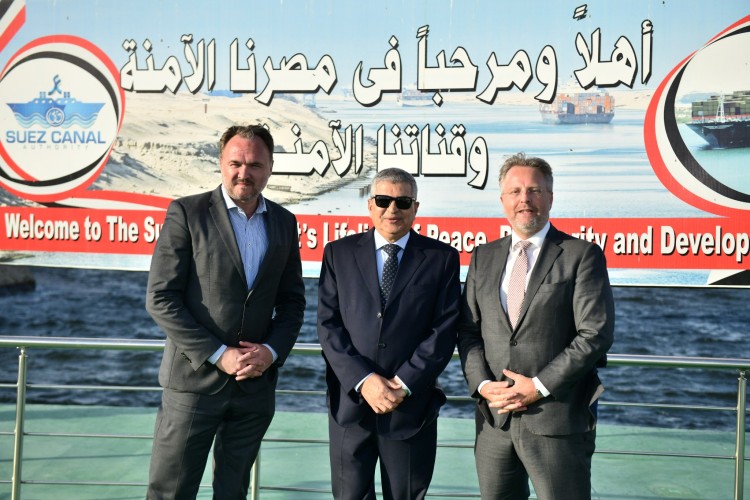
The Estonian government, in collaboration with several companies from the Baltic states, has announced its intention to establish a partnership with Indonesia aimed at enhancing the transition to green energy. This announcement is part of Estonia's efforts to reduce carbon emissions and align with global trends towards environmental sustainability.
In statements to an Indonesian news agency, Kristian Tro, Estonia's Deputy Minister of Marine Affairs and Water Resources, confirmed that all parties are currently striving to achieve a green transition as a primary goal. He explained that this transformation is not only about the environment but also about increasing the competitiveness of countries in global markets, especially in the maritime industry.
Event Details
Tro noted that the European Union has launched the Clean Industry Agreement, which aims to enhance the competitiveness of European industries and accelerate the transition to climate-neutral technologies. He provided an example of this through the Green Maritime Corridor project between Estonia and Finland, which seeks to create a green transport chain that includes ports utilizing renewable energy such as solar power.
Furthermore, Tro added that the renewable energy produced in the ports is used to power ships, contributing to the reduction of emissions resulting from maritime transport. He emphasized that Estonia is also working with other European countries, such as Sweden, to achieve these goals.
Background & Context
This initiative comes at a time when the world is witnessing an increasing interest in climate issues, as countries strive to reduce carbon emissions to combat climate change. The International Maritime Organization (IMO) has introduced a Zero Emissions framework that will begin implementation in 2025, making it essential for countries like Indonesia to take serious steps towards a green transition.
Indonesia is among the countries facing significant environmental challenges, being one of the largest producers of carbon emissions due to its heavy industries. Therefore, cooperation with Estonia could provide valuable expertise in this field.
Impact & Consequences
This cooperation is expected to strengthen relations between Estonia and Indonesia, potentially leading to knowledge and experience sharing in renewable energy and maritime technology. Additionally, this collaboration could serve as a model for other countries seeking to achieve similar goals.
The transition to green energy may also enhance Indonesia's image on the international stage and improve its ability to attract foreign investments in renewable energy sectors. This, in turn, could contribute to achieving sustainable development in the country.
Regional Significance
Climate issues and renewable energy are vital topics that also concern Arab countries, which face significant challenges in this area. Cooperation between countries like Estonia and Indonesia could motivate Arab nations to adopt similar strategies in the transition to green energy.
Moreover, enhancing international cooperation in renewable energy could help achieve global environmental goals, benefiting all nations, including Arab countries.