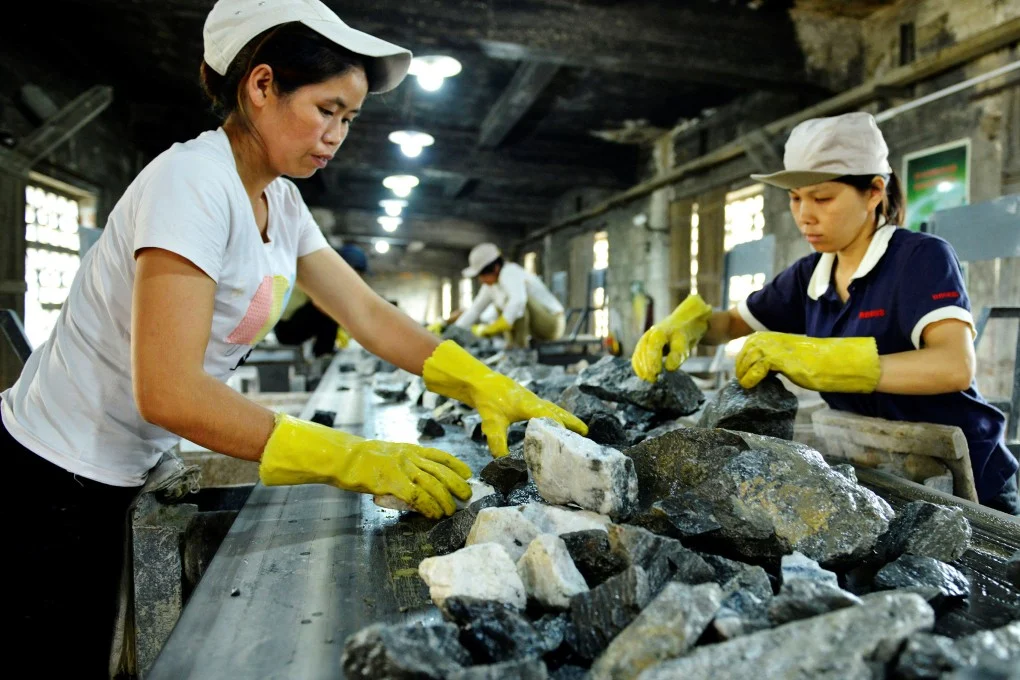
The European Union has chosen a group of critical minerals including tungsten, rare earth elements, and gallium to be part of its first joint stockpile, in a move aimed at reducing dependence on China. This initiative is part of the EU's efforts to enhance its economic independence and mitigate risks associated with reliance on external sources.
Currently, negotiations are underway with major ports, including the Port of Rotterdam in the Netherlands, which is considered the largest in the region, for the storage of these minerals. This step represents one of the most visible actions by the EU to protect its economy from the dominance of Chinese production.
Event Details
Critical minerals such as tungsten, rare earth elements, and gallium are essential in many modern technological industries, including electronics and renewable energy. The EU heavily relies on China for the supply of these minerals, making it vulnerable to political and economic fluctuations.
EU member states are seeking to enhance cooperation among themselves to develop new strategies aimed at securing supplies of critical minerals. More details about this joint stockpile are expected to be announced in the coming weeks.
Background & Context
Historically, China has been the primary supplier of critical minerals, controlling over 80% of global production. This situation has led to increasing concerns in Europe and the United States regarding dependence on China, especially amid rising geopolitical tensions.
In recent years, many countries have begun to seek alternatives to secure their supplies of critical minerals. Some European nations have launched initiatives to boost domestic mining and develop recycling technologies to recover minerals from used products.
Impact & Consequences
This move by the EU is seen as a strategic shift that could affect trade relations with China. These actions may lead to increased tensions between the two sides, as China may seek to reinforce its control over global markets.
Furthermore, this step could enhance cooperation among European countries in the field of research and development, which may contribute to reducing reliance on external sources in the future.
Regional Significance
For the Arab region, these developments could open new avenues for cooperation in mining and the exploitation of natural resources. Many Arab countries possess significant reserves of critical minerals, providing an opportunity to strengthen economic partnerships with the EU.
This move could also contribute to boosting investments in the mining sector in Arab countries, potentially leading to the creation of new job opportunities and achieving sustainable development.
In conclusion, the EU's selection of a group of critical minerals represents an important step towards enhancing its economic independence and reducing reliance on China. This decision is expected to have far-reaching effects on trade and economic relations between the EU and the rest of the world.