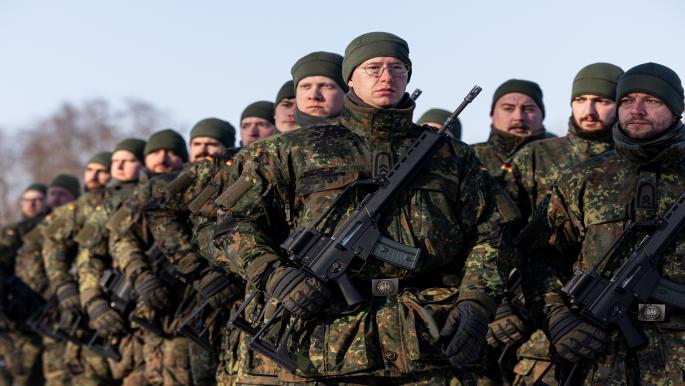
European fears are mounting regarding Germany's militarization in light of rising Russian threats, as European countries find themselves in a difficult position that limits their ability to intervene in Berlin's defense choices. These developments evoke deep concerns about the potential return of Germany to its old ambitions for dominance on the continent.
Historically, Germany has been one of the major powers in Europe, experiencing periods of military and political dominance. With tensions escalating in the region, particularly following Russia's invasion of Ukraine, Germany has been compelled to modernize and enhance its military capabilities, which raises alarms among its neighboring countries.
Details of the Situation
In recent years, the German government has announced plans to significantly increase its defense budget, reflecting its commitment to addressing security threats. This decision comes after decades of military spending cuts and represents a radical shift in Germany's defense policy. Other European nations are watching these moves with concern, fearing that the strengthening of Germany's military power could alter the balance of power in the region.
There are growing fears that this militarization could revive nationalist sentiments in Germany, potentially sparking new tensions in relations with other European countries. Many analysts believe that these steps could lead to an arms race on the continent, which could have dire consequences for European security.
Context and Background
Since the end of World War II, Germany has followed a cautious defense policy, preferring to collaborate with its NATO allies. However, the increasing Russian threats, especially following the events in Ukraine, have prompted Berlin to reassess its defense strategy. This new dynamic reflects a change in the European security landscape, where external threats require immediate and effective responses.
Historically, there have been concerns about Germany returning to the hegemonic policies it exhibited in the 20th century. These fears are not new but have resurfaced with the rising tensions in the region. Other European countries, such as France and Poland, are expressing their concerns over these developments, intensifying discussions about security and defense on the continent.
Consequences and Impact
The enhancement of Germany's military capabilities could lead to significant changes in European alliances. Countries that have relied on Germany as an ally may feel uneasy about its ability to control this new power. Additionally, these developments may lead to a reshaping of the defense strategies of other European nations, potentially increasing tensions among traditional allies.
Moreover, increased military spending could impact the national budgets of European countries, potentially leading to cuts in investments in other areas such as education and health. These dynamics could affect economic and social stability in the region, raising questions about the future of European cooperation.
Impact on the Arab Region
Although the situation in Europe may seem distant from the Arab region, military tensions on the continent could affect regional security. Arab countries are closely monitoring these developments, as any escalation in Europe could lead to changes in security and defense policies in the Middle East.
Furthermore, the strengthening of Germany's military might influence the balance of power in the region, especially if Berlin decides to expand its role in foreign policy. This could open the door to new alliances or tensions that could impact regional stability.
In conclusion, European concerns about Germany's militarization amid the Russian threat remain a complex issue that requires careful monitoring. New security challenges may reshape relationships among European nations, raising questions about the future of cooperation and security on the continent.