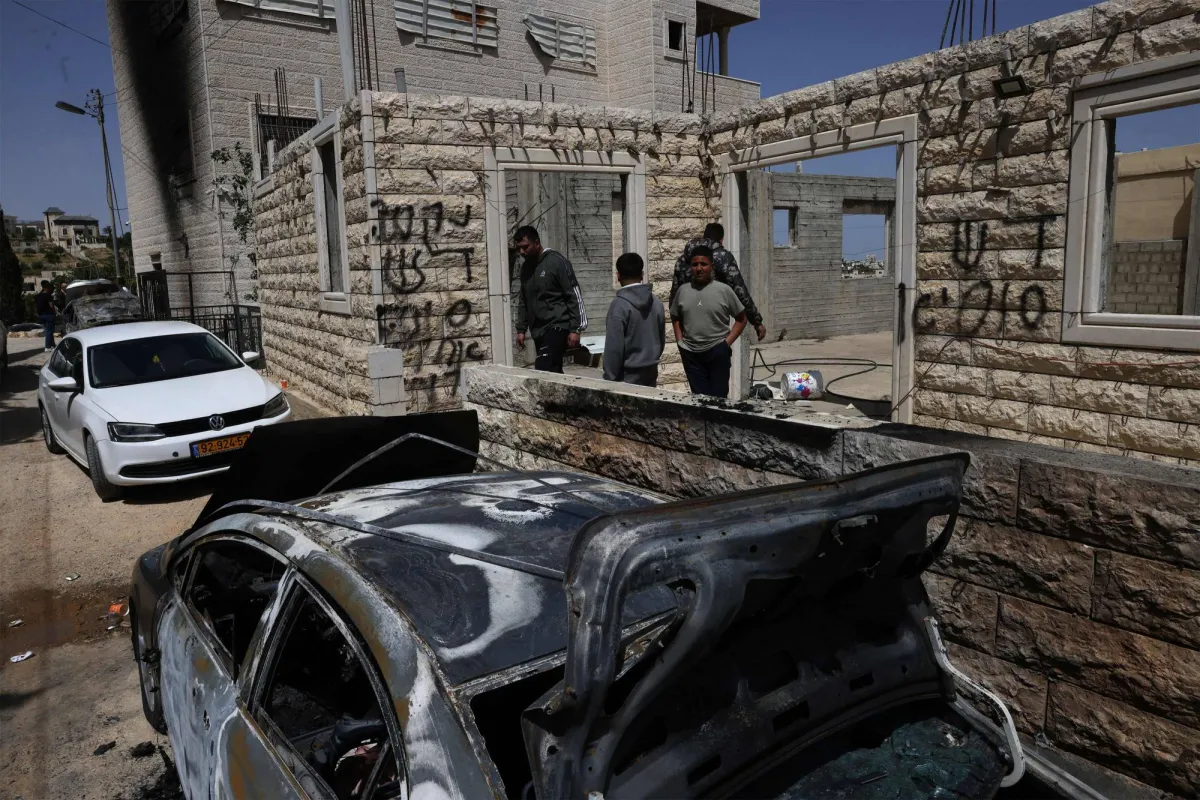
Britain, Italy, France, and Germany have urged Israel to halt its settlement expansion in the West Bank, emphasizing the need to reduce the escalating violence from settlers. This call was made in a joint statement reported by Reuters, where the four nations asserted that the situation in the West Bank is deteriorating rapidly. They warned that settlement activities in the "E1" area would divide the West Bank into two parts, representing a serious violation of legal norms.
In a related development, Dutch Prime Minister Mark Rutte announced his government's decision to impose a ban on the import of goods produced in Jewish settlements established in the occupied Palestinian territories. Rutte clarified that the aim of this ban is to prevent "any contribution to the illegal occupation through Dutch economic activities." This ban is expected to come into effect in the second half of this year.
Details of the Event
The Netherlands is one of the largest buyers of Israeli goods globally; however, the government has not disclosed the volume of goods imported from the settlements. Most global powers consider Israeli settlements illegal, as numerous United Nations Security Council resolutions have called for Israel to cease all settlement activities. Israel, for its part, rejects these resolutions, citing its historical and religious ties to the land.
The European statement comes at a sensitive time, as international pressure on Israel to stop settlement expansion is increasing, which is one of the most prominent issues in the Israeli-Palestinian conflict. This pressure is part of the international community's efforts to reduce tensions and achieve peace in the region.
Background & Context
Historically, the West Bank has witnessed a surge in Israeli settlement activity since its occupation in 1967. These activities have led to increasing tensions between Palestinians and settlers, resulting in a rise in violence in the area. In recent years, the Israeli government has intensified its support for settlements, drawing widespread criticism from the international community.
Israeli settlements in the West Bank are among the most complex issues in the Israeli-Palestinian conflict, as they conflict with the rights of Palestinians to establish their independent state. Many European governments, including the Netherlands, have attempted to take concrete steps to pressure Israel to halt these activities.
Impact & Consequences
The Dutch ban on goods from the settlements is expected to have economic repercussions for Israel, particularly given its significant reliance on the European market. Additionally, European pressure may encourage other countries to take similar steps, increasing Israel's isolation on the international stage.
At the same time, continued settlement expansion may exacerbate humanitarian conditions in the West Bank, where Palestinians face increasing restrictions on movement and resources. The international community views these activities as a threat to peace prospects and complicating efforts to resolve the conflict.
Regional Significance
These developments hold significant importance for Arab countries, as they reflect the ongoing tensions in the Israeli-Palestinian conflict. Such European pressures may provoke reactions from Arab nations, which may seek to bolster their support for the Palestinian cause in international forums.
Moreover, these events could impact relations between Arab states and Israel, as calls for solidarity with Palestinians in facing their challenges grow. Ultimately, hope remains for achieving a comprehensive and just peace in the region.