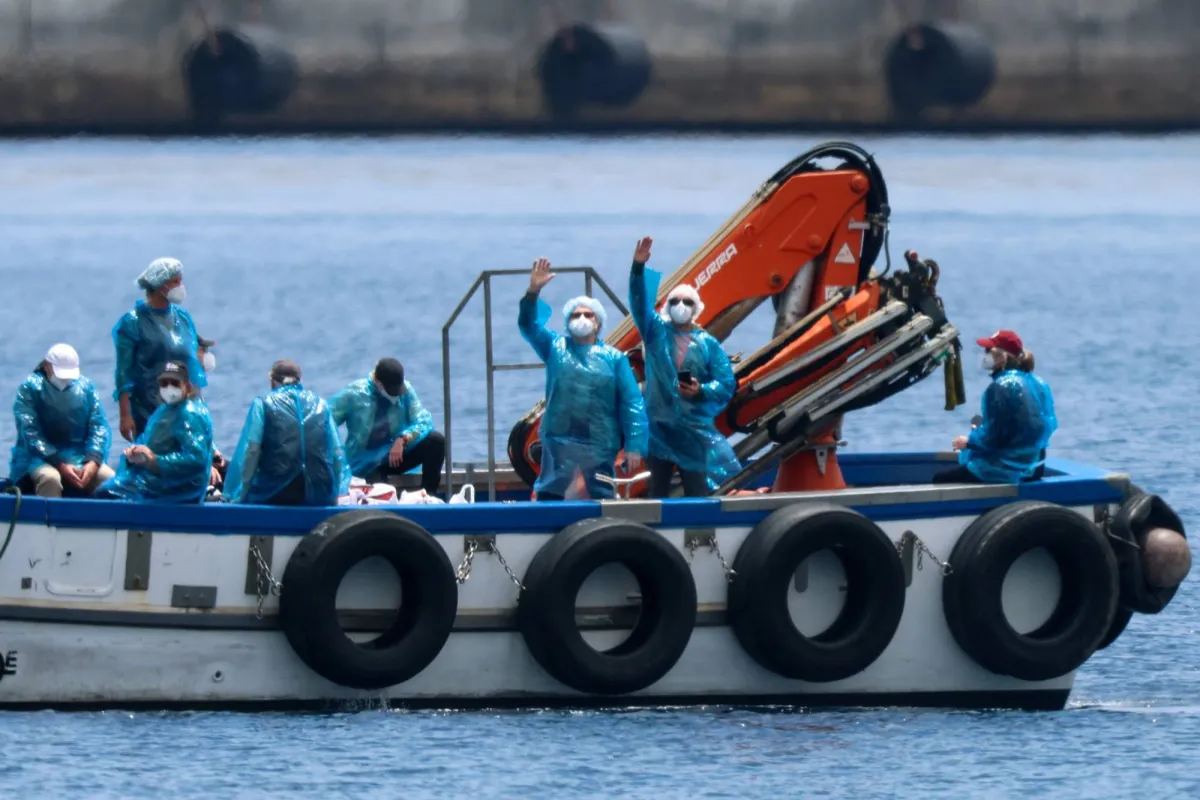
The evacuation of passengers from the cruise ship 'MV Hondius', which experienced a deadly outbreak of the Hanta virus, commenced on Sunday from the Spanish Canary Islands amid strict health protocols. This crisis has resulted in the deaths of three passengers, including a Dutch couple and a German woman, raising widespread concerns about the safety of the remaining passengers.
The Hanta virus is a rare disease typically transmitted through rodents, with no vaccines or specific treatments available. However, health officials have confirmed that the risk to global public health remains low, dismissing any comparisons to the COVID-19 pandemic. Spanish Health Minister Mónica García stated that the evacuation process for approximately 150 passengers and crew members would continue until Monday, with the ship expected to return to Australia.
Details of the Evacuation
Images of passengers wearing blue medical suits as they left the ship via small boats to the port of Granadilla on the island of Tenerife reflect the seriousness of the measures taken. Upon arrival at the port, they were transported by a Spanish military bus to Tenerife South Airport, with a barrier separating the driver from the passengers to ensure their safety. The first group of evacuees, which included 14 Spaniards, was sent to Madrid where they will undergo quarantine at a military hospital.
Other flights have transported passengers to the Netherlands, Belgium, Greece, Germany, Guatemala, and Argentina. A French passenger, Roland Citer, confirmed that the evacuation process was well organized, with everyone cooperating.
Background & Context
The 'MV Hondius' set sail from Ushuaia, Argentina, on April 1, making a journey across the Atlantic Ocean before reaching Tenerife. Three infected individuals had previously been evacuated to Europe before the ship arrived in the Canary Islands. The World Health Organization confirmed that the initial infection may have occurred before the voyage began, leading to the virus's transmission among passengers.
Health authorities in Spain have confirmed that the evacuated passengers show no symptoms of the disease and underwent medical assessments before leaving the ship. Strict measures have also been implemented to prevent any contact between the evacuees and the local population in Tenerife.
Impact & Consequences
These events come at a sensitive time, as health authorities in several countries continue to track passengers who left the ship earlier. British paratroopers have landed on Tristan da Cunha Island following confirmation of a suspected case of the Hanta virus there, reflecting the widespread concern surrounding the virus.
The British military operation is the first of its kind, as a medical team and medical supplies were dispatched to support the suspected case, highlighting the importance of international cooperation in combating epidemics.
Regional Significance
Although the Hanta virus has not recorded cases in Arab countries so far, these events raise concerns about how prepared nations are to face epidemics. It is crucial for Arab countries to adopt effective health strategies for monitoring infectious diseases, especially with the increase in travel and tourism.
This incident serves as a reminder of the need to enhance international cooperation in public health and the exchange of information between countries to tackle global health challenges.