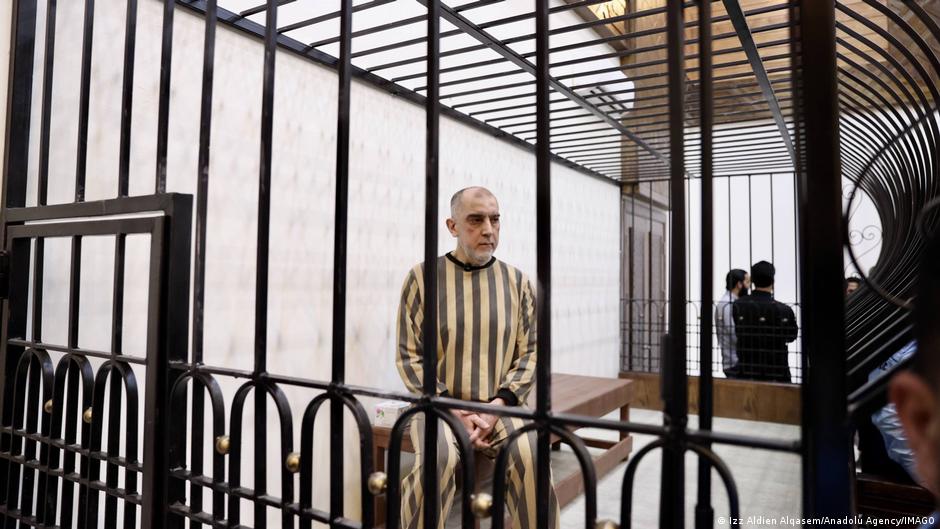
In an unprecedented move, the Syrian court has issued charges against Aatif Najib, cousin of President Bashar al-Assad, related to war crimes committed during the violent crackdown on peaceful protests that erupted in 2011. These charges were announced during a court session in Damascus, where Najib is considered the first high-ranking official to stand trial in this case.
This trial comes at a sensitive time, as the Syrian government seeks to rebuild its image after years of conflict. Judge Fakhr al-Din al-Aryan noted that Najib was responsible for the excessive use of force against protesters in Dar'a, which was the starting point of the protests.
Details of the Charges
During the session, the judge stated that Najib, who served as the head of the political security branch in Dar'a, bears direct responsibility for the repressive actions targeting civilians, including murder, torture, and arbitrary detention. The charges also included the arrest and torture of children and the opening of fire on peaceful protesters in mosques.
The roots of the protests date back to March 15, 2011, when 15 students were arrested for writing anti-government slogans, leading to widespread protests met with severe violence from the authorities, escalating the conflict into a civil war that has lasted for over a decade.
Background & Context
Since 2011, Syria has witnessed a surge in political and social tensions, as peaceful protests transformed into an armed conflict between the government and opposition factions. The country has suffered massive destruction, with many cities losing their identity, and millions of citizens displaced.
Impact & Consequences
The trial of Aatif Najib is viewed as a symbolic step towards achieving justice in Syria, as pressures mount on the new government to take legal action against former officials. This trial may open the door to further prosecutions, reflecting the international community's desire to hold those responsible for human rights violations accountable.
Regional Significance
The implications of this trial extend beyond Syria, as it could influence the political landscape in the region. The pursuit of justice may inspire similar movements in other countries affected by authoritarian regimes, highlighting the importance of accountability and rule of law.
In conclusion, the trial of Aatif Najib represents a crucial moment in Syria's quest for justice and accountability, echoing the aspirations of the Syrian people and the international community.