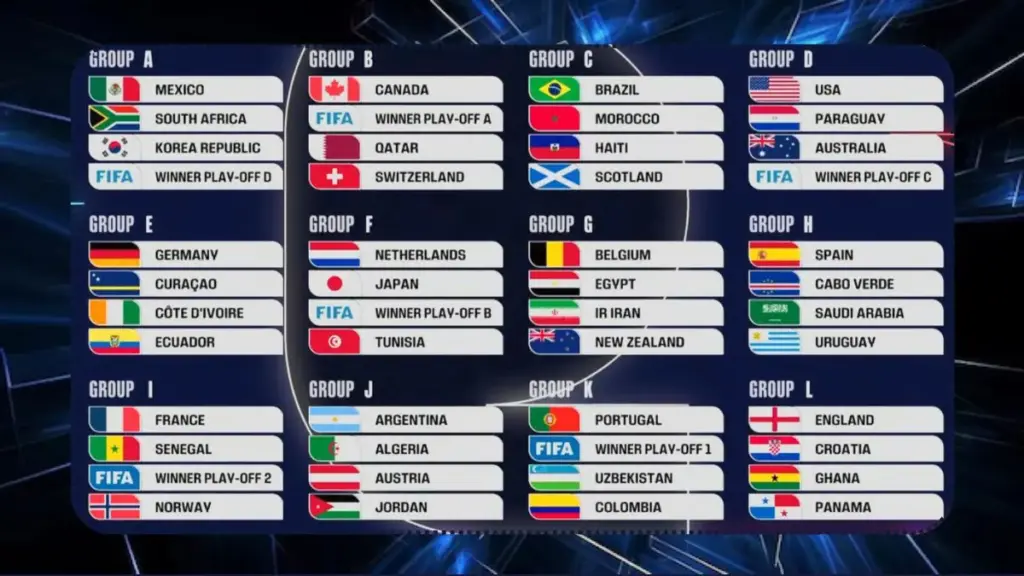
Forty-eight teams are gearing up to participate in the 2026 World Cup, which will take place in the United States, Canada, and Mexico. This significant sporting event is the most important globally, and teams are being assessed based on their potential to win the championship. As the tournament approaches, expectations rise regarding which teams might achieve success, generating excitement among fans worldwide.
This edition of the tournament marks a significant shift in the history of the World Cup, as it is the first time that 48 teams will participate instead of 32. This expansion reflects the growing popularity of football globally and provides greater opportunities for teams from various continents to compete for the title.
Event Details
The 2026 World Cup matches will be held in three countries: the United States, Canada, and Mexico, which is considered a historic achievement in the world of football. Matches are expected to take place in 16 cities, allowing fans to enjoy the tournament in multiple locations. This event will also see a large number of teams that have not previously qualified, increasing the level of competition.
Teams have been ranked based on their performance in qualifiers and previous international competitions. Among the teams considered favorites to win are Brazil, Germany, Argentina, and Italy, which are regarded as traditional powerhouses in the football world. However, there are other teams like France and Spain that have shown strong performances in recent years, making them contenders as well.
Background & Context
The history of the World Cup dates back to 1930, when the first edition was held in Uruguay. Since then, the tournament has become one of the largest sporting events in the world, followed by millions of football fans. Over the years, the tournament has seen significant developments, including an increase in the number of participating teams and an expansion of the competition.
In recent years, football has undergone major changes, with teams from smaller countries competing at the highest levels. This shift reflects the evolution of the game and its spread across the globe, heightening fan enthusiasm and enhancing the spirit of competition.
Impact & Consequences
The 2026 World Cup represents a significant opportunity to strengthen relations between the host countries, as the tournament is expected to contribute to enhancing tourism and the economy in the three countries. Additionally, hosting this major event will help develop sports infrastructure in these nations, benefiting local communities.
Moreover, the success of the tournament could enhance the status of football in the United States, where the sport is still in its growth stages. Hosting the World Cup may encourage more young people to engage in football, contributing to the development of new talents.
Regional Significance
The World Cup is an important event for the Arab region, as many Arab fans eagerly anticipate their national teams' participation in the tournament. Although some Arab teams have not qualified, there is always hope that Arab teams will showcase strong performances in the upcoming qualifiers.
Furthermore, the tournament serves as an opportunity to strengthen cultural ties between Arab countries and others, contributing to mutual understanding among peoples. The success of any Arab team in the tournament could enhance national pride and encourage further investments in sports.