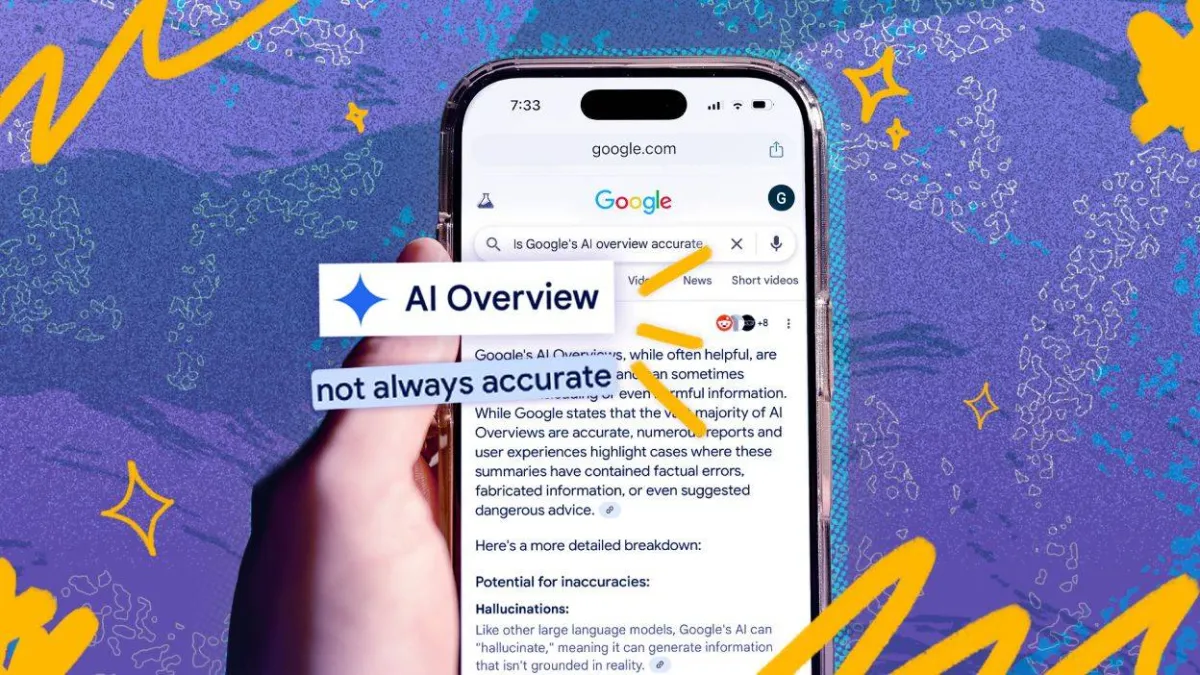
A recent study has shown that Google's AI tools, despite appearing reliable, suffer from a lack of accuracy. The findings confirmed that more than 50% of the correct answers provided by these tools are not backed by trustworthy evidence, which raises concerns among users regarding the credibility of the information presented.
To evaluate the accuracy of this tool, a group of journalists collaborated with the AI-focused company Omi, using a benchmark test known as SimpleQA to determine the precision of Google's responses. The results indicated that the tool was accurate in approximately 85% of cases with the Gemini 2 system and 91% with the Gemini 3 system.
Details of the Incident
Late last year, a user named Stephen Bonwasi raised questions about the death of the famous wrestler Hulk Hogan, only to find that Google's answer indicated no reliable reports of his death, despite an article contradicting that claim. This incident reflects the challenges users face in verifying the information provided.
Google is working on enhancing its smart tools, having begun to give AI-generated answers a prominent place in search results. With over 5 trillion searches processed annually, this means that there are tens of millions of incorrect answers provided every hour, according to an analysis by Omi.
Background & Context
AI tools are part of Google's shift from being merely a search engine to an information publisher. As reliance on these tools increases, the need to assess their accuracy and reliability becomes more pronounced. Some technicians have noted that these tools have improved significantly, yet there remains concern that users may not recognize the necessity of verifying information.
Google's AI tools encompass two types of information: direct answers and lists of supporting sources. However, the difficulty in assessing the accuracy of these answers lies in the fact that the system may generate a new response for each query, making it challenging to determine the reliability of the information provided.
Impact & Consequences
These findings raise questions about how AI is used to provide information, especially given the increasing reliance on these technologies across various fields. Despite improvements, verifying information remains essential, as errors can lead to severe consequences, particularly in sensitive areas such as health or politics.
Moreover, reliance on AI tools for information delivery may erode trust in traditional sources, placing a greater responsibility on tech companies to ensure the accuracy of the information provided.
Regional Significance
In the Arab region, where the need for accurate and reliable information is growing, the importance of these findings is highlighted. Errors in the information provided can impact political and social decisions, necessitating an increased awareness of the importance of verifying information.
Additionally, the use of AI in information delivery can have both positive and negative effects, requiring users to be more discerning and capable of distinguishing between correct and incorrect information.
In conclusion, the challenges facing Google's AI tools call for the development of mechanisms to verify information and enhance awareness of the importance of reliable sources, ensuring accurate and trustworthy information is provided to users.