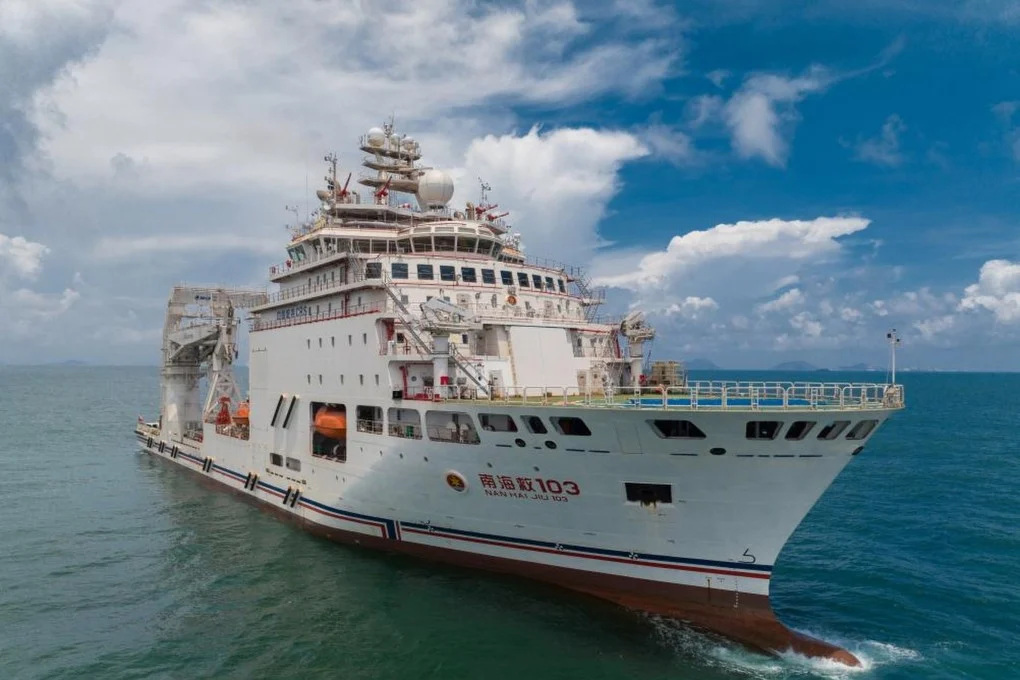
Chinese maritime authorities have announced an expansion of their deep-sea search and rescue operations, now capable of conducting missions at depths exceeding 4000 meters (13,100 feet). This announcement was made through official media, with the People's Daily, the voice of the Communist Party, indicating that this development represents an official transformation in the capabilities of China's maritime rescue forces.
This step is part of China's efforts to enhance its search and rescue capabilities, especially amid the significant expansion of its maritime activities. It has been noted that the development of advanced technological equipment played a crucial role in achieving this milestone, allowing China to conduct effective rescue operations in the depths of the oceans.
Details of the Development
The Nanhai Rescue Agency, responsible for maritime rescue operations, is leading these efforts. The agency has been equipped with modern equipment that enables it to handle harsh environmental conditions in the deep sea. This progress comes at a time when risks associated with maritime activities, including ship and submarine accidents, are increasing.
Reports indicate that these new capabilities will enhance China's ability to respond swiftly to maritime emergencies, contributing to the protection of lives and property at sea. Furthermore, this step reflects China's commitment to strengthening its presence in the world's oceans.
Background & Context
Historically, China relied on traditional techniques for search and rescue operations, but with the increase in maritime activities, it became essential to develop these capabilities. In recent years, China has invested heavily in maritime technology, which has contributed to improving its capabilities in various fields, including search and rescue.
This development also aligns with China's vision to enhance its naval power, as the country seeks to expand its influence in the oceans, which is consistent with its economic and political strategy.
Impact & Consequences
This expansion of maritime rescue capabilities could have significant implications at both regional and international levels. With the increase in maritime activities, the need for international cooperation in search and rescue may grow. Additionally, these new capabilities could strengthen China's position in maritime disputes, potentially leading to new tensions in the region.
Moreover, enhancing maritime rescue capabilities may improve China's image on the international stage, as the country positions itself as a major supporter of maritime safety and security in the oceans.
Regional Significance
For Arab countries, this development may have multiple implications. With increasing maritime activities in the Red Sea and the Arabian Gulf, Arab nations may need to enhance their search and rescue capabilities. Collaborating with China in this field could yield significant benefits, especially given the growing challenges faced by the region.
In conclusion, the expansion of China's maritime rescue capabilities represents an important step that reflects the country's commitment to enhancing its presence in the oceans. This move could also open new avenues for international cooperation in maritime safety.