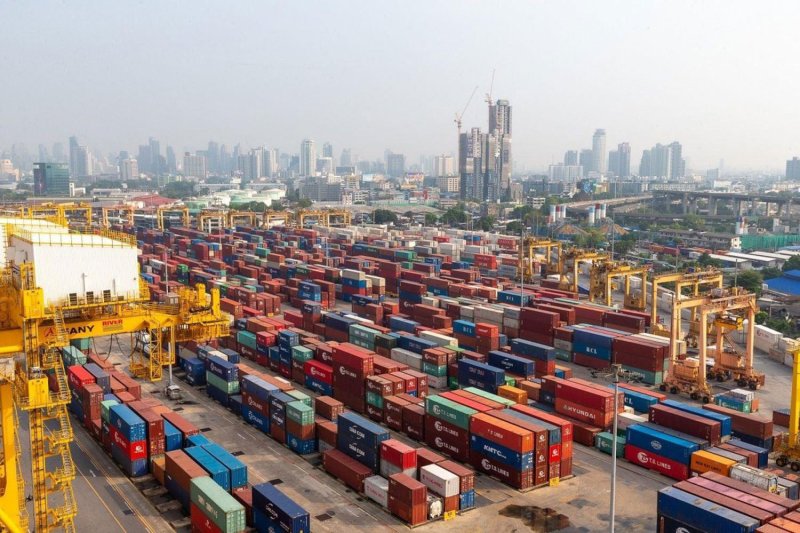
Industry reports predict that Thailand's food exports will experience a significant decline of 7.3% year-on-year, reaching 1.4 trillion baht this year, which could mark the lowest level in five years. This decrease is attributed to ongoing conflicts in the Middle East, which have severely impacted the food industry, along with rising energy prices that have affected the global economy and trade, including Thai food exports.
Since March, the war in the Middle East has disrupted the food industry, with the head of the National Food Institute of Thailand, Paia Da Hanshesukol, forecasting a 11.5% decline in first-quarter exports, bringing them down to 306 billion baht. This is due to shipment disruptions to Gulf Cooperation Council (GCC) countries through the Strait of Hormuz and re-exports from the UAE to other countries in the Middle East and South Africa.
Event Details
Forecasts indicate that products heavily reliant on Middle Eastern markets, such as canned tuna, rice, processed sweet corn, and canned pineapple, will be significantly affected. Additionally, rising energy prices are leading to increased costs across the supply chain, from fertilizers and agricultural raw materials to packaging and logistics.
Paia Da expects exports to sharply decline by 17.7% in the second quarter before gradually recovering with a 3% decrease in the third quarter and a 7% increase in the last quarter of the year. She pointed out several negative factors affecting food exports this year, such as the closure of the Strait of Hormuz, which impacts exports to GCC countries and could reduce shipments by 20 billion baht.
Background & Context
Historically, Thailand has been one of the largest food exporters in the world, heavily relying on foreign markets to sell its agricultural products. However, regional conflicts and a volatile global economy have affected the country's ability to maintain export levels. In recent years, Thailand has seen significant growth in future food exports, rising from 79.5 billion baht in 2020 to 134 billion baht last year, representing 8.9% of total food exports.
Nevertheless, current challenges, including protective policies from some countries like Indonesia's ban on importing rice, corn, and sugar, could lead to additional losses estimated at 40 billion baht in exports. Border tensions with Cambodia could add further losses estimated at 40 billion baht.
Impact & Consequences
Concerns are growing that these conditions could exacerbate inflation and increase the cost of living, affecting global demand for food products. Rising production costs may lead to higher food prices in the market, putting additional pressure on consumers.
Despite these challenges, Paia Da believes that food exports still hold promising prospects, as food is considered a staple commodity. Thailand has called to become a global hub for food innovation, encouraging manufacturers to target emerging markets and develop value-added products while embracing innovation to boost business.
Regional Significance
Arab countries are among the largest food importers in the world; thus, any decline in food exports from Thailand could directly impact Arab markets. Amid current crises, Arab nations may find themselves needing to diversify their import sources to meet their food needs. Additionally, rising global food prices could increase pressure on national budgets in many Arab countries.
In conclusion, the current situation requires Arab countries to consider new strategies to ensure food security, including enhancing local production and expanding trade partnerships with other nations to reduce reliance on specific sources.