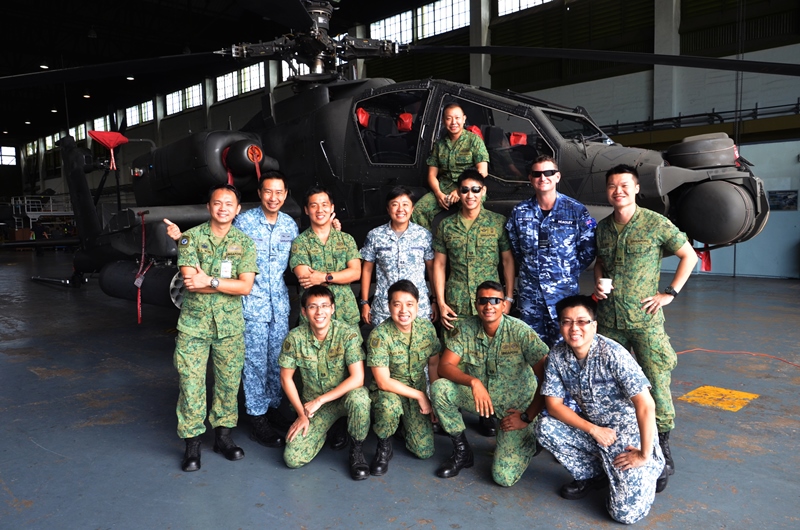
Defense experts in Singapore have warned about the security risks that may arise from the use of fitness tracking applications, such as Strava, within military bases. These risks are not just related to location disclosure but also to the daily patterns and movements of individuals within these bases. This warning comes in light of a series of notable breaches that have occurred in other countries, where sensitive military sites were revealed due to the use of such applications.
In March, the precise location of a French aircraft carrier was disclosed after an officer logged a running route on Strava. Earlier this month, British soldiers inadvertently revealed their locations within a sensitive nuclear base by posting their runs on the app. Investigations by CNA have shown that routes within military facilities in Singapore, including Geylang Camp, Changi Naval Base, and Changi Air Base, appear on Strava's global heat map.
Details of the Incident
Razwana Begum, a professor of global security and strategy at the Singapore University of Social Sciences, pointed out that the real risks lie not in location disclosure but in revealing patterns and behaviors within and around military facilities. The Singapore Ministry of Defence (MINDEF) confirmed that it is aware of these risks and will take security measures when necessary.
In response to inquiries from CNA, a spokesperson for the ministry stated that MINDEF and the Singapore Armed Forces (SAF) recognize that the technology used in fitness tracking devices is constantly evolving. The spokesperson added that the ministry is monitoring these developments and will take appropriate measures to maintain operational and training security.
Background & Context
Singapore is a highly urbanized nation, where many military facilities are either known or can be inferred from open sources. However, information obtained from fitness tracking devices can be combined with other publicly available data to create a clearer picture of activities within military installations.
Historically, terrorist groups have used simple tools to gather information about potential targets. For instance, the Islamic Group previously employed rudimentary techniques to collect information about targets in Singapore. Today, with the proliferation of social media and applications, it has become easier for non-state actors to gather information about military activities.
Impact & Consequences
Experts warn that publicly available data can reveal soldiers' lifestyles, such as the number of individuals in a specific area and their activity levels. This information may seem harmless when viewed as individual data points, but it can represent part of a larger picture that adversaries could exploit. In this context, David Poy, a defense observer, emphasized that the available information could be utilized by hostile intelligence services and potential terrorist threats.
Rizwan added that Singapore must remain vigilant, especially given the volatile global geopolitical situation. Soldiers should exercise responsibility when using these applications by taking measures to protect their privacy, such as setting activities to private mode and disabling location services.
Regional Significance
These risks are particularly significant for the Arab region, where geopolitical tensions are on the rise. Arab nations must learn from these experiences and consider the risks associated with modern technology in the context of military security. The use of smart applications in military domains must be approached with caution, focusing on protecting sensitive information.
In conclusion, the current situation requires heightened awareness from military personnel and security planners worldwide, including in Arab countries, to ensure that technology is not exploited in ways that threaten national security.