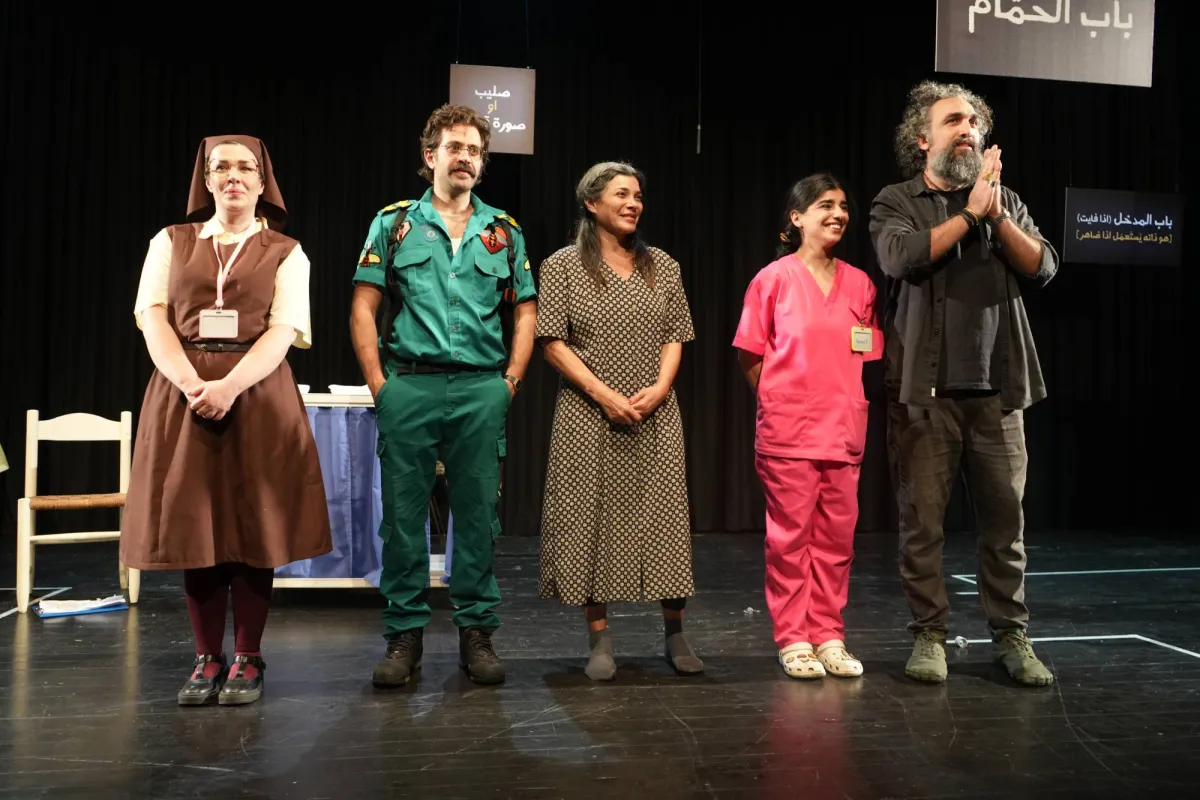
The play 'Hanna' offers a balanced artistic experience, blending humor with deep meanings on the stage of the Mono Theater. Writer and director Eli Kamal aims to present a new vision of Lebanese reality post-war, opening a door for laughter in times when joy seems scarce.
The plot revolves around the character 'Hanna', portrayed by actress Nada Abu Farhat, a woman who enters the hospital after an accident, and everyone believes she has lost her memory. However, as events unfold, it becomes clear that 'Hanna' possesses a profound awareness of her surroundings, creating a contrast between what is supposed to be consciousness and what is reality.
Event Details
The play is characterized by its light script, which avoids superficiality and addresses deep topics such as the state, healthcare, and insurance companies. Through wordplay and situations, the work successfully presents comedy that transcends superficial laughter, reaching the depths of the human experience.
The characters in the play interact dynamically, with 'Hanna' demonstrating the ability to control the course of events despite her vulnerable state. This interaction reflects the imbalances in Lebanese society and raises questions about human fate under difficult circumstances.
Background & Context
'Hanna' comes at a sensitive time for Lebanon, where society is still recovering from the effects of the civil war. The play reflects this reality, as Kamal seeks to provide a space for venting the psychological and social pressures that people endure. Through comedy, viewers can laugh at what pains them, creating a unique experience.
The play features multiple characters, such as 'Sister Isabel', played by Salma Al-Shalabi, who adds a comedic dimension to the work. This character shows how strictness can turn into a source of laughter, reflecting social tensions within the community.
Impact & Consequences
'Hanna' is considered a complete theatrical experience, showcasing how art can be a means of expressing complex emotions and ideas. The play is not merely a comedic performance; it is an invitation to reflect on Lebanese reality, making it relevant to many communities facing similar crises.
The play illustrates how art can be a tool for social change, highlighting issues such as migration and psychological pressures. By presenting these topics in a comedic manner, the audience can engage with them on a deeper level.
Regional Significance
'Hanna' exemplifies how theater can be used as a means to express social and political issues in the Arab world. Amid the multiple crises facing the region, the work demonstrates how art can be a voice for suffering and hope simultaneously.
The play enhances the importance of the arts in addressing societal issues, encouraging critical thinking and positive interaction among individuals. In challenging circumstances, such works can serve as a source of inspiration for many artists and creatives in the region.