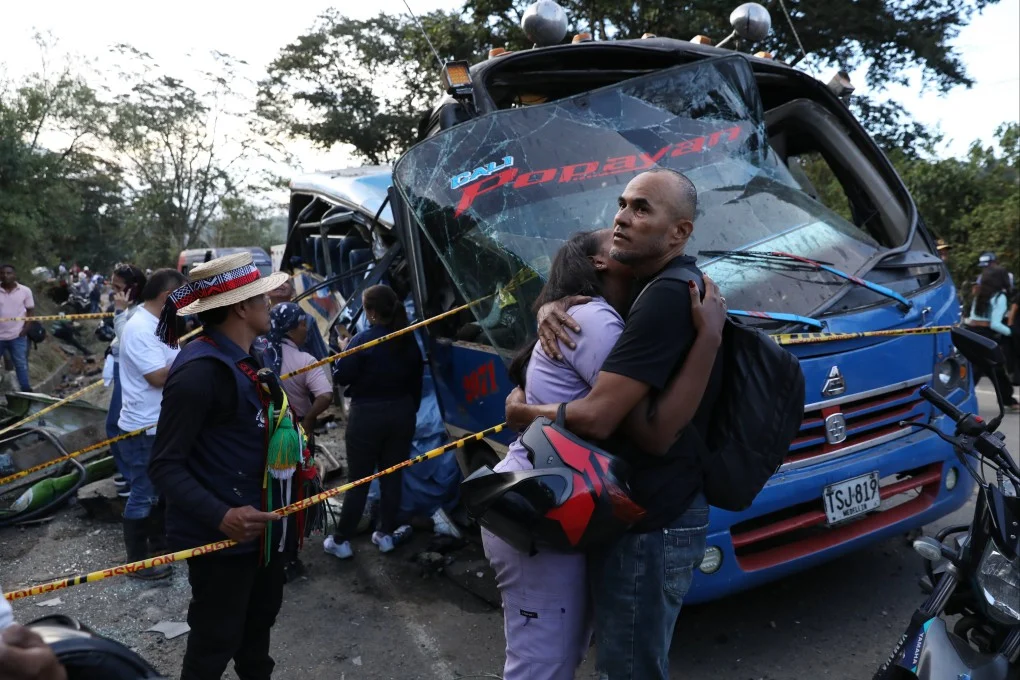
A bomb explosion on a bus in southwestern Colombia resulted in the deaths of 13 individuals and injuries to 38 others. The incident, described by the army commander as a 'terrorist act', occurred on the Pan-American highway in the municipality of Cajibío, where the bomb was detonated while the bus was in motion, causing panic and chaos among the passengers.
According to statements from Octavio Guzmán, the governor of the Cauca region, among the injured were five children, raising concerns about the safety of civilians in the area. This attack comes at a time when violence related to drug trafficking is escalating in Colombia, with the country experiencing a rise in armed conflicts.
Details of the Incident
The attack occurred late Saturday evening, targeting a bus carrying passengers on a routine journey. The incident provoked angry reactions from local officials, who condemned this brutal act and called for increased security measures to protect civilians. The army commander also noted that this attack is part of a broader escalation of violence in the region, which is suffering from the impacts of drug trafficking.
The Cauca region is considered one of the most affected areas by armed conflicts in Colombia, hosting numerous illegal armed groups competing for control over drug trafficking routes. These groups have intensified their attacks against civilians in recent years, exacerbating the humanitarian situation.
Background & Context
Colombia's history is marked by armed conflicts, having experienced decades of violence due to drug trafficking and disputes among armed groups. Since the 1990s, Colombia has been a major center for cocaine production, leading to the emergence of various armed groups seeking to dominate this market. Over the years, the Colombian government has attempted to implement various strategies to address this issue, but violence continues unabated.
In recent years, Colombia has seen an increase in attacks against civilians, reflecting a deterioration in security conditions. Attacks targeting civilians, such as the recent bombing, indicate that armed groups are unhesitant to use violence to achieve their goals, further increasing the suffering of local populations.
Impact & Consequences
The recent attack may lead to an escalation of violence in the region, as the Colombian armed forces are expected to respond forcefully to these assaults. This escalation could increase the suffering of civilians living in conflict areas, who may face further attacks or retaliatory operations.
Moreover, this attack could impact the Colombian government's efforts to achieve peace and stability in the country. With rising violence, it may become increasingly difficult for the government to negotiate with armed groups or make any progress in the peace process. This situation could exacerbate humanitarian conditions and increase the number of displaced individuals.
Regional Significance
Although Colombia is geographically distant from the Arab world, violent events like this raise concerns globally. The escalation of violence in Colombia may affect global drug markets, which could reflect on Arab countries facing similar issues. These events remind us of the importance of international cooperation in addressing security challenges.
In conclusion, there remains hope that the Colombian government will take effective steps to reduce violence and achieve peace, but the current reality indicates that the road ahead is still long and challenging.