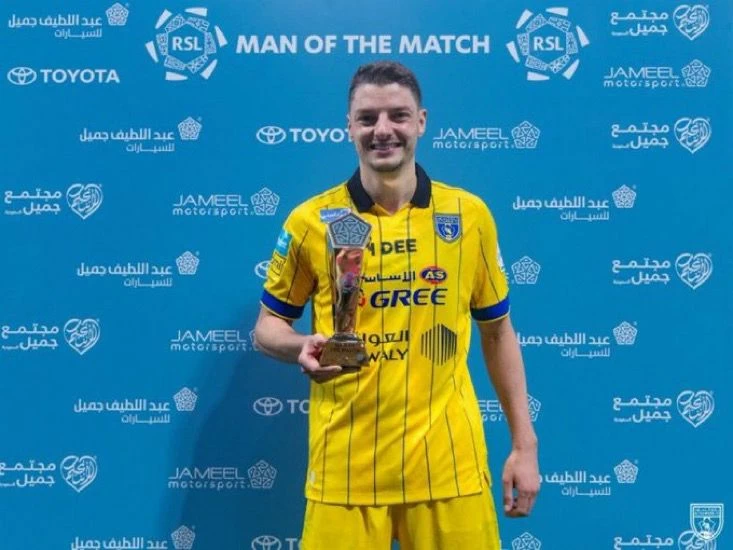
Simone Inzaghi, the Italian coach of Al-Hilal, voiced his frustration regarding the slow pace of Al-Taawoun's play, calling for a faster tempo during a conversation with Al-Taawoun defender Andre Girotto. These remarks were made in statements Girotto provided to the specialized platform "Canal GOAT," which broadcasts matches of the Roshan Professional League in Brazil.
Girotto responded to Inzaghi, clarifying that this style of play is considered normal in football, especially since his team was playing away from home, necessitating a slowdown to maintain the score. These comments reflect the significant pressures Inzaghi is under following a series of setbacks experienced by his team recently.
Details of the Incident
Girotto's statements come at a sensitive time for Al-Hilal, as the team has achieved only 4 victories out of 8 matches played recently, while drawing in the other 4 matches. This inconsistent performance has led to Al-Hilal dropping to second place in the league table with 65 points, trailing 5 points behind leaders Al-Nassr, raising questions about Inzaghi's ability to manage the team effectively.
Inzaghi, who took over the helm of Al-Hilal earlier, faces significant challenges related to improving the team's performance and overcoming obstacles in their quest for the title. Girotto's statements indicate player dissatisfaction with some of the training methods and tactics being employed.
Background & Context
Historically, Al-Hilal is considered one of the leading clubs in Saudi football, having won numerous local and continental titles. However, the recent decline in performance has raised concerns among fans and management alike. Inzaghi, who possesses extensive coaching experience, is faced with the challenge of steering the team back to winning ways.
Modern football requires flexible tactics that adapt to the circumstances of the match, which seems to be an area where Inzaghi occasionally falls short. This situation adds to the pressure on him, especially with strong competitors like Al-Nassr in the league.
Impact & Consequences
The negative results for Al-Hilal are affecting the morale of both players and fans, which could exacerbate the pressure on the coaching staff. A decline in performance may negatively impact the team's chances of competing for titles, necessitating swift decisions to improve the situation.
Additionally, these circumstances could influence the transfer market, as Al-Hilal may seek to bolster their squad with new players if the poor performance continues. Changes in the coaching staff could also be an option if the situation remains unchanged.
Regional Significance
Football in Saudi Arabia is an important part of the sports culture in the region, enjoying significant popularity. The performance of major clubs like Al-Hilal affects their supporters throughout the Arab world, making negative results have wider implications than just points in the league.
Highlighting such events reflects the challenges faced by Arab clubs in their pursuit of success on both regional and international levels. The success or failure of Al-Hilal could impact the image of Saudi football on the international stage.
In conclusion, Inzaghi faces a significant challenge in returning Al-Hilal to winning ways, as it requires improving the team's technical and tactical performance in upcoming matches.