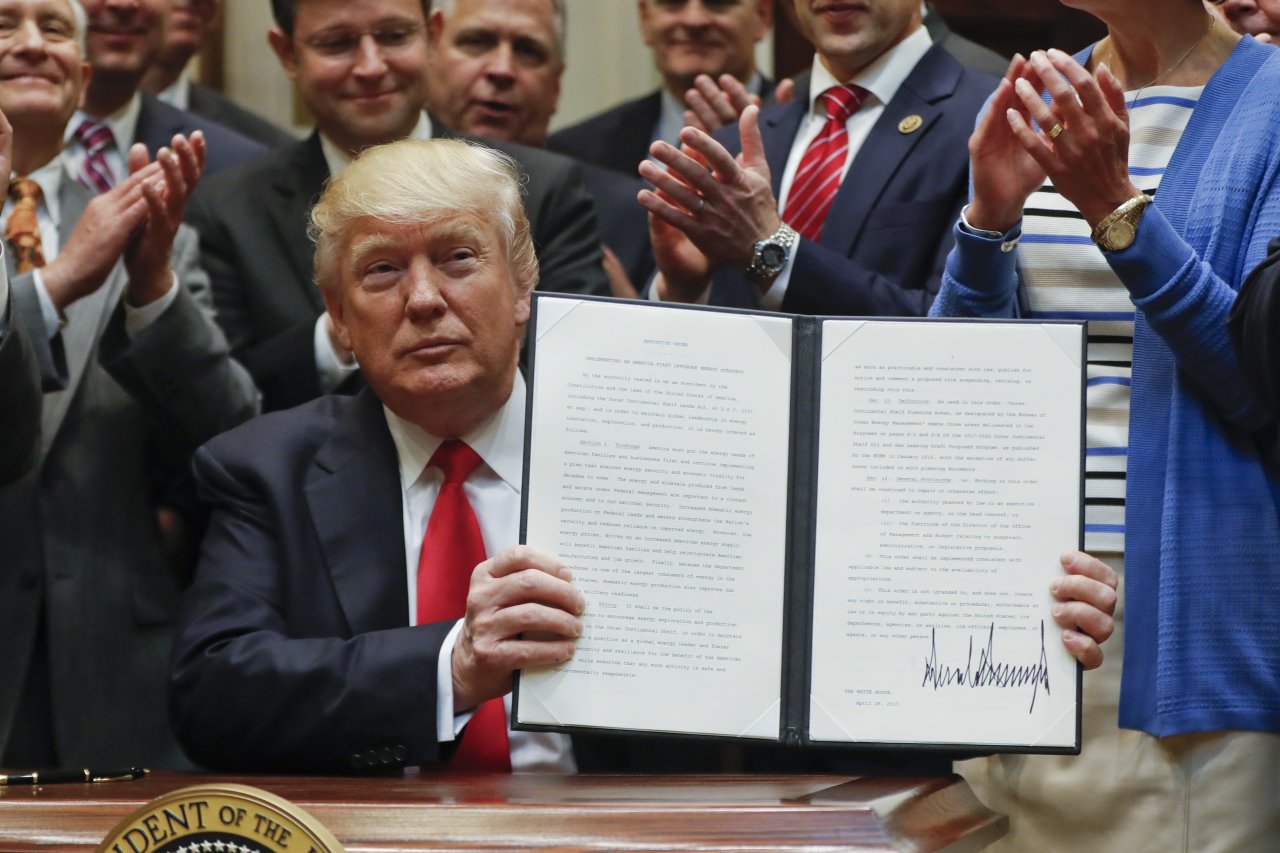
U.S. President Donald Trump announced the extension of the suspension of the Jones Act, a law that imposes restrictions on the transportation of oil and gas between the United States. This decision aims to enhance oil flow within the country and increase local production in light of current economic challenges.
The Jones Act is part of a set of laws enacted in 1920, designed to protect the American maritime industry. However, suspending this law will allow companies to transport oil more freely, thereby enhancing the United States' ability to meet its energy needs.
Details of the Decision
The decision made by the U.S. administration comes at a sensitive time, as the country faces economic challenges due to fluctuations in global oil prices. Trump indicated that this extension will help bolster the United States' energy independence, reducing reliance on imports.
Trump also emphasized that this decision will contribute to creating more job opportunities in the energy sector, thereby boosting economic growth in the country. This decision has been welcomed by many oil companies looking to increase their production.
Background & Context
Historically, the Jones Act was enacted following World War I to protect the American maritime industry from foreign competition. Over time, this law has become a barrier to the development of the domestic oil industry, especially given the significant changes in the global energy market.
In recent years, the United States has seen a substantial increase in oil production, making it one of the largest oil producers in the world. However, the restrictions imposed by the Jones Act have hindered companies from capitalizing on this production increase.
Impact & Consequences
The extension of the suspension of the Jones Act may enhance the United States' ability to export oil, potentially affecting global oil prices. Additionally, this decision could strengthen the United States' position in international energy negotiations.
Locally, this decision is expected to lead to increased investments in the energy sector, contributing to improved infrastructure and higher production levels. This decision may also enhance the United States' energy security.
Regional Significance
As the United States seeks to boost its oil production, this could have implications for oil-producing Arab countries. An increase in American production may lead to fluctuations in oil prices, impacting economies reliant on oil exports.
Moreover, this decision could alter the dynamics of the global oil market, as Arab countries may need to reassess their strategies in light of increasing competition from the United States.
In conclusion, Trump's decision to extend the suspension of the Jones Act represents a strategic move aimed at enhancing local oil production and reflects the current trends of the U.S. administration in the energy sector. At the same time, this decision raises questions about its impact on global markets and regional countries.