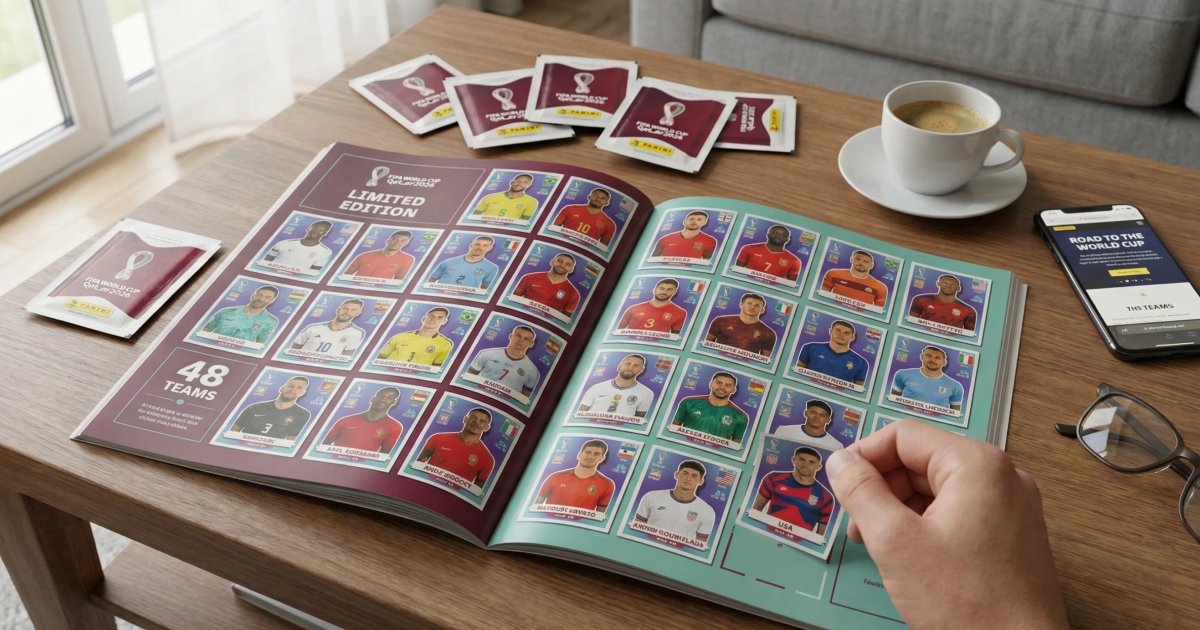
Football fans around the globe are gearing up to face the greatest challenge in the history of Panini sticker collecting, as the 2026 World Cup in the United States, Canada, and Mexico promises an unprecedented experience. With the participation of 48 countries, completing the sticker album necessitates 980 unique stickers, making this edition the most costly and challenging in the company's history.
The new album will hit the shelves starting Thursday, featuring 68 special stickers. In the UK, packs containing seven stickers are sold for £1.25 (approximately $1.69). Simple calculations indicate that at least 140 packs must be purchased, leading to a total cost of around £175. However, statistics suggest that acquiring all players may require over 1000 packs, translating to an expenditure of about £1000.
Event Details
The largest sticker collection in Panini's history was launched during a special event at Wembley Stadium, where several former England players, including David James, John Barnes, and Gary Cahill, reminisced about their sticker-collecting experiences. Cahill expressed his joy at being part of this collection, stating, "Stickers have always been a true starting point for the World Cup for me!"
Panini also plans to hold a "sticker exchange" event in May across various locations in the UK, providing collectors with the opportunity to find the players they are seeking. Additionally, the company will distribute a "sticker box" nationwide to give away sticker packs and albums for free.
Background & Context
The Italian company Panini was founded in 1961 and has since become a symbol of sticker collecting in the football world. The company released its first sticker collection during the 1970 World Cup in Mexico, and it has since become an integral part of football culture. Collecting stickers is a popular tradition among children and youth, with stickers often exchanged in schools and playgrounds.
With each World Cup edition, the popularity of sticker collecting increases, becoming more complex with the growing number of participating countries. The current edition is the largest in the tournament's history, heightening the challenge for collectors.
Impact & Consequences
The phenomenon of collecting Panini stickers transcends mere hobby; it reflects the passion of fans for football and its history. There is also a growing market for vintage stickers, with rare stickers fetching astronomical prices, such as a sticker of Maradona from 1979 that sold for £470,000 at an auction in 2021.
This trend also illustrates how hobbies can serve as investment opportunities, as many seek to collect stickers not only for enjoyment but also as a means of future profit.
Regional Significance
In the Arab world, football enjoys immense popularity, and sticker collecting is a part of youth culture. Many children and young people in Arab countries passionately follow global tournaments, making them eager to collect Panini stickers. This can enhance social bonds among youth through sticker exchanges and foster a sense of belonging to the global football culture.
In conclusion, the 2026 World Cup represents a new opportunity for football fans worldwide, where passion and memories converge in the Panini sticker album. The challenges faced by collectors also reflect the evolution of the game and its history, making this edition an unforgettable event.