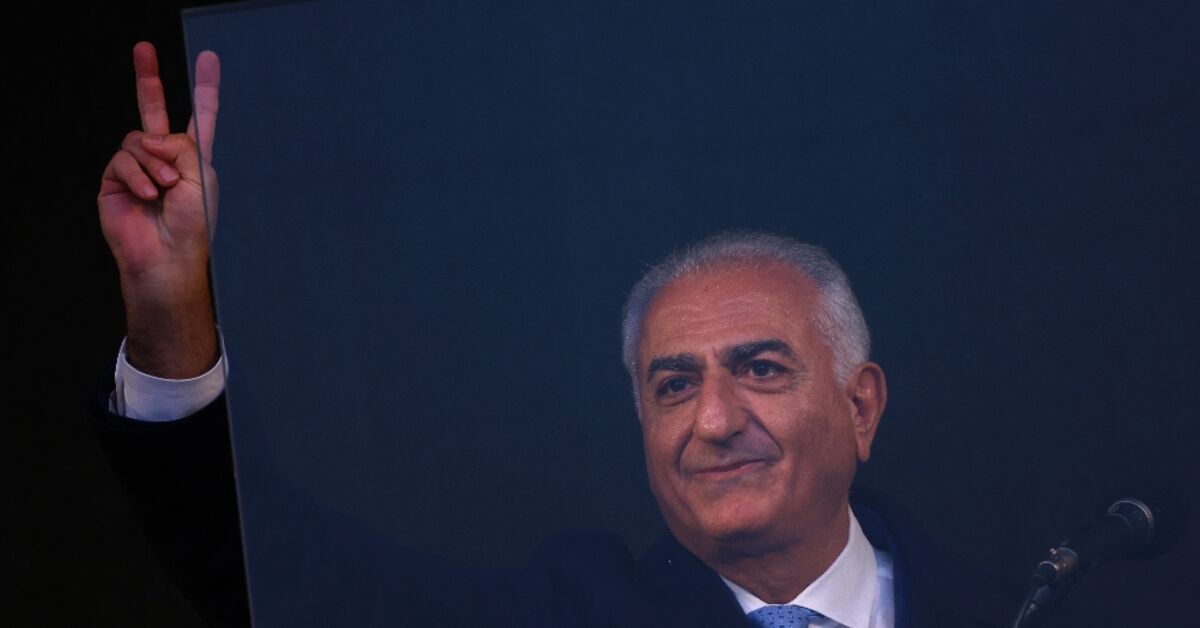
Nobel Peace Prize winner Shirin Ebadi is facing severe backlash from some Iranians after joining a transitional body led by Reza Pahlavi, the son of the ousted Iranian Shah, who aims to return to Iran. This development comes amid escalating tensions between the Iranian regime and the United States and Israel, complicating the political landscape in the country.
Ebadi, considered one of the foremost advocates for human rights in Iran, joined this body at a sensitive time, as Reza Pahlavi hopes it will facilitate a peaceful transition of power should the current regime fall. Pahlavi has stated on several occasions that he is prepared to lead this transition if the Iranian regime collapses under the current crises.
Details of the Event
Shirin Ebadi is a prominent figure in Iranian society, having received the Nobel Peace Prize in 2003 for her efforts in defending human rights and democracy in Iran. However, her decision to join a transitional body led by the ousted Shah's son has sparked widespread controversy, with some viewing it as a betrayal of her principles and the Islamic Revolution that overthrew the Shah in 1979.
Criticism of Ebadi is growing among some Iranians who see her support for Pahlavi as a return to an old monarchical system, which contradicts their aspirations for democracy. At the same time, there are those who support her decision, believing that any step towards political change in Iran deserves backing, regardless of historical backgrounds.
Background & Context
Modern Iranian history is filled with complex political events. In 1979, the country witnessed an Islamic Revolution that led to the overthrow of Shah Mohammad Reza Pahlavi, who ruled with Western support. Since then, the current Iranian regime, led by clerics, has faced both internal and external criticism for human rights violations and repressive policies.
In recent years, protests against the regime have intensified, particularly following the death of Mahsa Amini in September 2022, which sparked a wave of public outrage. In this context, Reza Pahlavi seeks to leverage the current situation to bolster his position as a potential leader for the transitional phase.
Impact & Consequences
Ebadi's decision to join the transitional body marks a turning point in the discussion about Iran's future. If Reza Pahlavi succeeds in achieving his goals, it could lead to a radical change in the Iranian political system. However, he may face significant resistance from existing political forces unwilling to relinquish their power.
Concerns are rising that any change in the regime could lead to political chaos, especially given the deep divisions within Iranian society. Additionally, external interventions, particularly from the United States and Israel, could complicate matters further.
Regional Significance
Arab countries are significantly affected by political developments in Iran, as Iran is a key player in many regional issues. Any change in the Iranian regime could impact the balance of power in the region and lead to a reshaping of political alliances.
Moreover, Iran's stability has a direct effect on regional security, as any political chaos could escalate conflicts in neighboring countries such as Iraq, Syria, and Lebanon.
In conclusion, the future of Iran remains uncertain, with internal and external interests intertwining to shape this future. Ebadi's stance and support for Pahlavi may have far-reaching implications for Iranian and regional politics.