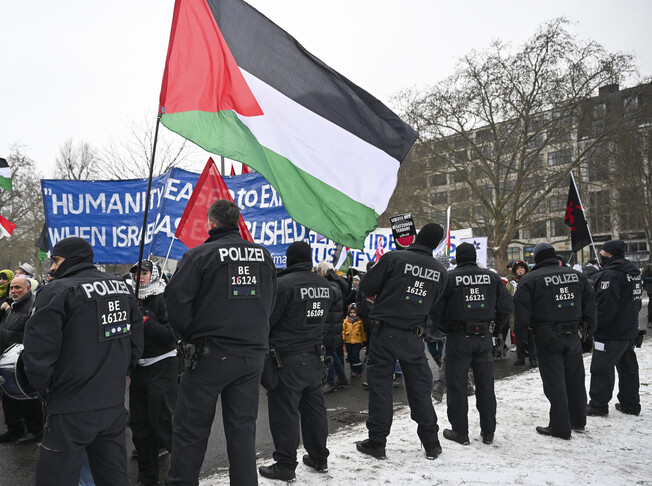
Five activists are facing trial in Stuttgart, Germany, after they stormed the Elbit Systems arms factory as part of their protests against what they describe as genocide being inflicted on Palestinians in Gaza. This trial occurs at a sensitive time when global protests against Israeli policies in the Palestinian territories are increasing.
The activists, who were arrested during the incursion, climbed the factory's walls and raised banners calling for an end to the Israeli occupation. This incident has sparked mixed reactions within political and social circles in Germany, with some viewing these actions as a show of solidarity with the Palestinian cause, while others consider them unjustified acts of violence.
Details of the Incident
The incursion, which took place earlier this month, led to the arrest of the five activists, who now face charges related to vandalism and assault. This protest was organized by a group of human rights activists seeking to raise awareness about the humanitarian situation in Gaza.
It is worth noting that Elbit Systems is one of the largest arms manufacturers in Israel and has faced widespread criticism for its role in supplying the Israeli military with weapons used in conflicts. These protests are part of a broader campaign calling for a boycott of companies that engage with Israel.
Background & Context
Historically, the relationship between Germany and Israel has been characterized by strong support from the German government towards Israel, especially following the Holocaust. However, this support is facing increasing challenges amid rising anti-occupation sentiments. Many NGOs and activists in Germany have begun organizing protest events against Israeli policies, reflecting a shift in public opinion.
In recent years, protests against Israel in Germany have increased, particularly following military escalations in Gaza. These events have sparked widespread debate about Germany's role in supporting Israel, leading to calls for a review of foreign policies.
Impact & Consequences
This trial represents a turning point in how Germany addresses human rights issues, as it could influence future policies towards Israel and the Palestinian conflict. If the activists are convicted, it may lead to increased protests and demonstrations in the streets, potentially placing the German government in a difficult position.
The outcome of this trial could also set a precedent for how similar cases are handled in the future, impacting the broader discourse on human rights activism in Germany.
Regional Significance
This trial not only highlights the tensions surrounding human rights issues in the context of the Israeli-Palestinian conflict but also underscores the growing discontent within Germany regarding its foreign policy. As public sentiment shifts, the German government may find itself under pressure to reassess its stance on Israel.
In conclusion, the trial of these activists is emblematic of a larger movement advocating for Palestinian rights and could have significant implications for Germany's political landscape and its international relations.