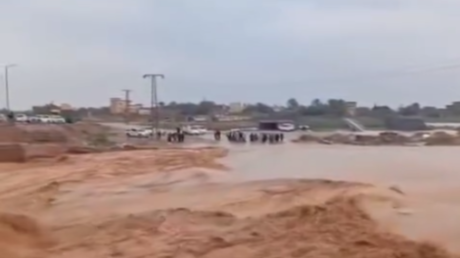
Severe floods have disrupted the border road between Iraq and Syria, particularly affecting areas around Al-Qaim and Al-Hari since early morning. These floods, resulting from heavy rainfall, have led to the closure of main roads and disrupted traffic between the two countries, significantly impacting commercial and security movements.
This unusual weather phenomenon is attributed to rapid climate changes affecting the region, where rainfall intensity has increased recently, exacerbating conditions in low-lying areas. Local authorities have issued warnings to residents about the flood risks, urging them to take necessary precautions.
Details of the Incident
In the early hours of this morning, heavy rains began to fall on the border areas, resulting in unprecedented water flow. Local rescue teams have reported rising water levels in rivers and valleys, leading to road inundation and blockage. Flooding has also been recorded in some nearby villages, prompting emergency teams to intervene to rescue citizens.
It is noteworthy that the border road between Iraq and Syria is a vital artery for trade and transport, linking major cities and serving as a crossing point for goods and individuals. With this road cut off, trade movement between the two countries is expected to be significantly affected, potentially leading to rising prices for essential goods in local markets.
Background & Context
Historically, the border areas between Iraq and Syria have experienced climatic fluctuations, but the current situation reflects new challenges due to global climate changes. Studies have shown that the Middle East is experiencing an increase in heavy rainfall rates, leading to exacerbated flooding in certain areas.
These weather phenomena are not new to the region, as Iraq and Syria have faced similar flooding events in past years, highlighting the urgent need for infrastructure development capable of addressing these challenges. Local governments have previously taken measures to improve drainage systems and develop dams, but there remains a need for further investment in this area.
Impact & Consequences
The severe floods are expected to significantly impact the economic and social situation in the region. With roads cut off, trade movement will be affected, potentially leading to shortages of certain essential goods and rising prices. Additionally, flooding may destroy agricultural crops, increasing pressure on local farmers who are already facing economic challenges.
Moreover, these weather conditions may exacerbate humanitarian situations in the affected areas, where many residents suffer from shortages of essential services such as water and electricity. Humanitarian organizations are expected to intervene to provide assistance, but logistical challenges may hinder relief efforts.
Regional Significance
This incident serves as a reminder of the fragility of the environmental situation in the Arab region, where climate risks are continuously increasing. As climate changes intensify, Arab countries must enhance regional cooperation to address these challenges.
Furthermore, these natural phenomena could lead to increased conflicts over water resources, necessitating urgent actions to ensure the sustainability of water resources in the region. Under these circumstances, it becomes essential to raise environmental awareness and develop effective strategies to adapt to climate changes.
In conclusion, the severe floods witnessed in the border areas between Iraq and Syria highlight the urgent need for effective strategies to tackle climate challenges and enhance cooperation among Arab countries to ensure the sustainability of natural resources and protect local communities from increasing environmental risks.