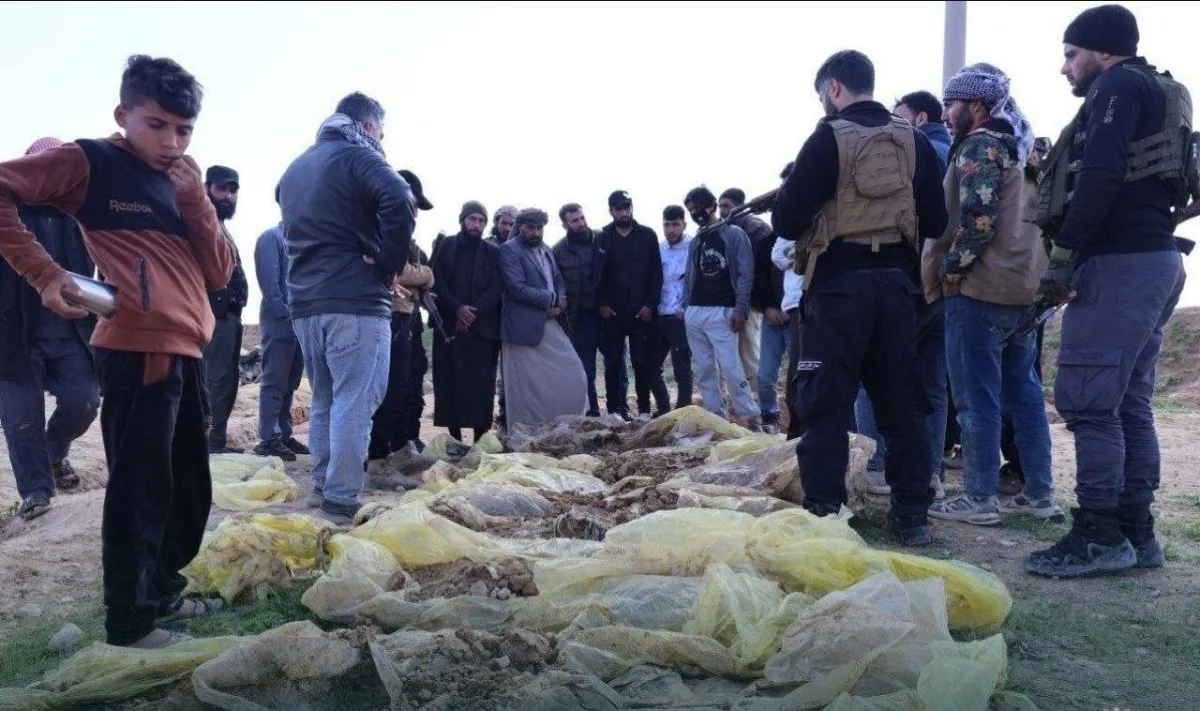
Recent floods that swept through eastern Syria have revealed several mass graves in the Al-Shaddadi area of southern Al-Hasakah, raising international concerns about the human rights violations that have occurred in the region. The spokesperson for the presidential team, Ahmad Al-Hilali, reported that these graves contain dozens of trenches filled with hundreds of unidentified bodies.
These discoveries come just two days after another grave was found near the "Chinese Camp" prison, where the identity of one of the buried individuals was confirmed, shedding light on the abuses committed against detainees during that period.
Details of the Event
Al-Hilali announced in a statement on his Facebook account that the heavy rains led to the exposure of these trenches, noting that the number of victims and their identities remain unknown. He also mentioned that the Ministry of Emergency and Disaster Management has begun collaborating with the Ministry of Interior and relevant authorities to conduct preliminary investigations into the locations of the graves.
Al-Hilali warned against any unauthorized excavation activities due to the sensitivity of forensic evidence, emphasizing that this file will receive direct attention from the presidential team. The "Chinese Camp" prison is considered one of the detention centers previously managed by the Syrian Democratic Forces (SDF), where thousands of detainees, including members of the ISIS organization, were held.
Background & Context
Historically, the Al-Shaddadi area was one of the main strongholds of ISIS from 2014 to 2016, witnessing fierce battles that led to the area being controlled by the Syrian Democratic Forces. Numerous human rights violations were documented during that time, including arbitrary arrests and massacres.
In the Al-Tadamon neighborhood, south of the capital Damascus, a new mass grave was discovered, adding to the list of graves found in the region. The Al-Tadamon Coordination Committee documented the finding of human remains in the neighborhood, which witnessed brutal massacres committed by the previous regime's militias.
Impact & Consequences
These discoveries raise significant concerns about the fate of victims and the missing in Syria, with increasing calls for extensive investigations to uncover the circumstances surrounding these violations. Furthermore, these events place the international community before its responsibilities to protect human rights in conflict-affected areas.
These findings serve as a stark reminder of the suffering endured by Syrians during years of war, necessitating urgent international action to hold those responsible for these crimes accountable.
Regional Significance
These events underscore the need to enhance cooperation among Arab countries in the field of human rights and to exchange information regarding violations occurring in conflict zones. Additionally, these discoveries may impact relations between the concerned countries, as international pressure on governments to investigate these violations increases.
In conclusion, this issue remains open and requires further efforts to uncover the truths and deliver justice to the victims and their families, reflecting the importance of collective action in addressing human rights violations.