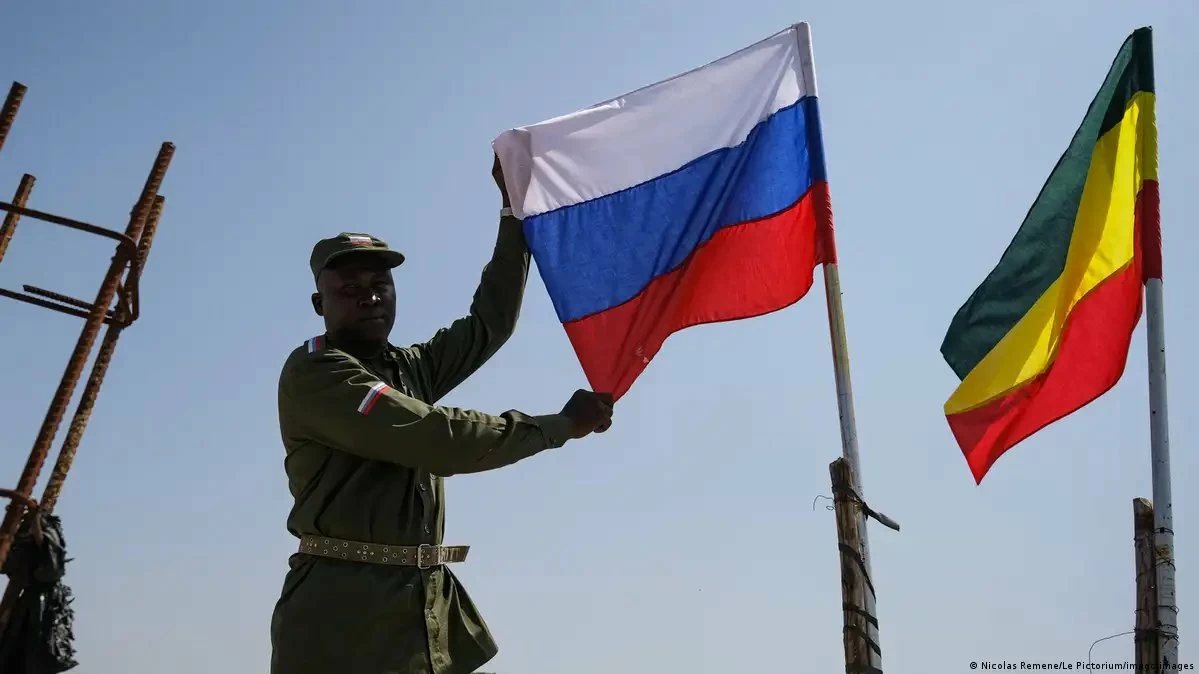
The Russian Ministry of Defense announced the successful thwarting of a military coup attempt in Mali's capital, Bamako, by its forces in collaboration with the Malian army. The coordinated attack, carried out by a group of over 12,000 militants, aimed to seize control of vital facilities, including the presidential palace.
According to the ministry's statement, the militants involved in the attack had received training from mercenaries and trainers from Ukraine and Europe. These militants utilized shoulder-fired missiles of the Stinger and Mistral types during their operations.
Details of the Incident
The confrontations resulted in the death of the Malian defense minister due to a suicide car bomb explosion near his residence. Nevertheless, the Malian government forces, supported by Russian troops, managed to repel the assault and inflict significant casualties on the attackers.
The Russian Ministry of Defense indicated that Mi-8 and Mi-24 helicopters conducted 21 sorties, despite coming under enemy fire, and carried out precise strikes on militant gatherings. Additionally, Su-24 attack aircraft executed 8 airstrikes.
Background & Context
These events occur amid ongoing security tensions in Mali, where the military government faces significant challenges from separatist and terrorist armed groups in the north and center of the country. Recently, the nation has witnessed a surge in violence, complicating the security situation further.
On April 25, Mali experienced widespread coordinated attacks targeting several areas, including the capital Bamako. Russian forces from the African Legion described these attacks as a military coup attempt.
Impact & Consequences
These events serve as an indicator of the deteriorating security situation in Mali, as the military government seeks to regain control over the country. The attacks highlight the increasing capability of armed groups to execute coordinated operations, threatening the stability of the current government.
Moreover, the Russian intervention in Mali reflects Moscow's strategy to enhance its influence on the African continent, which could lead to shifts in political and security balances in the region.
Regional Significance
The Arab region is directly affected by the events in Mali, as stability in West Africa has implications for regional security. The escalation of violence in Mali may lead to an influx of refugees and increased tensions among neighboring countries.
In conclusion, the situation in Mali remains under close observation, as any new developments could impact stability across the entire region.