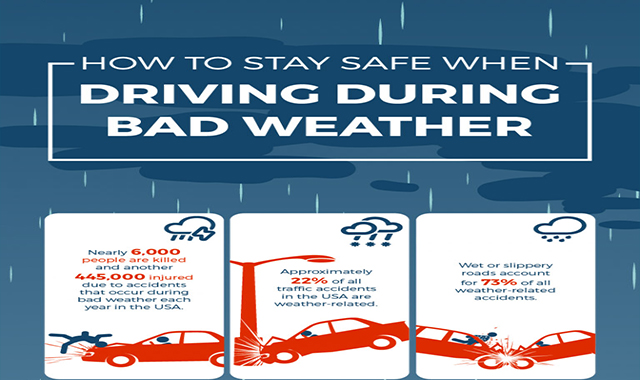
Driving in bad weather is one of the major challenges faced by drivers, as the risk of accidents significantly increases. Therefore, it is essential to follow specific guidelines to ensure safety on the roads. These guidelines include reducing speed, increasing the safe distance between vehicles, and using lights appropriately.
When driving in unstable weather conditions such as heavy rain, fog, or snow, drivers must exercise greater caution. Limited visibility and slippery roads can lead to serious accidents. Thus, it is important for drivers to be aware of how to handle these conditions.
Details of the Event
Reports indicate that road accidents noticeably increase during the winter season, as rain and snow make roads more hazardous. It is important for drivers to take necessary precautions, such as checking tire conditions and ensuring that brakes are functioning properly. Additionally, it is advisable to avoid driving during peak hours when weather conditions are poor.
Drivers should also be prepared to deal with emergencies, such as skidding or losing control of the vehicle. Having an emergency plan that includes contacting emergency services in the event of an accident is crucial.
Background & Context
Historically, many countries have witnessed fatal accidents due to non-compliance with driving guidelines in bad weather. In recent years, awareness regarding the importance of road safety has increased, leading to awareness campaigns aimed at educating drivers on how to act in adverse weather conditions.
These campaigns involve providing tips through media and social networks, as well as organizing workshops to teach drivers how to handle various conditions. Modern technology also plays a significant role in enhancing safety, as some vehicles are equipped with advanced assistance systems that help drivers maintain control.
Impact & Consequences
Road accidents resulting from bad weather can have severe consequences, not only for individuals but also for society as a whole. Accidents lead to loss of life and serious injuries, putting pressure on the healthcare system.
Moreover, accidents affect traffic flow and cause congestion, leading to delays in transportation and increased transportation costs. Therefore, it is essential for everyone, whether drivers or pedestrians, to cooperate to ensure road safety.
Regional Significance
The Arab region is one of the areas that experience various weather fluctuations, increasing the importance of following safe driving guidelines. In some countries, such as Lebanon and Jordan, heavy snowfall occurs in winter, requiring drivers to take extra precautions.
Additionally, Gulf countries, despite not experiencing snow, sometimes witness heavy rains that lead to flooding. Thus, drivers throughout the Arab region must be aware of the risks associated with bad weather and follow the necessary guidelines to ensure their safety and the safety of others.
In conclusion, adhering to driving guidelines in bad weather can save lives and reduce road accidents. Therefore, everyone must be responsible and take the necessary steps to ensure their safety and the safety of others on the roads.