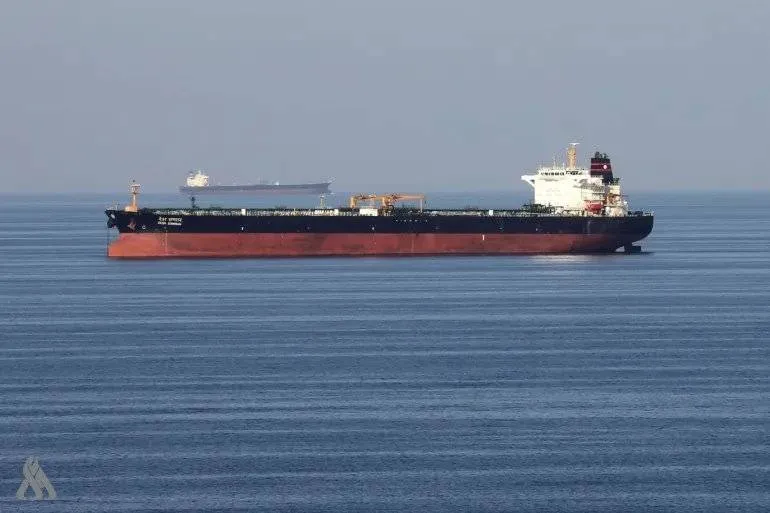
Iraq appears to be encountering substantial difficulties in resuming its oil exports through the Gulf and the Strait of Hormuz. A number of experts and specialists in the oil and economic sectors have expressed pessimistic forecasts regarding this matter. This comes after Iran announced a "waiver" for Iraq to cross as a "friendly state," raising questions about the feasibility of achieving this goal.
The ongoing conflict in the region, particularly the U.S.-Israeli war with Iran, has inflicted severe losses on Iraq, estimated at around three-quarters of its oil exports. Iraq's exports have primarily relied on the southern Basra ports, where oil production was around 3.5 million barrels per day, while the current export volume does not exceed one million barrels per day, most of which is consumed domestically. Additionally, over 300,000 barrels per day are exported via the Kurdistan region to the Turkish port of Ceyhan, along with small quantities transported overland to Jordan and Syria.
Event Details
Experts predict that Iraq's monthly financial deficit could reach between 5-6 billion dollars, placing the government in front of complex financial challenges. Dr. Majid Shankali noted that oil revenues for last March amounted to approximately 2 billion dollars, indicating a significant deficit compared to previous months.
While optimism prevails among Iran's allies and sympathizers, pessimists point out that the real obstacle to Iraqi oil exports lies not in an "administrative or marketing decision," but in a complex equation involving security, insurance, and the behavior of global shipping companies.
Background & Context
Four oil sites in Basra are under attack from drones, believed to be orchestrated by Iranian-backed armed factions, complicating the situation further. These attacks raise questions about the seriousness of the "Iranian allowance" and the actions of armed groups within Iraq.
Asim Jihad, the former spokesperson for the Ministry of Oil, confirmed that Iraqi oil exports depend on the "fundamental realities" governing the export mechanism, indicating that Iraq does not possess supertankers to transport crude oil, as companies contracted with the Iraqi Oil Marketing Company (SOMO) are responsible for providing the tankers.
Impact & Consequences
The rising insurance costs for tankers are a critical factor, as insurance companies impose high premiums on ships crossing conflict zones, leading some companies to hesitate or withdraw. Even with buyers for Iraqi oil, the dilemma of providing tankers willing to dock at southern ports remains.
Economist Ziad Al-Hashimi pointed out that Iraqi oil fields continue to face attacks, hindering a return to normal operations. He explained that the "Iranian allowance" pertains to ships carrying Iraqi oil, but how will empty ships enter through the strait?
Regional Significance
The Iraqi government and the Ministry of Oil face widespread criticism for failing to take precautionary measures to ensure the sustainability of oil production, which is the sole source of national income in Iraq. Economics professor Nabil Al-Marsoumi noted that the Iraqi Oil Tankers Company currently owns only six tankers, reflecting the weak infrastructure necessary to support the oil sector.
In conclusion, Iraq appears to be in urgent need of effective strategies to enhance its ability to resume oil exports amidst complex security and economic challenges. Failure to address these issues could exacerbate the financial and economic crises in the country.